

A New Academic Certificate Will Aid Baylor Students Interested in Careers Involving Environmental Sustainability
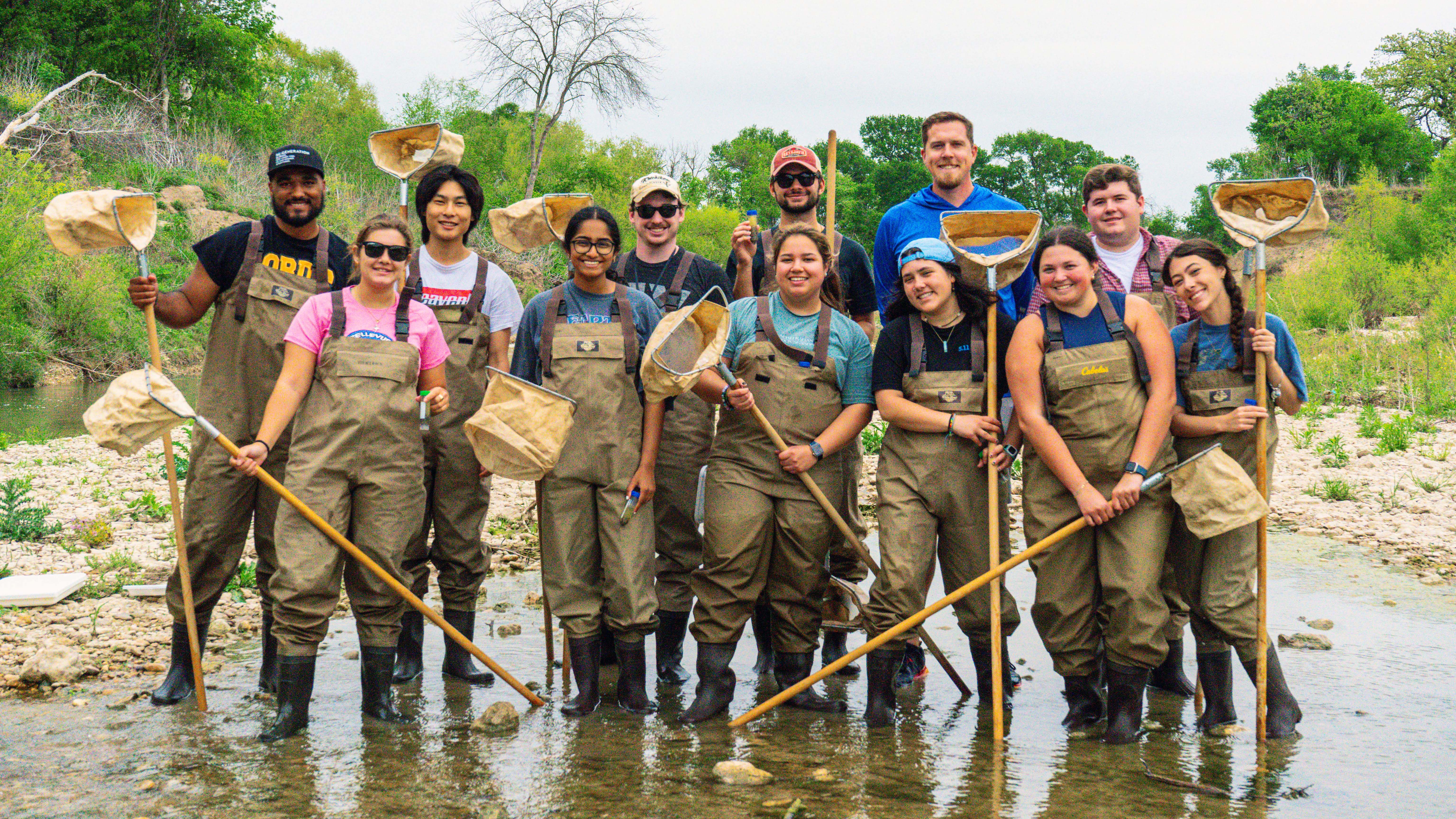
One of the ways Baylor students learn more about sustainability is by taking part in research done with faculty in the University’s Center for Reservoir & Aquatic Systems Research (CRASR)
As the desire to ensure environmental sustainability becomes a larger priority for governments, educational institutions and members of the corporate world, Baylor University has introduced a certificate program to help train its students in sustainability and find satisfying careers in the fast-growing field.
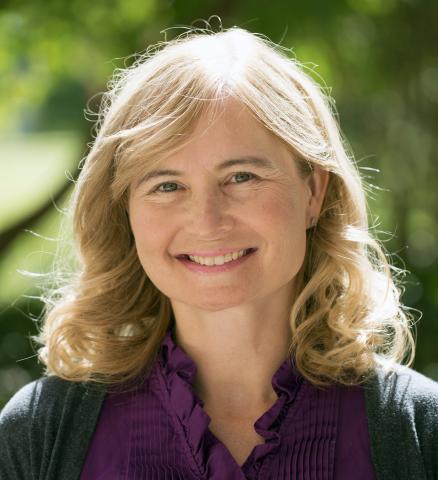
The new Certificate in Environmental Science Sustainability will be offered through the School of Earth and Environmental Sciences in the College of Arts & Sciences beginning with the Fall 2026 semester. Julie King, teaching professor and undergraduate program director in environmental sciences, said sustainability focuses on how current and future generations can best care for and preserve the Earth’s finite resources.
“Sustainability is one of the defining challenges of the 21st century. It involves the impacts of certain activities on the environmental health of our resources, but more significantly, how those activities affect people,” she said. “When we think about sustainability in the context of the operation of businesses, universities, churches and families, we are looking at the core concept of sustaining resources for use by future generations in a healthy way that continues to benefit us –– not harm us.”
Students must complete a total of 12 semester hours of coursework to earn the Certificate in Environmental Science Sustainability. Three hours must be earned by completing their choice of three required core courses in environmental sciences –– either Introduction to Environmental Sustainability, Exploring Environmental Issues, or Climate Change: Environmental and Human Dimensions.
Students must also complete an additional six hours of coursework from seven possible three-hour courses dealing with sustainability, which examine topics such as environmental justice, pollution abatement, agricultural ecology, the sustainable development of national resources, and the ecology of forests or tropical environments.
Hands-on experience
The final three hours must be earned by either doing research with a professor at Baylor already studying an aspect of sustainability, or by completing an internship that will give students hands-on experience with either environmental sustainability or with environmental planning or management.
“There are a variety of possibilities for internships through this program. We can pair up students with Baylor alumni around the country who are now working in the field of sustainability, or students can choose to complete a local internship with one of our community partners,” King said. “We already work with Mission Waco’s Urban REAP (Renewable Energy and Agricultural Project), with the World Hunger Relief Farm in Waco, and with the Office of Sustainability here at Baylor. These local internships are ideal if students need something they can complete during the semester.”
King said the experience gained through research projects and internships will make earning the new certificate even more valuable.
“The goal is to make completing the Certificate in Environmental Science Sustainability a very well-rounded experience for students, providing them with real skills that they can take into the workplace, or potentially into a graduate program somewhere,” she said.
For those students entering the workforce after Baylor, King said that the number and scope of jobs which touch on aspects of sustainability are increasing.
“We have seen a number of Baylor students find jobs in sustainability in large corporations. I had a student who is now manager of product sustainability in New York City for The Estée Lauder Companies Inc., a large cosmetics company. In her job she is thinking about concerns such as their waste stream and the environmental health aspects used in making their formulations,” she said. “Another former Baylor student started her career as a sustainability intern at the corporate headquarters of United Parcel Service (UPS) in Atlanta, and is now working in sustainability as a global program manager in global environmental affairs at UPS. Many companies, universities, hospitals, airports, government agencies and other employers are looking for graduates who are knowledgeable about sustainability practices and what those look like when applied to an organization.”
For more information about the Certificate in Environmental Science Sustainability, contact Julie King.
None of the original writing contained in this story was created with the use, in whole or in part, of artificial intelligence (AI).
ABOUT THE COLLEGE OF ARTS & SCIENCES AT BAYLOR UNIVERSITY
The College of Arts & Sciences is Baylor University’s largest academic division, consisting of the School of Earth and Environmental Sciences and 24 academic departments in the sciences, humanities, fine arts and social sciences, as well as 12 academic centers and institutes. The more than 5,000 courses taught in the College span topics from art and theatre to religion, philosophy, sociology and the natural sciences. The College’s undergraduate Unified Core Curriculum, which routinely receives top grades in national assessments, emphasizes a liberal education characterized by critical thinking, communication, civic engagement and Christian commitment. Arts & Sciences faculty conduct research around the world, and research on the undergraduate and graduate level is prevalent throughout all disciplines. Visit the College of Arts & Sciences website.