

Arts & Sciences: Building on Growth and Change
Baylor’s College of Arts & Sciences has a firm foundation of excellence as it changes leadership

Georgia Burleson Hall, home to the Baylor University College of Arts & Sciences administrative offices (Baylor Photography)
For the first time in two decades, the Baylor University College of Arts & Sciences will welcome a new dean –– Dr. James R. Brockmole, who will assume that office on July 1. As the College’s 13th dean since its founding in 1919, Dean Brockmole will inherit an academic unit that has seen steady growth in size and influence since the current dean, Dr. Lee C. Nordt, took the reins in 2005.
Long leadership
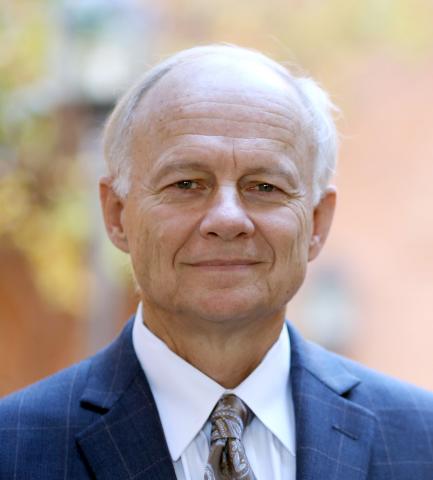
Nordt joined the faculty of what then was called Baylor’s Department of Geology in 1996 as an assistant professor. He was serving as the associate dean for sciences in the College of Arts & Sciences when he was appointed as interim dean in January 2005, after the previous dean, Dr. Wallace Daniel, stepped down to return to the classroom. Following a nationwide search, Nordt was appointed dean of the College in April 2007.
Counting his two years as interim dean, Nordt's 21 years in the position make him the longest-serving dean in the history of the College. Beginning on August 1, 2026, he will become Baylor University’s interim provost and vice president, and will serve in that capacity while the search for a permanent provost is made. When the new provost takes office, most likely in 2027, Nordt will return to the classroom and laboratory, serving as professor of geosciences in the new School of Earth and Environmental Sciences within the College of Arts & Sciences, which debuted on June 1, 2026.
Growth and change
When Nordt became dean in 2005, the College of Arts & Sciences contained 26 academic departments. When Baylor’s Robbins College of Health and Human Sciences was created in 2014, two academic departments that had been housed in Arts & Sciences were transferred to Robbins –– the Department of Communication Sciences and Disorders and what eventually became known as the Department of Human Sciences and Design. That left 24 departments in Arts & Sciences, but the number increased to 25 in 2015 when the new Department of Film and Digital Media was created from a program formerly within the Department of Communication.
The loss and gain of various departments over the years makes a 20-year look at growth in Arts & Sciences somewhat challenging to track easily. But a survey of official statistics, provided by Baylor’s Office of Institutional Research, does provide an interesting look at the changing face of Arts & Sciences over the period.
Between Fall 2005 and Fall 2025, the total number of faculty in the College of Arts & Sciences increased from 407 to 516 –– a 27 percent increase. The number of tenured faculty in Arts & Sciences increased by 30 percent during that same period.
The number of staff positions in the College, meanwhile, almost tripled between 2005 and 2025 –– from 86 to 253.
Undergraduate student enrollment in Arts & Sciences has gone up and down over the past 20 years. In Fall 2005 there were 6,762 undergraduates enrolled in the College, making up 57 percent of the total undergraduate enrollment at Baylor. The number of A&S undergraduates remained fairly steady until the fall of 2014, when the opening of Robbins College and the resulting loss of two departments contributed to a drop of 670 undergraduate students from the previous fall.
The most recent numbers show that the College of Arts & Sciences had 5,145 undergraduate students enrolled in the fall of 2025 –– comprising 36 percent of Baylor’s total undergraduates.
While undergraduate enrollment in both the College of Arts & Sciences and Baylor as well has fluctuated up and down over the past two decades, the number of graduate students in Arts & Sciences has risen steadily every year since 2016. In the fall of 2025, the College was home to 793 graduate students –– a 29 percent increase over graduate enrollment two decades before.
Between 2005 and 2025, the student body in Arts & Sciences has also become more diverse and academically gifted. The number of students classified as members of an “underrepresented minority” in the College over that period increased from 1,612 to 1,899 –– a jump of 18 percent.
During that same 20-year period, the number of first-time freshmen entering the College of Arts & Sciences with “high academic status” increased from 421 in Fall 2005 to 734 in Fall 2025 –– a 74 percent increase.
The period between 2005 and 2025 was also one that resulted in significant academic milestones being reached in the College.
Vigorous research
In 2019, Baylor University announced that it was committed to become recognized as a Research 1 doctoral institution for having “very high research activity.” Guided by Illuminate, the University’s academic strategic plan launched the year before, Baylor administrators expected to reach the R1 goal by 2024 –– five years later –– but were pleasantly surprised when the Carnegie Classification of Institutions of Higher Education awarded Baylor R1 status in December 2021.
One of the significant reasons Baylor was able to achieve Research 1 status only two years after publicly announcing its intentions is that much of the needed groundwork had already been laid in the College of Arts & Sciences.
“I believe that Arts & Sciences played a major role in helping Baylor achieve Research 1 status,” Nordt said. “While there were already research faculty present in the College, we knew we needed more to have any hope of achieving R1 status. To Baylor’s credit, we were able to access resources that helped Arts & Sciences achieve this lofty goal. We hired the right faculty, created the research infrastructure and established R1 expectations for research productivity. All of that helped get us to R1.”
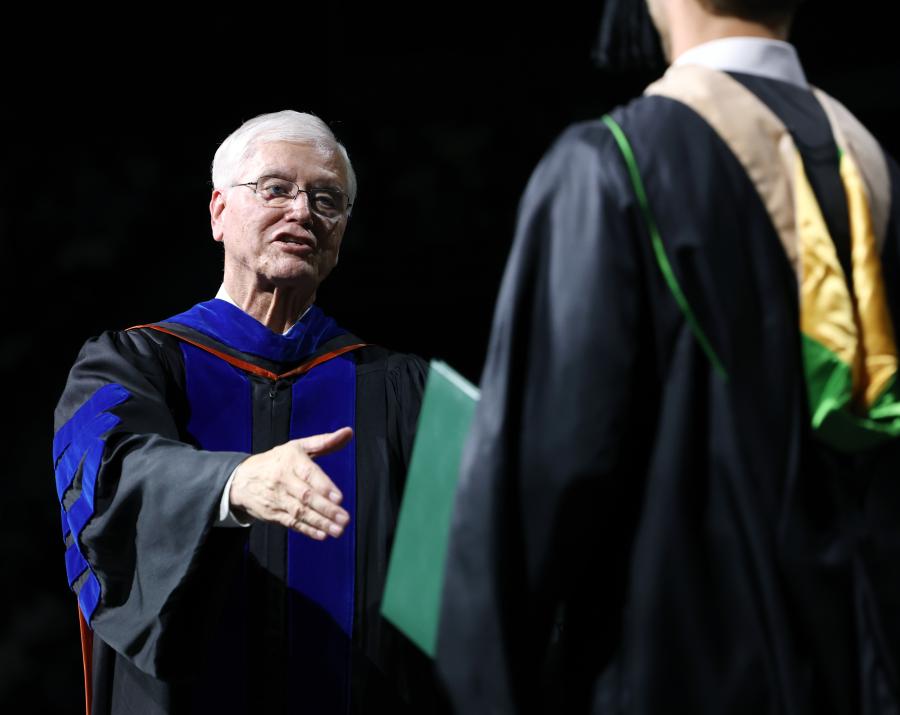
Dr. Larry Lyon, who served as a vice provost and dean of the Baylor Graduate School when the University was working toward R1 status, said that the impact the College of Arts & Sciences made was crucial to that effort.
“The degree to which Baylor’s road to R1 ran though Arts & Sciences is clear,” Lyon said. “During the years examined by the Carnegie Foundation to award us with R1 status, faculty in the College of Arts & Sciences accounted for approximately half of our total research expenditures. During that same time, the College accounted for almost three-quarters of our Ph.D. graduates. Arts & Sciences was key to our becoming an R1 university.”
Lyon said that Nordt’s leadership was another important factor in the drive toward R1.
“When Lee became dean, he was an active researcher and remained so during his tenure, which made him a role model for the faculty,” Lyon said. “He also worked with Arts & Sciences departments to hire faculty who were strong researchers, and worked with me in the Graduate School to provide them with doctoral students to support their research. It took time, but the result was a College of Arts & Sciences strong enough to carry Baylor to R1.”

A stronger core
One of the most significant academic changes made in the College of Arts & Sciences over the past two decades involved the reevaluation and transformation of the College’s core curriculum –– those common courses which all Arts & Sciences students must complete to graduate.
While the College’s core curriculum played an integral part in Baylor University’s consistent “A” ratings for its general education program from the American Council of Trustees and Alumni, the Arts & Sciences core had not been changed for many decades when Nordt initiated what would become a formal revision process.
In 2012, as a major piece of the College of Arts & Sciences strategic plan, A&Spire, Nordt appointed an A&Spire subcommittee to “strengthen the undergraduate core curriculum and deepen our excellence in the liberal arts.” He then appointed a task force to write a Vision document for the core, which was eventually unanimously approved by the A&S Council of Chairs in May 2016.
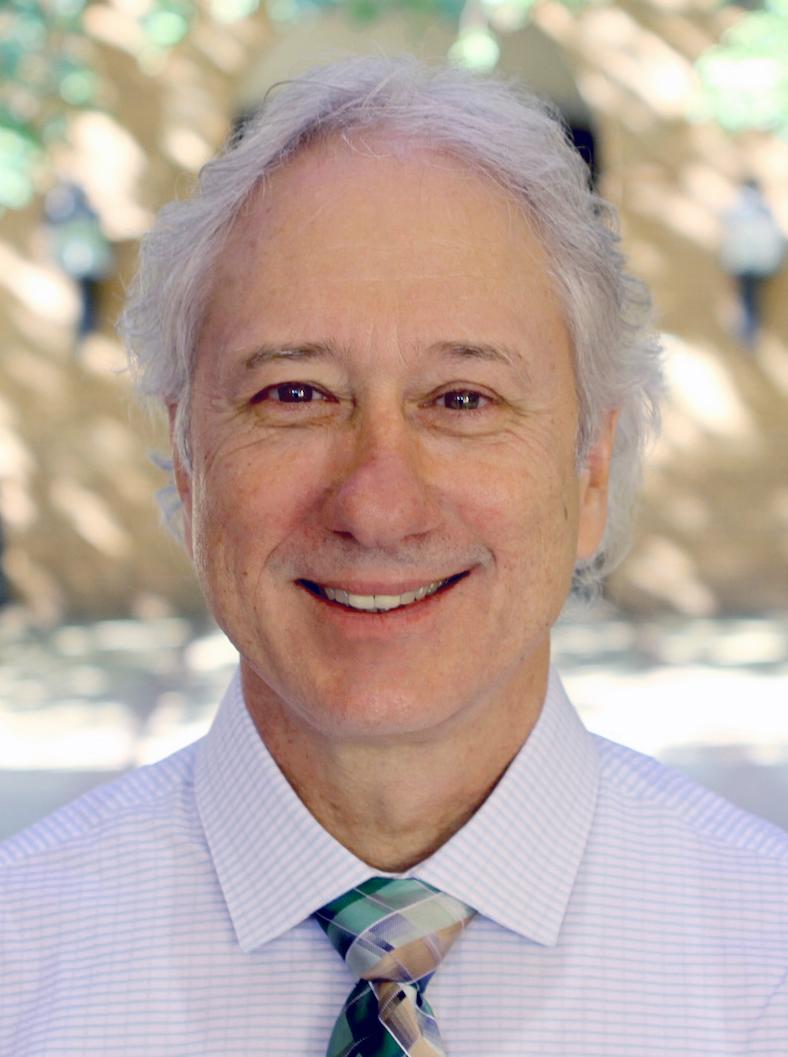
The next step was the appointment of a 40-member task force led by Dr. Blake Burleson, senior lecturer in religion and associate dean for undergraduate studies, strategic and enrollment initiatives in the College, to determine the size and content of the new core based on the Vision.
“I remain grateful to Dean Nordt and to Vice Provost Wes Null for their support, encouragement and guidance through those exciting and challenging years,” Burleson said. “There were many committees with thousands of faculty and staff hours devoted to this herculean task. The primary motive of our faculty from the beginning was to create a core curriculum that reflected Baylor’s longstanding mission of transformative undergraduate education.”
Nordt said the goal of the many committees was to address problems that had accumulated with the original core curriculum.
“The initial impetus was a practical one. Our core course requirements were among the largest in the country,” Nordt said. “Understandably, most departments wanted their courses included, and it grew so unwieldy over time that it became difficult for a student to complete both the course requirements and requirements for the major –– all within the 124 hours needed to graduate. It was no longer practical, and after all that time there really wasn’t a common theme holding it all together.”
After recommendations for a new core were received from faculty in all 25 departments in the College of Arts & Sciences, a final document was approved by the Arts & Sciences Council of Chairs in October 2017, with approval from Baylor Provost Nancy Brickhouse following soon afterward.
When the new Arts & Sciences core curriculum was launched in the Fall 2019 semester, it was –– for the first time –– a “unified” core. This meant that students pursuing each of the four degrees offered by the College of Arts & Sciences shared the same core requirements.
The new Unified Core Curriculum requires students to complete 15 hours in common requirements –– fewer hours in common than required before, but designed to be more intentional about learning outcomes. A core with fewer required hours also gives students more flexibility in choosing to pursue minors, academic certificates or even second majors in subjects that interest them.
“Over time, the other Baylor academic units have all tied into the Arts & Sciences core, so it is essentially the Baylor University core,” Nordt said. “And we are constantly evaluating it and tweaking things here and there to give our students the best liberal arts education as efficiently as possible.”
Engaged learning
A major achievement of the College of Arts & Sciences over the past two decades has been to successfully encourage and support the growth of engaged learning –– learning which takes place outside the classroom –– among students.
“As important as a traditional classroom setting is for learning the fundamentals of any discipline, students also need access to areas outside the classroom, to apply their skills in what you might call the nexus to the ‘real world,’” Nordt said. “That’s why engaged learning is critical, and many students aren’t going to come to Baylor if they don’t have the opportunity to access engaged learning programs.”
The foundation for a program of engaged learning in the College was laid by Elizabeth Vardaman, associate dean for special programs in Arts & Sciences. For 39 years at Baylor, Vardaman mentored hundreds of students from all Baylor academic divisions, helping them to apply for prestigious scholarships and fellowships, and find internship, research and study abroad opportunities.
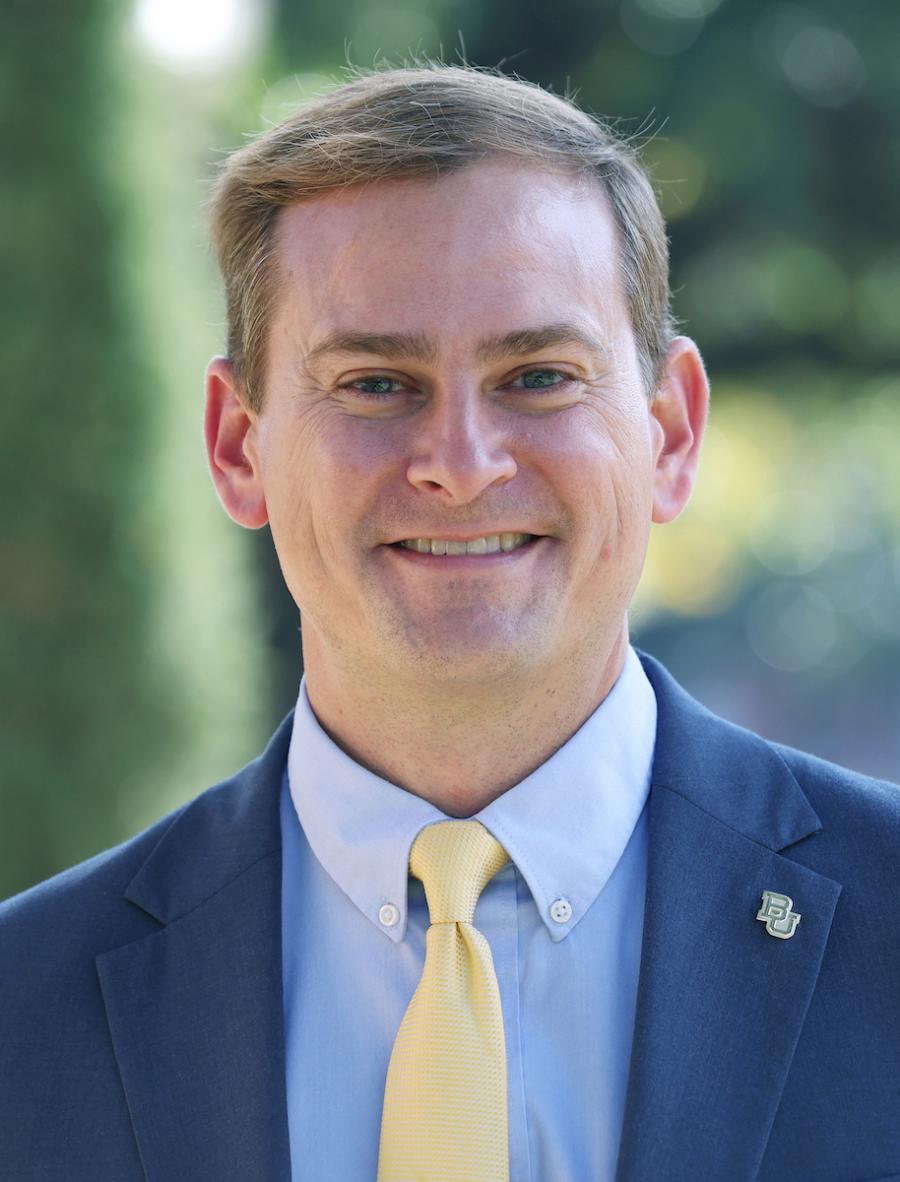
When Vardaman retired in 2019, Nordt created the Office of Engaged Learning (OEL) in the College of Arts & Sciences and appointed Dr. Andrew Hogue as the founding associate dean for engaged learning.
“Our challenge in forming the new office was –– how can we pull together things such as undergraduate research with involving our students in civic engagement with the community, as well as helping them win fellowships, internships and awards?,” Hogue said. “How can we put all those things together into something coherent?”
With the help of a support staff that has grown to more than a dozen experienced academics, the Office of Engaged Learning has significantly increased the number of students across Baylor who are plugged into engaged learning opportunities each year.
Perhaps the most dramatic results can be seen in the increase in Baylor students applying for –– and winning –– prestigious national and international scholarships and fellowships.
“As an example, in 2019 when the engaged learning office was established, 23 Baylor students applied for a Fulbright Award –– the most who had applied from here up to that time,” Hogue said. “By contrast, last year we had 104 Baylor students apply –– and 24 of those won, breaking a Baylor record. That means we had more students win a Fulbright Award last year than we had even apply for one in 2019.”
The success the OEL has had is also reflected by the fact that the Fulbright Program has recognized Baylor University as one of the nation’s elite top 10 producers of students and recent alumni selected for the Fulbright U.S. Student Program. Baylor also has maintained its position as the No. 1 Fulbright producer among Texas colleges and universities and among Big 12 institutions.
The OEL has plans to make engaged learning opportunities available to even more students each year.
“The latest Arts & Sciences strategic plan calls for all departments in the College to be invested in engaged learning activities,” Hogue said. “So, we’ll be meeting with every single department to begin the work of building even more robust portfolios of research and study abroad opportunities, as well as the number of engaged learning courses, in those departments.”
An expansion in advisement
In the summer of 2006, the College of Arts & Sciences added a significant tool to help its students navigate the academic landscape at Baylor. With the growing size and effectiveness of College of Arts & Sciences Advisement (CASA), Arts & Sciences has gained an in-house advisement unit that now helps all A&S undergraduates plan wisely for the courses and degrees that will help them graduate in a timely manner and pursue the career of their dreams.
When CASA was formed in June 2006, its three staff members worked only with Arts & Sciences sophomores, advising 1,307 of them during the academic year. By contrast, in 2025 CASA’s 20 staff members –– trained professionals from a variety of backgrounds –– advised freshmen, sophomores, juniors and seniors in Arts & Sciences, serving 4,910 students during the academic year.
“We now have the number of CASA staff members needed to advise our students using professional standards,” Nordt said. “And that’s really been a success.”
Undergraduate support
One of the academic changes introduced during Nordt’s tenure as Arts & Sciences dean was the creation of a position known as undergraduate program director (UPD). With the help of some additional funding provided by the Provost’s Office, faculty members in each of the College’s 25 departments take on the role of the UPD to help students keep on track.
“Our front line of interaction with students in the departments is really the undergraduate program director,” Nordt said. “They help the departments to get courses scheduled and meet minimum enrollment requirements, as well as make sure there are faculty available to teach the needed courses. And from the standpoint of students, they know that the UPD is the person they can go to with a variety of issues and concerns.”
Nordt said that being a UPD is not an easy job, but having them in place has proven invaluable.
“It’s been a real game changer for recruitment, for student retention, and for managing a lot of the important pieces of the departments at the undergraduate level. I’m very glad that I was able to introduce this into Arts & Sciences while I was dean,” he said.
Fundraising growth
In 2005 when Nordt became dean, all fundraising efforts at Baylor were centralized within a University development office. As years went by, development officers were assigned to each academic unit, and the change has helped the College of Arts & Sciences significantly increase its level of financial support from donors.
During Nordt’s first year as dean, he remembers that Arts & Sciences was able to raise around half a million dollars in support. Eventually, three development officers were added to work full-time raising funds for the College, and during the 2024-2025 academic year those officers raised $33 million for Arts & Sciences.
“It took us 10 to 15 years to build a network with our alumni that spans the country, made up of people who are philanthropically interested in building and keeping a relationship with their alma mater,” Nordt said. “The support we’ve received from the University in supplying us with well-trained development officers to help us build that network has been an investment that’s paid off very well.”
The College of Arts & Sciences also created a Board of Advocates during Nordt’s tenure by recruiting a rotating group of well-connected alumni with an interest in helping the College reach its goals. They act as advocates for Arts & Sciences throughout the public and private sectors, and provide financial support for College initiatives.
A bright future
Nordt said that he’s excited about Dean Brockmole’s leadership, adding that he will inherit a College of Arts & Sciences that is prepared to continue its gains over the years.
“The College has a wonderful faculty, supported by a very experienced staff of professionals, that will give Dr. Brockmole a strong foundation to build upon,” Nordt said.
Provost Brickhouse said that Nordt will leave an impressive legacy as he transitions to his new role.
“Under Dean Nordt’s leadership, the College of Arts & Sciences was the forerunner in creating a culture of research and scholarship that, in turn, led to Baylor attaining Carnegie R1 status,” Brickhouse said. “His commitment to revising the core curriculum, streamlining degree programs and providing engaged learning opportunities was central to the University achieving an all-time-high four-year graduation rate in 2025. His keen eye for talent and high expectations for performance have been fundamental in helping build Baylor’s reputation for excellence in Christian higher education.”
None of the original writing contained in this story was created with the use, in whole or in part, of artificial intelligence (AI).
ABOUT THE COLLEGE OF ARTS & SCIENCES AT BAYLOR UNIVERSITY
The College of Arts & Sciences is Baylor University’s largest academic division, consisting of the School of Earth and Environmental Sciences and 24 academic departments in the sciences, humanities, fine arts and social sciences, as well as 12 academic centers and institutes. The more than 5,000 courses taught in the College span topics from art and theatre to religion, philosophy, sociology and the natural sciences. The College’s undergraduate Unified Core Curriculum, which routinely receives top grades in national assessments, emphasizes a liberal education characterized by critical thinking, communication, civic engagement and Christian commitment. Arts & Sciences faculty conduct research around the world, and research on the undergraduate and graduate level is prevalent throughout all disciplines. Visit the College of Arts & Sciences website.