

Streams of Innovation
Baylor’s CRASR center is supporting research to protect and enhance water resources in Texas and beyond
Water is an essential component of any thriving ecosystem. In the Baylor University College of Arts & Sciences, a highly regarded research center is paving the way for helping our community to understand, conserve and sustain this God-given resource.
CRASR’s beginnings
The Center for Reservoir and Aquatic Systems Research (CRASR) has been a part of the College since the early 2000s, yet many people are not yet familiar with its history, purpose and operations.
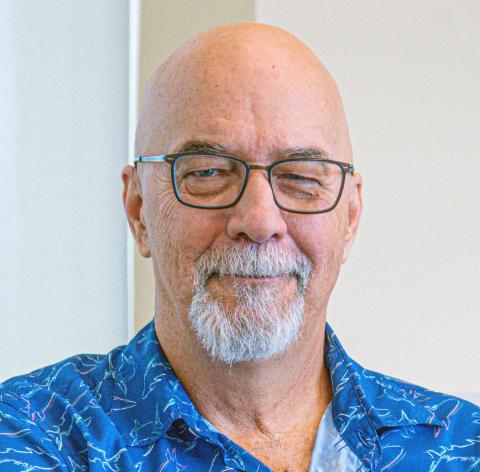
Dr. Robert Doyle, professor of biology and the founding director of CRASR, came to Baylor as a freshman in 1976 and said that couldn’t have been a better decision.
“My parents were Baptist missionaries, and ironically, Baylor was one place they didn’t urge me to go to,” he said. “But I came anyway, and it changed my life.”
Doyle completed his undergraduate and master’s degrees at Baylor under the direction of Dr. Owen Lind, a highly esteemed scientist and now an emeritus professor of biology. Though he left Baylor to earn his Ph.D. in environmental science, Doyle returned in 2001 to join the faculty. His return ignited a conversation that would give birth to the CRASR we know today.
“A close friend of mine, Tom Conry, was at the City of Waco at the time. He and I got to talking and we said, ‘We should form a joint center between Baylor and the City of Waco,” Doyle said.
That shared vision led to the start of CRASR in 2003 — creating a collaborative hub where Baylor researchers from all backgrounds could engage in high-impact, cross-disciplinary work. For students, faculty, and staff alike, it has served as a foundation and booster for their aquatic research pursuits.
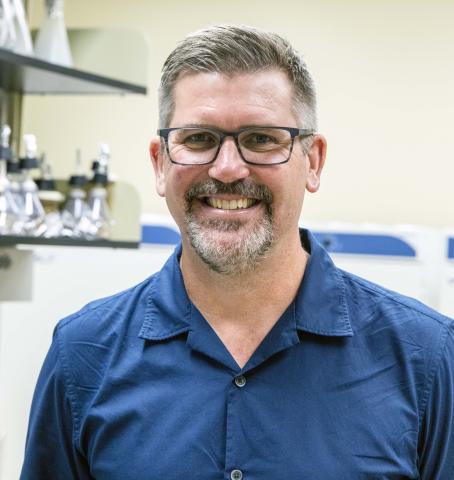
“CRASR is an interdisciplinary water research institute, so we bring together multiple disciplines — primarily geosciences, biology and environmental science, but also increasingly statistics, computer science and the humanities,” said Dr. Thad Scott, a professor of biology who is CRASR’s current director. “Environmental science at Baylor is very strong in ecotoxicology and chemistry, while geosciences will focus primarily on groundwater and surface water hydrology, while biology is largely centered on ecosystem ecology.”

Environmental challenges
The Center’s research also aims at uncovering and addressing some of the environment’s greatest challenges, many of which can be magnified in the unique landscape of the Lone Star State.
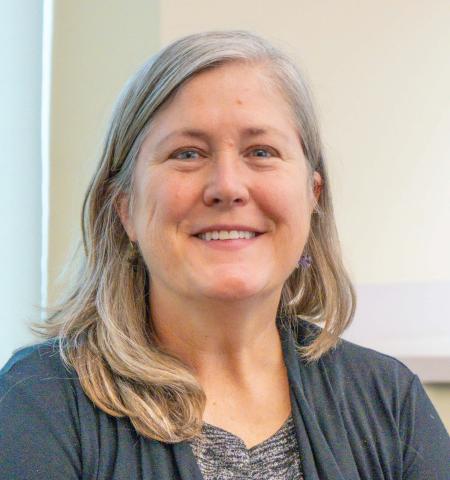
“Texas presents unique water management challenges — from a dramatic rainfall gradient east to west to explosive population growth along the Interstate 35 corridor,” said Melissa Mullins, an associate research analyst at CRASR who serves as its environmental education and outreach coordinator. “In Waco, we’re right in the middle of all of it. Planning for water quantity and quality is critical for our future.”
“Texas presents unique water management challenges...Planning for water quantity and quality is critical for our future.”
--Melissa Mullins
Baylor’s proximity to large bodies of water such as the Brazos River and Lake Waco provides researchers with direct access to diverse, high-quality aquatic environments — right in their own backyard.
“We have this incredible intersection of major aquatic resources here in Central Texas,” Scott said. “Plus, Waco sits right along the I-35 corridor, which divides the drier western half of Texas from the wetter eastern half. The Brazos River itself flows from dry to wet regions, making this area a perfect natural laboratory for studying changes in water systems.”
Community impact
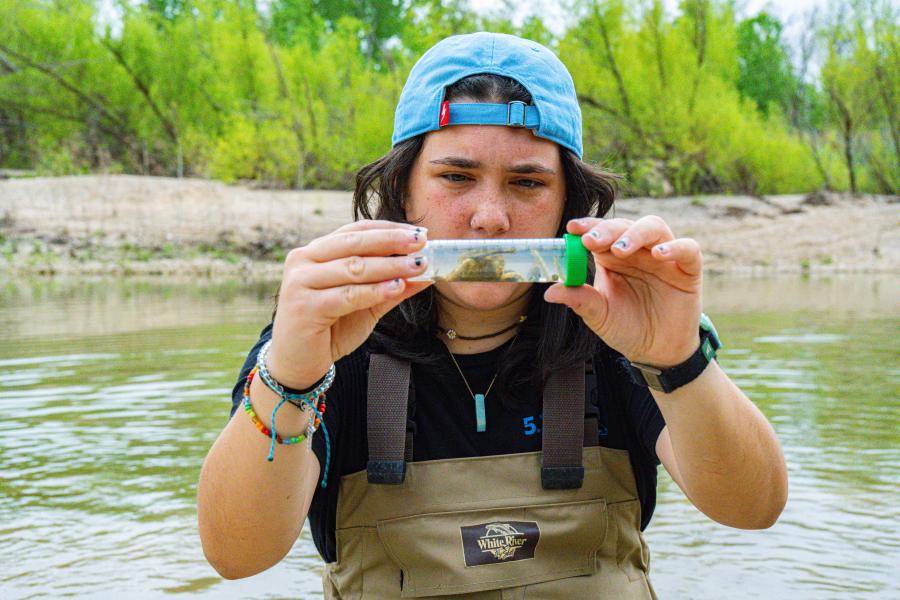
In addition to CRASR’s research efforts, the greater Waco community benefits from CRASR’s presence. The Center has designed key initiatives to help engage and instruct the next generation. CRASR offers educational programs and outreach opportunities throughout the academic year so students at the K-12 level can “get their feet wet” in aquatic science.
“Water education is the heart of what I do,” Mullins said. “Everyone knows water is important, but when I interact with people, I ask — do you know where your water comes from? Do you know where it goes after it leaves your home? Everyone lives in a watershed, and understanding that connection is crucial.”
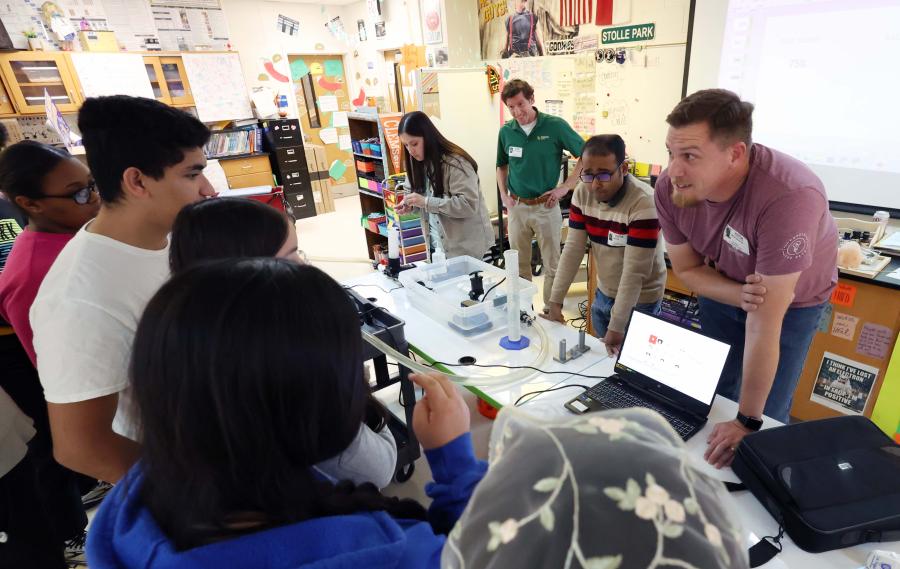
Mullins’s role helps to foster partnerships with local organizations such as Keep Waco Beautiful to help everyday citizens take the plunge and help keep the Brazos River and other bodies of water as clean as possible. Another key contributor to this effort, Baylor’s Mayborn Museum, partners with CRASR for educational events each year including the museum’s “Meet the Scientist” and “Sic ‘em Science Day” programs.
Beyond being a source of environmental research, CRASR provides a vital platform to encourage evidence-based decision-making. Its work helps inform public policymakers and advocates with reliable data that can drive environmental protections and change.
Enhancing the research profile
As a result, CRASR has become instrumental in Baylor University’s long-term vision to achieve R1 status. That vision, once viewed as an improbability, came to fruition in December 2021 following years of strategic planning and dedication to the University’s mission.
“When I came back in 2001, Baylor was just starting to imagine a future with high-level research and graduate education,” Doyle said. “Back then, we only said ‘Tier One’ behind closed doors. I laughed when I first heard it, thinking it could never happen in my lifetime — but I was willing to invest my career trying to help make it real. But through strategic investments like building the Baylor Sciences Building and focusing on recruiting excellent faculty, we made it happen much faster than I ever expected.”
Doyle said attracting strong graduate students to campus was a concern during the early days of this effort.
“Why would top students come to a place still building its research reputation? But good faculty attract good students, and that made all the difference,” he said.
"Through strategic investments like building the Baylor Sciences Building and focusing on recruiting excellent faculty, we made [achieving R1 status] happen much faster than I ever expected.”
--Dr. Robert Doyle
Student support
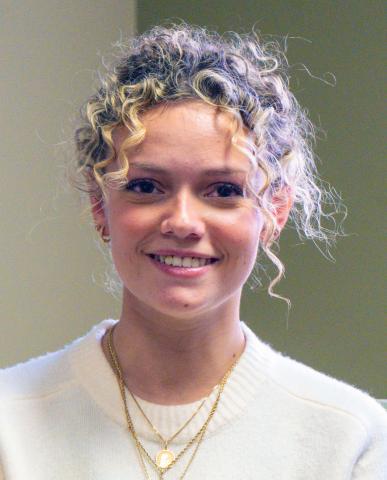
Over time, great graduate students have made their way to Waco. Their consistent success, along with growing interest in the College of Arts & Sciences, played a major role in Baylor being recognized by the Carnegie Classification of Institutions of Higher Education as an R1 research institution.
“CRASR has given me so many opportunities, both lab-based and out in the field — and that’s not something you find everywhere, especially as an undergraduate,” said biology graduate student Sara Coppellotti. “Baylor’s R1 status means we have amazing funding for research, which really opens doors for students like me.”
Faculty members such as Dr. Cole Matson, associate professor of environmental science and the department’s graduate program director, have invited several students over the past few years to join the University’s research efforts around the globe. One standout location is the Galapagos Islands, a marquee destination for biologists and the site of Baylor’s annual research trips.
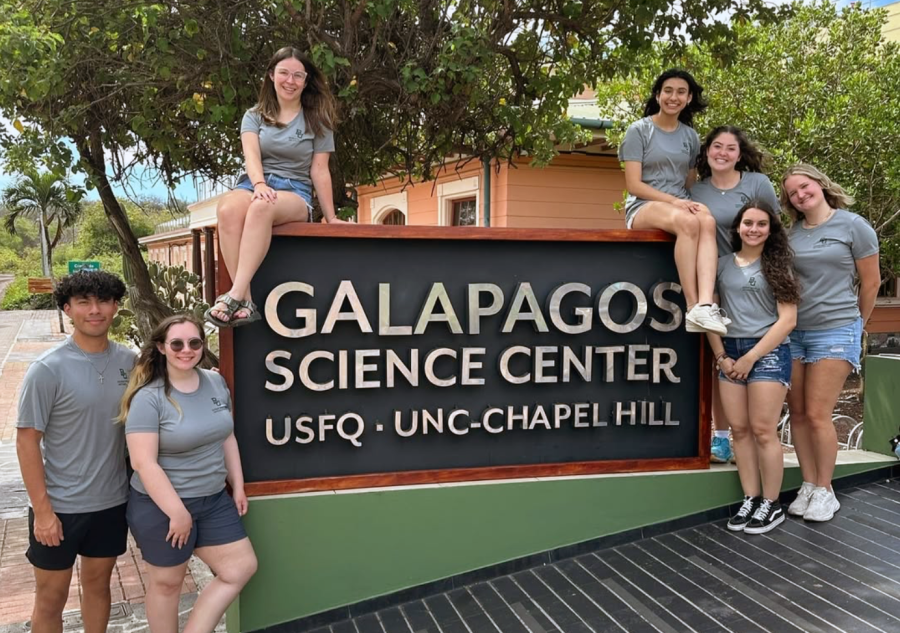
Two former participants in the Galapagos research — Cadance Swearingen, who received a B.S. degree in environmental science in May 2025, and Kendall Greer, a current graduate student — have nothing but glowing endorsements for the program.
“The Galapagos trip was unforgettable –– such a historic place for biology and evolution,” Greer said. “Every day, I’m still grateful that I had the chance to go.”
“One thing I love about Baylor’s environmental science department is how well-rounded it makes you,” Swearingen said. “You get hands-on experience in areas such as water quality, toxicology and molecular biology. It’s not just academic — it shapes you into a better person.”
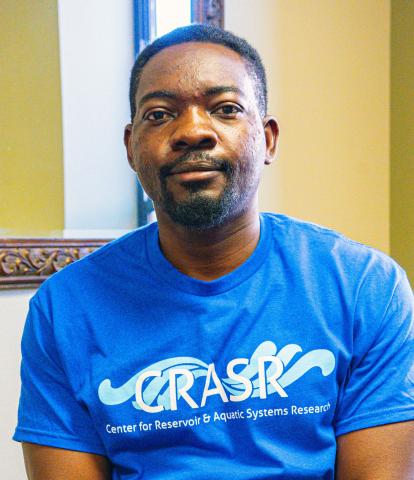
CRASR and its affiliated faculty members also make an impact in attracting high-achieving international students to campus. For example, Richardson Egyirifa, a current doctoral candidate in biology and a native of Accra, Ghana, was impacted by the University’s outreach efforts. He discovered what Baylor has to offer when he attended the Gordon Research Conference in Houston and heard presentations from Baylor faculty.
“I think CRASR has done an excellent job in fostering interdisciplinary collaboration,” Egyirifa said. “The diversity of people attending its events — from geosciences, environmental science and other departments — gives a broad perspective beyond my immediate research area and helps encourage future collaboration.”
As CRASR prepares for a bright future, its mission remains the same –– to inspire others to help our planet’s aquatic systems thrive and prosper, both in Waco and beyond.
“We’re not going to save the environment from the top down — it’s going to happen from the bottom up,” Doyle said. “Through outreach, education and inspiring young people, we can create lasting change.”
This article originally appeared in the Fall 2025 issue of Baylor Arts & Sciences magazine. An accompanying video feature on CRASR can be viewed here on the Arts & Sciences YouTube page.
ABOUT THE COLLEGE OF ARTS & SCIENCES AT BAYLOR UNIVERSITY
The College of Arts & Sciences is Baylor University’s largest academic division, consisting of 25 academic departments in the sciences, humanities, fine arts and social sciences, as well as 11 academic centers and institutes. The more than 5,000 courses taught in the College span topics from art and theatre to religion, philosophy, sociology and the natural sciences. The College’s undergraduate Unified Core Curriculum, which routinely receives top grades in national assessments, emphasizes a liberal education characterized by critical thinking, communication, civic engagement and Christian commitment. Arts & Sciences faculty conduct research around the world, and research on the undergraduate and graduate level is prevalent throughout all disciplines. Visit the College of Arts & Sciences website.