

Baylor Philosopher Honored for Excellence in Teaching and Scholarship
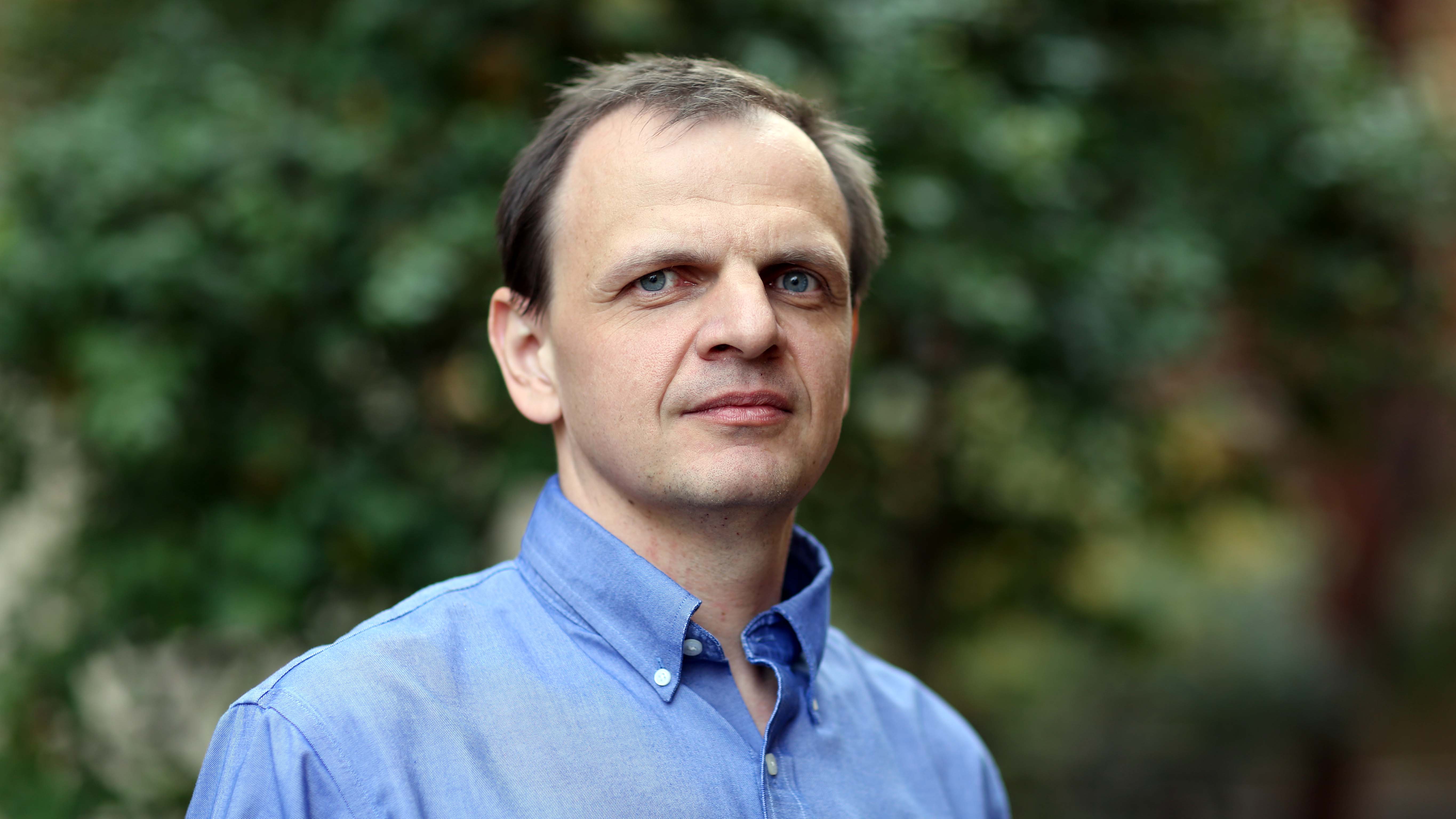
Dr. Alexander Pruss (Baylor University photo)
Alexander Pruss, Ph.D., professor and graduate program director in the Department of Philosophy in the Baylor University College of Arts & Sciences, is the recipient of the Aquinas Medal for 2025 from the American Catholic Philosophical Association (ACPA). The award, named for the 13th century Italian Dominican friar, priest and influential philosopher Thomas Aquinas, was first presented in 1951.
The Aquinas Medal, which is voted on by members of the ACPA executive committee, is presented to candidates affiliated with “outstanding teaching, personal publications of permanent and scholarly value, (and) influence upon American philosophical thought.” Previous recipients have included American philosopher and educator Mortimer J. Adler and Karol Wojtyla, the Polish priest who went on to become Pope John Paul II.
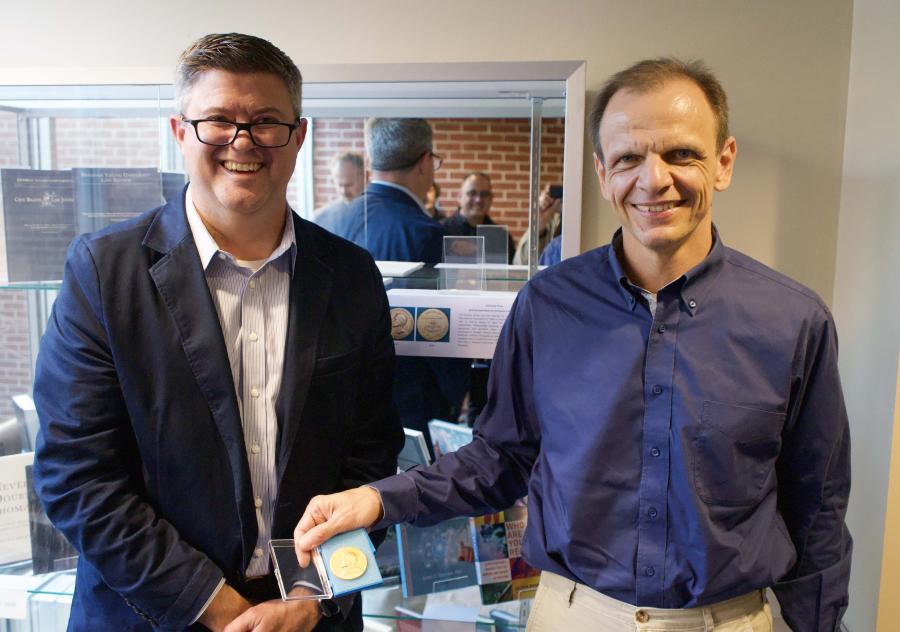
At the ACPA ceremony where Dr. Pruss received his award, he was lauded by Daniel Johnson, Ph.D., professor of philosophy at Shawnee State University and one of Pruss's former doctoral students.
“In my view, [Dr. Pruss] stands out among contemporary philosophers as the most creative and brilliant defender of the arguments for the existence of God,” Johnson said.
Todd Buras, Ph.D., chair and associate professor of philosophy, said Pruss deserves the Aquinas Medal because he is a Catholic philosopher whose cumulative record reflects a legacy of excellence.
"Dr. Pruss’s work has met a high standard across a remarkable range of topics in the discipline, from applied ethics to the philosophy of religion, and the most formal and speculative subfields,” Buras said.
Pruss earned both a Ph.D. in mathematics from the University of British Columbia in 1996 and a Ph.D. in philosophy from the University of Pittsburgh in 2001. He joined the Baylor faculty in 2007 after teaching philosophy for six years at Georgetown University. He won Baylor University’s Outstanding Research Award for tenured faculty in 2013, and his most recent courses taught at Baylor cover subjects including metaphysics, logic, and contemporary Aristotelian philosophy.
In 2019, Pruss was invited to give the highly regarded Wilde Lectures at Oxford University, and chose to deliver a series of five lectures on “God, Human Nature and Mathematics.”
Buras said that having his colleague win the Aquinas Medal puts both Pruss and Baylor University in elite company.
“Dr. Pruss has joined the list of Aquinas Medal recipients that is a veritable Who’s Who of 75 years of Christian thought across the world,” Buras said. “At the same time, having a Baylor philosopher win the highest honor from the ACPA helps show how far we have come toward our goal of building a top-tier Christian research university. It is a reminder as well of the capaciousness of our project at Baylor. Not only is there room for the contributions of scholars from a wide range of Christian traditions, but the broad base of Christian scholars gathered here at Baylor is essential to our success."
ABOUT THE COLLEGE OF ARTS & SCIENCES AT BAYLOR UNIVERSITY
The College of Arts & Sciences is Baylor University’s largest academic division, consisting of 25 academic departments in the sciences, humanities, fine arts and social sciences, as well as 11 academic centers and institutes. The more than 5,000 courses taught in the College span topics from art and theatre to religion, philosophy, sociology and the natural sciences. The College’s undergraduate Unified Core Curriculum, which routinely receives top grades in national assessments, emphasizes a liberal education characterized by critical thinking, communication, civic engagement and Christian commitment. Arts & Sciences faculty conduct research around the world, and research on the undergraduate and graduate level is prevalent throughout all disciplines. Visit the College of Arts & Sciences website.