

These Bears Keep Rolling Along
Baylor’s Army ROTC unit is growing in both size and influence
Like the U.S. Army that “keeps rolling along” in the words of its official song, Baylor’s Army ROTC program is marching into a new era with an enhanced status and new leadership.
Established in 2011 with a handful of cadets, the Baylor Army ROTC program –– known as the Bear Battalion –– was originally an extension of the “host” Army ROTC program at Texas Christian University in Fort Worth. But no longer. With steady growth and an annual average of 80 cadets, Baylor’s Army ROTC has now been upgraded to its own host program, with a lieutenant colonel and professor of military science present on campus.
“This new relationship builds on the foundation of excellence built by previous ROTC leaders and cadets, and we are excited about even greater possibilities for student success under this new structure under the command of Lt. Col. Kyle Friesen,” said Dr. Charles Weaver, associate dean for sciences in the College of Arts & Sciences. The Army ROTC program is a department within Arts & Sciences, with Weaver as its academic supervisor.
“The Army ROTC program plays an important role in the life of Baylor University, and we are proud to contribute to the cadets’ academic and professional growth,” he said. “Our hope and expectation is that the new Baylor-Army agreement is just the beginning to an exciting new chapter in our ongoing relationship.”
Weaver said that under its new host status, Baylor’s Army ROTC program will now oversee the extension Army ROTC program at the University of Mary Hardin-Baylor in Belton, Texas.
Dedicated leadership
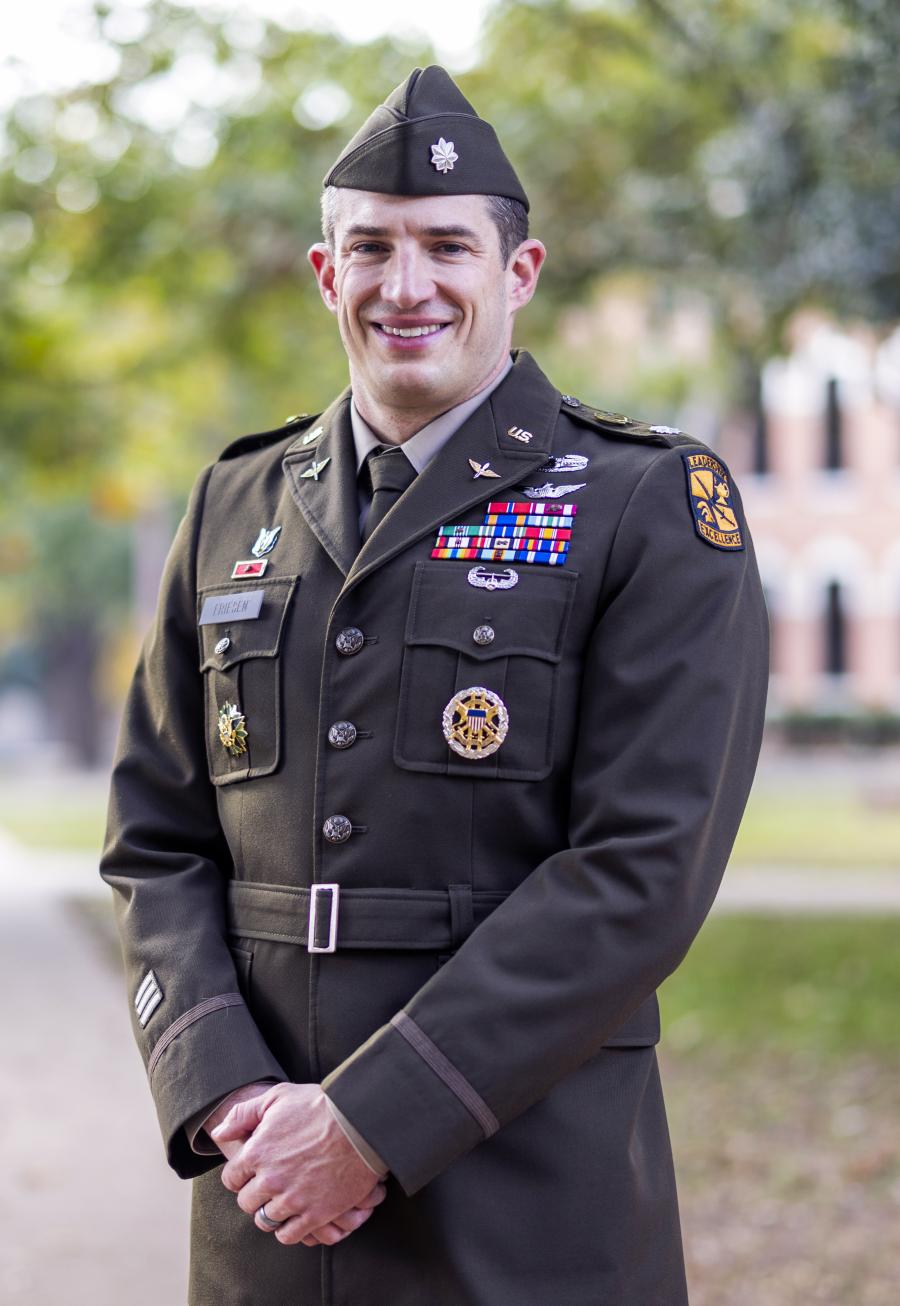
Lt. Col. Friesen, who came to Baylor in the summer of 2025, said his role as the Bear Battalion’s first professor of military science will be to provide fulltime, on-campus leadership and continue the transition, which includes filling cadre (faculty and staff) positions up to around nine persons.
“What that allows us to do is continue focusing efforts on the cadet leader development experience while generating recruiting and retention initiatives at the local, regional and national level,” he said. “The cadets will experience leader development engagement and support from a full cadre and staff team resident within the Baylor Army ROTC program.”
Friesen said the decision by the Army’s national cadet command to make the Bear Battalion a host was based on a five-year evaluation in which the program exceeded annual goals for sustained growth in number of cadets and commissioning of second lieutenants.
“Over the last 14 years, the Baylor program has grown through the success of supporting cadre and cadet participation to produce leaders of character, fully prepared to serve and commission as second lieutenants into the U.S. Army,” Friesen said. “Our cadre team of professionals are dedicated to continuing to build upon that foundation to carry the mission forward for our cadets.”
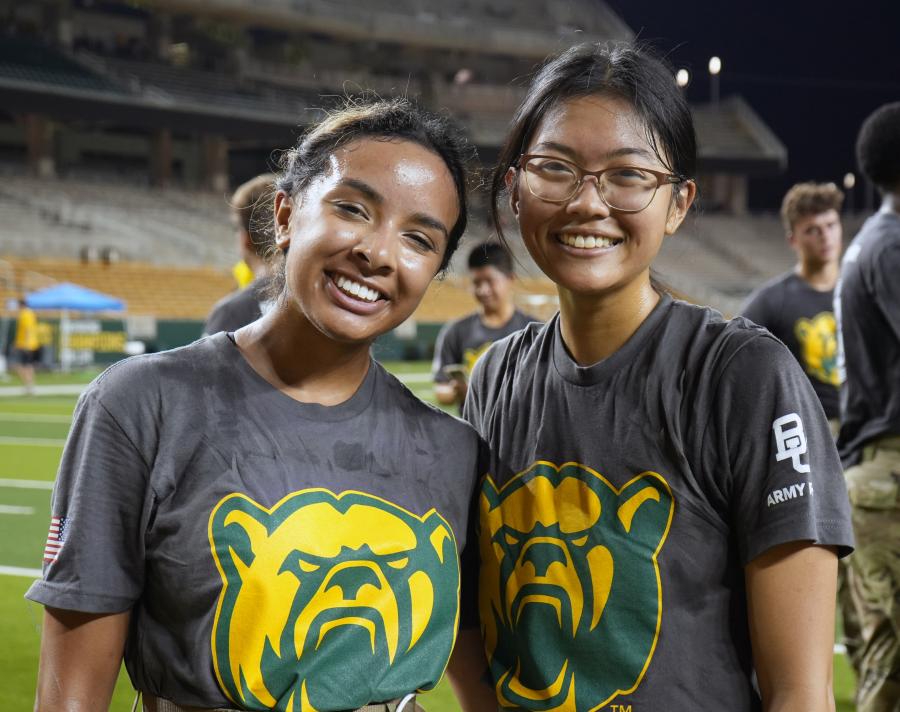
Friesen said current seniors and juniors who have been cadets three to four years have played an important role in the battalion achieving the host status.
“Our program is a cadet-led organization with dedicated cadre providing support to our cadets’ leader development experience while ensuring they are successful in meeting commissioning requirements,” he said. “Our cadets are often our best recruiters, and they have done a fantastic job building a program that is collaborative, cohesive and welcoming. Our cadets are extremely motivated by service to a cause greater than their own and to their country. They’ve done a great job of messaging Army officer service opportunities and developing a positive team environment for students who have an interest to serve in that capacity.”
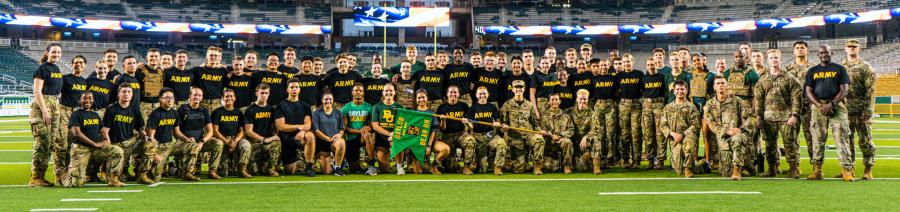
Mission-driven
Friesen said the mission of the Army ROTC to build servant leadership and leaders of character is well-matched with Baylor’s foundation and the University’s Christian mission as expressed in the “Baylor in Deeds” strategic plan.
“We are very much aligned when it comes to service to a greater cause,” he said. “I believe the Baylor culture naturally aligns with our Army ROTC service culture and goal of building leaders of character. The Baylor University community is very supportive of our Army ROTC partnership program to recruit, retain, develop and commission fully capable officers.”
Friesen came to Baylor from a six-year assignment at Fort Bliss in El Paso where he served as executive officer of the First Armored Division’s Combat Aviation Brigade and as air operations officer for a Joint Task Force. Trained as a pilot of AH-64D Apache helicopters, he has held leadership positions in both combat and garrison environments, including aviation operations during a European deployment in 2022-2023.
Friesen knows well the ROTC cadet life, having served as an assistant professor of military science instructor at the University of Maryland’s Army ROTC, and as a cadet himself in the Army ROTC at the University of Arkansas where he was commissioned as an officer in 2007.
“The four years I was a cadet were formative for me, and I was blessed to have incredible cadre members who invested time and energy into my development as a leader,” he said. “For me, this is a fantastic opportunity to continue paying it forward to the next generation of leaders.”
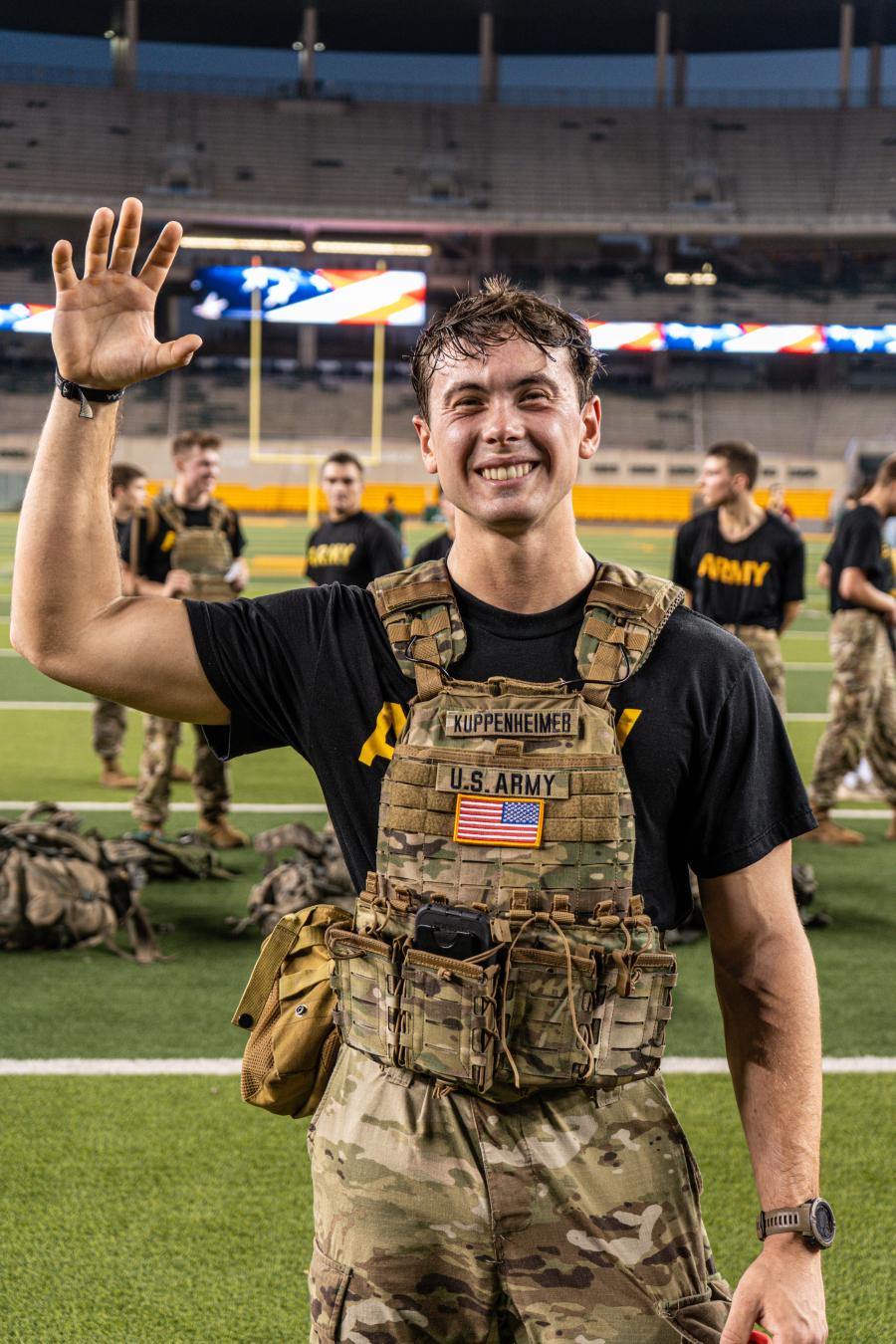
Friesen said Baylor’s Army ROTC program is still college-first, and the cadet experience benefits students in that regard in addition to preparing them for military service.
“A lot of what we teach from a leadership and team management standpoint is about personal ownership, taking the initiative, being part of the team, setting priorities and managing time appropriately,” he said. “For freshmen and sophomores just coming into the program, the structure provides organization for their daily student life and an opportunity to be part of a cadet community oriented around a common goal. This often leads to positive lifelong friendships and social peer networks that carry into their military service.”
Cadet leadership
Walking across campus in her OCP (camouflage) uniform on a Thursday, senior Ainslie Stewart has been up and going since 5 a.m. for physical training, military science lab and training exercises. In the ROTC program four years and now cadet battalion commander, she has firsthand knowledge of the benefits of the Bear Battalion’s new host designation.
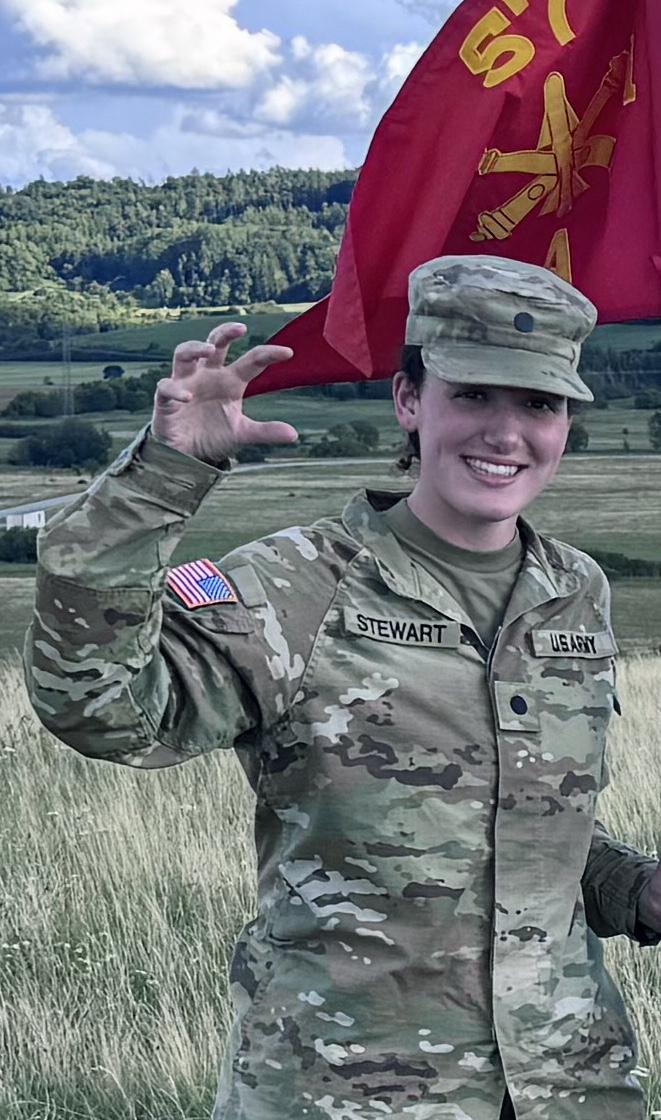
“It’s been awesome to see how having a consistent cadre and faculty within the program –– here on a daily basis –– which has contributed to the overall betterment and development of the program,” she said. “The fact we’re now a host program allows Baylor to expand our reach and allow our cadets to have awesome opportunities.”
Stewart comes from a military family and knew in high school she’d join the Army ROTC as a college freshman.
“It seemed like a very natural choice,” she said. “It pays for school. I automatically have a career. I get some awesome opportunities. I get to tie into a great group of people. It just made a lot of sense for me.”
Majoring in international studies with a minor in Chinese language, Stewart is considering a career as a foreign affairs officer, which would require several years in an Army language school before being assigned as a military attaché or advisor working with foreign military or government partners.
“I really hope to utilize my cross-cultural competencies and the language skills I’ve learned through my major in my career with the Army,” she said.
The “awesome opportunities” Stewart mentioned have included summer internships in Taipei, Taiwan, for language and cultural immersion, and in Grafenwohr, Germany, with a U.S. Army field artillery unit where she learned how the military works abroad.
Stewart said she chose Baylor over West Point or colleges with larger Army ROTC programs because she wanted a normal college experience alongside cadet life.
“In our ROTC program they emphasize you’re a student before you’re a cadet, and I found that really important,” she said. “I didn’t want to leave college and feel like I didn’t learn anything else except how to be an officer. I wanted also to learn how to be a person and learn how to be a friend, learn how to be a student, and learn all these different life skills that you don’t necessarily get at other programs.”
Stewart said she has learned much about leadership in her role as battalion commander.
“I think the hardest form of leadership is leading your peers, and that’s what ROTC is all about,” she said. “That gives all of us a really interesting leg up because we’re able to communicate and be respectful with people who we’re friends with outside the program. It also allows us to contribute to the betterment of each other.”
The Bear Battalion Army ROTC program is housed in offices at Speight Plaza Parking Garage next door to the Air and Space Force ROTC offices, a proximity Friesen said is helpful as they plan activities and events together. Those shared events include joint color guards, physical fitness events, and the annual 9/11 Memorial Stair Climb at McLane Stadium, which in 2025 had more than 600 participants.
“That’s a great joint event with the Air Force where we plan and coordinate our cadet leadership with their cadet leadership,” he said.
Friesen said he has seen and appreciates the dozens of lamppost memorial plaques on campus honoring Baylor students killed in action in wars and conflicts across the years.
“Seeing things like that reinforces the support the Baylor community and leadership has for those that have dedicated their life as service members as well as their families,” he said. “It’s encouraging for me and our cadre members to come into an environment that is very supportive of military service and celebrates and highlights that.”
(Kyle Friesen photo courtesy of Matthew Minard/Baylor University. All other photos courtesy of Christian Clark/Baylor University)
ABOUT THE COLLEGE OF ARTS & SCIENCES AT BAYLOR UNIVERSITY
The College of Arts & Sciences is Baylor University’s largest academic division, consisting of 25 academic departments in the sciences, humanities, fine arts and social sciences, as well as 11 academic centers and institutes. The more than 5,000 courses taught in the College span topics from art and theatre to religion, philosophy, sociology and the natural sciences. The College’s undergraduate Unified Core Curriculum, which routinely receives top grades in national assessments, emphasizes a liberal education characterized by critical thinking, communication, civic engagement and Christian commitment. Arts & Sciences faculty conduct research around the world, and research on the undergraduate and graduate level is prevalent throughout all disciplines. Visit the College of Arts & Sciences website.