

Seeking the Common Good
The new engaged learning requirement in the Arts & Sciences Core Curriculum is encouraging Baylor students to serve their communities
When the Core Curriculum in the Baylor University College of Arts & Sciences was revised in 2019, an adjustment was made that has been bearing considerable fruit ever since. A provision was added requiring students to take at least one engaged learning course to graduate –– allowing them to explore their gifts and talents by using them to serve their communities.

“I used to believe I understood what it meant to be a servant to others until I took Learning for the World with Dr. Jennifer Good,” said Lily Ward, a junior political science major with an interest in international studies. “That course provided a space to further explore my views on people, vocation and ethics through stimulating discussion, opportunities to serve the community, and mentorship that extended beyond the classroom.”
Learning for the World is just one of nearly 50 courses that satisfy the new Arts & Sciences engaged learning requirement. The applicable courses are part of the Engaged Learning Distribution List (ELDL), and each course asks students to think of what they learn as something not only for their benefit, but to better the world and provide for the common good.
Engaged learning

Engaged learning is an educational model that encourages students to think of their education as “for the welfare of the city,” and to embody that posture while in Waco and carry it with them into the world after they graduate. The Office of Engaged Learning (OEL) in the College of Arts & Sciences, founded in 2019, defines engaged learning as “learning that is active, experiential, often unscripted, and oriented toward the common good, allowing students to discover and apply knowledge in spaces beyond the traditional classroom.”
Andrew Hogue, Ph.D., associate dean for engaged learning in the College, said that during the revision of the Core in 2019, the requirement that students take part in engaged learning was “the one universally, uniformly and unanimously adopted part.” One reason for that support might be that the courses students can choose from in the ELDL are not centered in only a few departments, but are taught by faculty from across Arts & Sciences.
To help roll out the new requirement and keep it on track, two strategic additions were made to the OEL. Rebecca Flavin, Ph.D., a senior lecturer in political science, was appointed as director of engaged learning curriculum in Arts & Sciences, leading the faculty and curriculum side of engaged learning. Molly Simpson, assistant director for service and an associate chaplain in Baylor’s Office of Spiritual Life, helps build and nurture the ethical local partnerships through the OEL so students will have places to serve in the community.
Enthusiastic faculty
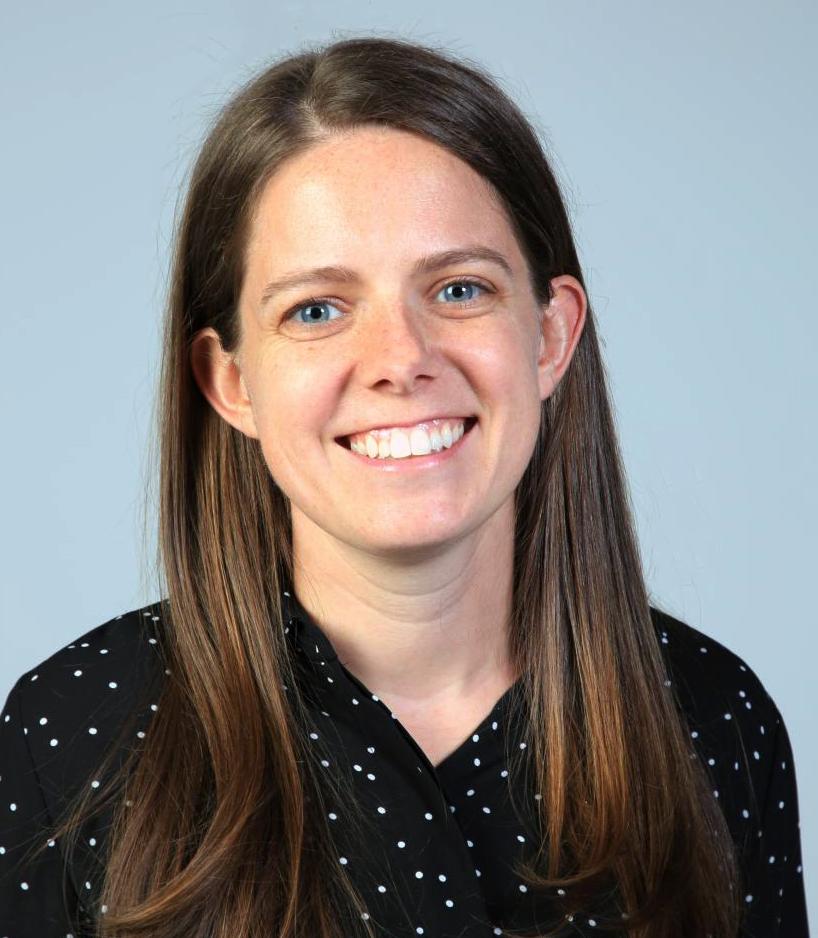
Hogue said that while there was much faculty interest and excitement around creating courses that could be added to the ELDL, Baylor faculty are not typically trained in how to create courses that embody engaged learning principles. Annie Ginty, Ph.D., associate professor of psychology and neuroscience, has long been involved with engaged learning at Baylor and said it’s important that faculty are trained in courses that embody it.
“My upper-level Behavioral Medicine course, which I’ve been teaching since 2018, took several rounds of development to really evolve the effectiveness of the engaged student experience,” Ginty said.
Today, Ginty’s course features vibrant engaged learning partnerships between her students and six different nonprofit partners locally and around the world.
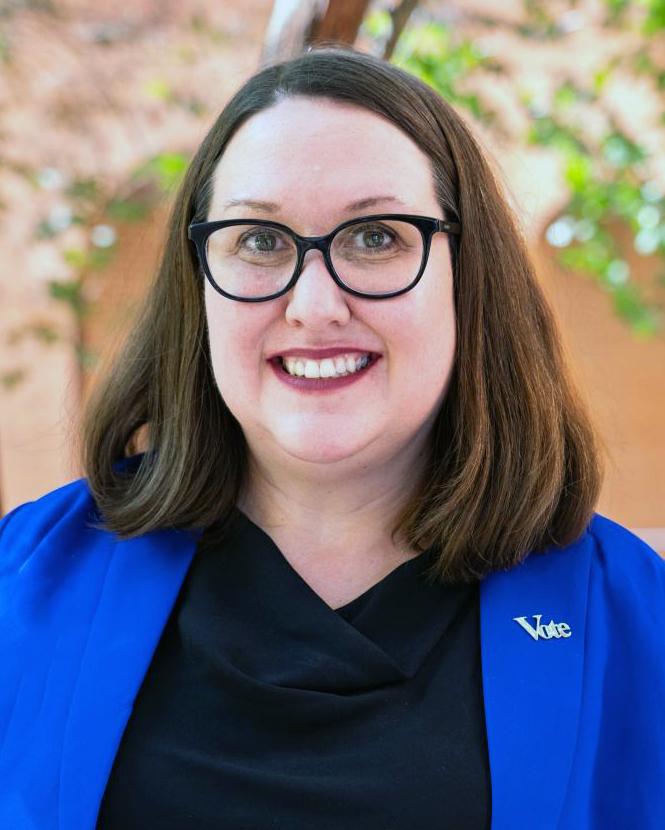
Flavin, who helps steward curricular development across departments, helps train and equip new ELDL instructors to maximize student experience. She said the new requirement allows students to choose from courses that can count toward their major or minor, or even toward “study abroad, such as with the Baylor in Washington program, or through an internship.”
Flavin is committed to combating some stereotypes which exist about engaged learning.
“I think there’s a presumption that civic engagement equals political engagement, and that’s certainly not true. The shift to calling it engaged learning elevates what was already true, which is that civic engagement isn’t the property of any one department or any one discipline,” she said. “This core requirement makes it possible for all disciplines to think about the work they’re doing and how that can be oriented to the world beyond Baylor.”
Community partnerships
The world beyond Baylor is where Simpson comes in. In her position as assistant director for service, she finds and fosters the community groups which partner with the OEL and acts as a liaison between the two. These groups include partners as diverse as Waco Family Medicine, Urban REAP (Mission Waco’s Renewable Energy and Agricultural Project), the World Hunger Relief Farm, and La Puerta Waco, a nonprofit which provides education and other services for the Spanish-speaking community.

“One of the joys of engaged learning comes from working with community partners to identify needs that they invite Baylor students and faculty to address,” Simpson said. “Our community partners are incredible sources of wisdom and experience, and our students benefit tremendously when they have an opportunity to learn from them. We seek to build partnerships that fit the model of ‘Fair Trade Learning,’ valuing mutuality and reciprocity while contributing to the common good.”
The Fair Trade Learning model is a framework that cultivates partnerships which are just, transparent and mutually beneficial. In her role, Simpson asks, “How can Waco benefit from Baylor’s resources, rather than Baylor profiting off of Waco’s resources?”
Student benefits

The impact this model has upon students is profound. Dalton Meeker, a junior international studies major who has taken three engaged learning courses, said that they have taught him that “relationships do not occur in a vacuum.” He feels grateful for the ways the courses on the ELDL required him to wrestle with “important issues, such as logical analysis, multiculturalism and civic debate, which is a cornerstone to accomplishing any sort of problem that may lay before us.”
In the fall of 2025, Meeker took a course where students crafted a community project that builds a “day in the life of a Baylor student” to provide knowledge about higher education to local middle schoolers at underserved and underfunded public schools. Meeker said the course would give these students the opportunity to come to campus, “walk the grounds, eat in the dining halls and sit in on lectures to experience what it is truly like to be a student.”
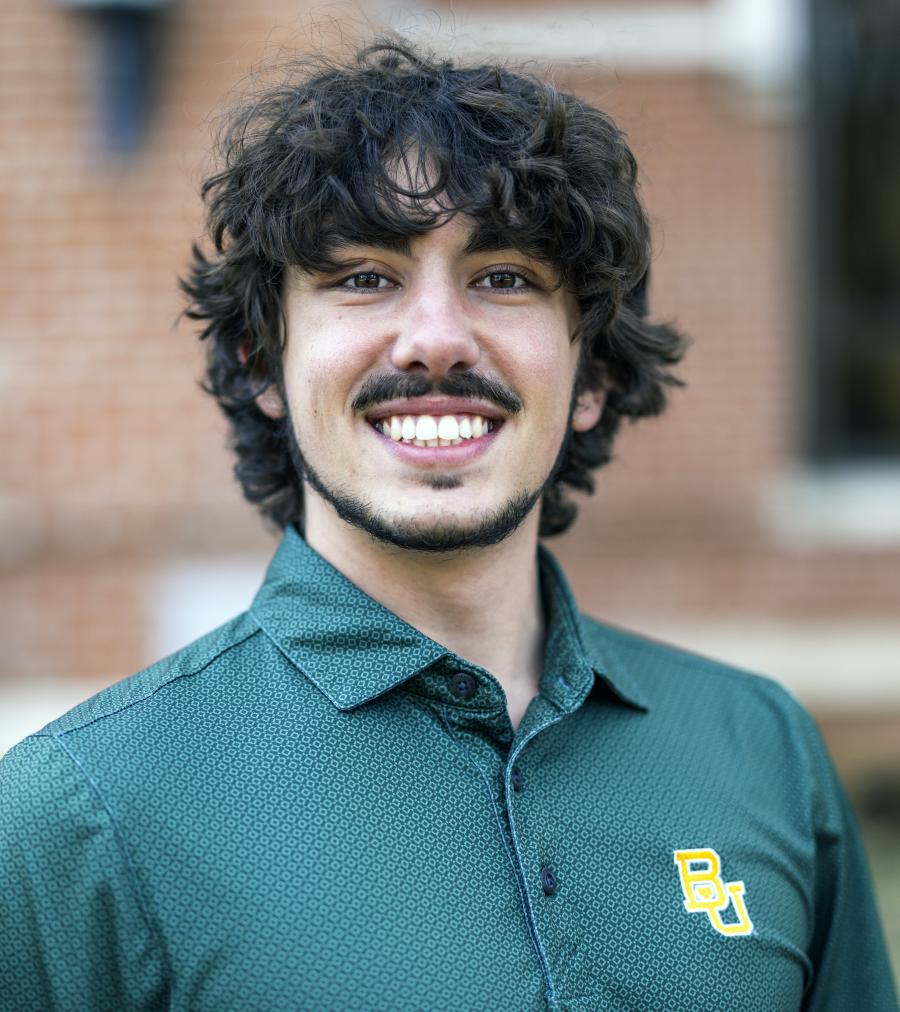
Luke Walther, a senior majoring in biology and biochemistry, said that his experiences in engaged learning courses have prompted him to take chances that he never would have considered otherwise. His engaged learning course required volunteering with the local nonprofit La Puerta Waco, which offers English as Second Language (ESL) courses to members of the community and provides programming to support the pursuit of GEDs, citizenship, financial literacy, mental health and more.
Walther volunteered at La Puerta Waco his freshman year and found the experience different and refreshing.
“I found so much joy in helping others learn a new language,” he said. “It was rewarding to see the impact my help had and how happy the students were as they improved.”
The connections Walther gained through his engaged learning course were also transformative, as they connected him with the other resources the OEL offers, such as support in applying for fellowships and opportunities for undergraduate research. Because of that one class he decided to apply for prestigious Goldwater and Churchill Scholarships, and was also matched with a faculty mentor who encouraged him to apply for research internships.
“Those experiences led me to get involved in a research lab at Baylor College of Medicine, and they have opened doors for me that I never could have imagined,” Walther said.
Long-term legacy
Engaged Learning courses are encouraging students to fully embrace the motto of Baylor University –– Pro Ecclesia, Pro Texana, Pro Mundo (For the Church, For Texas, For the World). Ward credits those courses with some of the most profound spiritual formation she has experienced while a student at Baylor.
“The mindset shift from these classes has encouraged me to make intentional changes in my life –– to be a better friend, daughter, student and servant of Christ,” Ward said. “In many ways, without my time in engaged learning classes, I cannot guarantee my passion for connecting people would have formed on its own. Every professor, ESL student and classmate has pushed me to seek a deeper understanding of vocation, genuine connection and its relation to shaping a better, more empathetic world.”
(Photo credits: Matthew Minard/Baylor University)
ABOUT THE COLLEGE OF ARTS & SCIENCES AT BAYLOR UNIVERSITY
The College of Arts & Sciences is Baylor University’s largest academic division, consisting of 25 academic departments in the sciences, humanities, fine arts and social sciences, as well as 11 academic centers and institutes. The more than 5,000 courses taught in the College span topics from art and theatre to religion, philosophy, sociology and the natural sciences. The College’s undergraduate Unified Core Curriculum, which routinely receives top grades in national assessments, emphasizes a liberal education characterized by critical thinking, communication, civic engagement and Christian commitment. Arts & Sciences faculty conduct research around the world, and research on the undergraduate and graduate level is prevalent throughout all disciplines. Visit the College of Arts & Sciences website.