

New African Studies Certificate Program to Be Offered in Arts & Sciences
A new certificate program will assist Baylor students to deepen their knowledge of the African continent
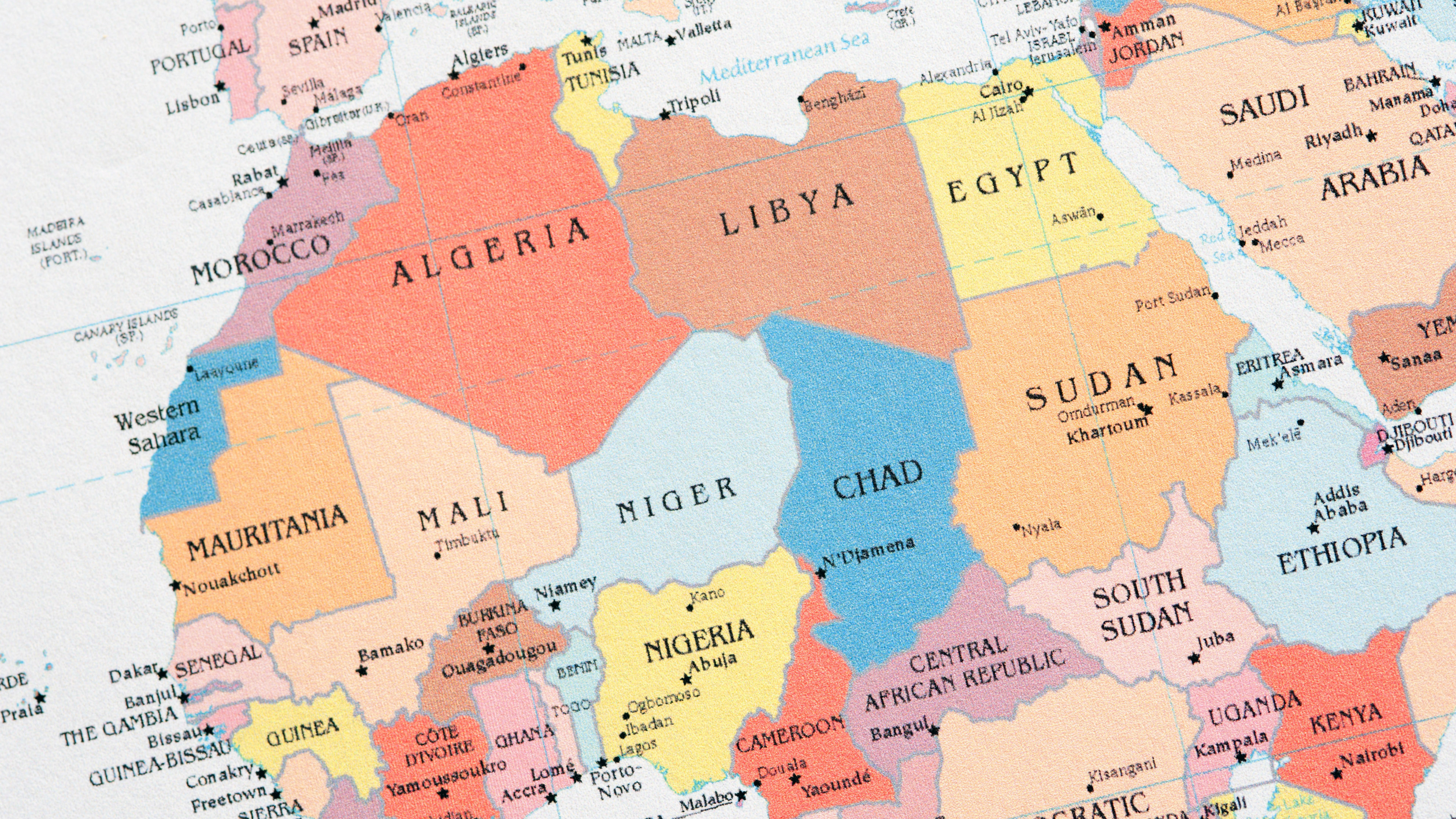
A new certificate program in African Studies in the Baylor University College of Arts & Sciences is open to students from academic units across the University who want to deepen their knowledge of the continent in a way that can expand their future career options.
The Certificate in African Studies, which becomes available beginning with the Fall 2026 semester, requires students to complete 12 hours of coursework. All students are required to complete a three-hour language course, “Intermediate Swahili II,” while the remaining nine hours are selected from 11 different offerings.
The 11 multidisciplinary elective courses range from two global health courses, four history courses including studies of West African history and modern Africa, anthropology courses looking at African archaeology and the societies and cultures of Africa, as well as additional language courses and courses in world Christianity and political science.
Student interest

The required course in Swahili is taught by Dr. Gorrety Wawire, lecturer in Swahili. Wawire is a native of Kenya who came to the United States as a Fulbright Scholar in 2013 to teach Swahili and complete her master’s and doctorate degrees. She joined the Baylor faculty in 2023, and she –– along with Dr. Emmanuella Amoh, assistant professor of history –– were early proponents of adding a new African Studies certificate program.
Wawire said that one of her students provided the initial inspiration for her and Amoh to investigate creating a new certificate.
“In my first year at Baylor, I had a student who had traveled to East Africa and came back asking if there was a chance to take in more beyond just learning Swahili as a language,” Wawire said. “She wanted to expand her knowledge of economics, history and other aspects of East Africa and learn more about the continent in general. She got me thinking about the possibility of Baylor creating a certificate program.”
Dr. Michael Long, professor of Russian and chair of the Department of Modern Languages and Cultures, said he has been looking to expand the programs offered by his department since Baylor’s African Studies program was discontinued about 15 years ago. He believes that the new certificate program is a great first step toward one day reinstating that program in full.
“The new African Studies certificate gives interested students a goal they can work toward that will appear on their transcript to show that they have expertise in this area,” he said. “It will complement their Swahili studies and help them with future job prospects or plans for additional education.”
Study abroad possibilities
Baylor students who want to experience Africa through study abroad programs now have a number of opportunities to do so. Study abroad programs sponsored by the Hankamer School of Business, Robbins College of Health & Human Sciences and the Louise Herrington School of Nursing are available in countries including Morocco, South Africa, Rwanda and Zambia. Also, the Baylor Jazz Band and Baylor Men’s Choir will go on trips sponsored by Baylor Missions to Nairobi, Kenya in the summer of 2026.
There are currently no African study abroad or mission trips sponsored by the College of Arts & Sciences, and Long is hopeful that interest in the new African Studies certificate program can one day lead to creating new study abroad opportunities within the College.
“We have a number of faculty members in Arts & Sciences who do research in Africa and who are fluent in Swahili,” Long said. “We have wanted to use these faculty to build our own study abroad programs for years, and the certificate program will hopefully be a way of building a cohort of students who could eventually accompany these faculty to Africa through study abroad programs.”
Interdisciplinary applications
Because of its interdisciplinary nature, Long said that the new African studies certificate will be of interest not only to students studying Swahili, but to students from other academic units across Baylor.
“The certificate program will allow students to study the history and culture and the emerging economies of Africa, giving students from other disciplines good ways to plug in if they want to,” he said. “Students in political science who are interested in diplomacy or African politics, or students who want to build careers in religion, business or law, will find this to be a great opportunity.”
Wawire agrees that the certificate program can speak to a wide range of students.
“It’s highly interdisciplinary, and we are hoping to attract students from the humanities, social sciences, business, health and agricultural fields –– anyone who is interested in conducting research or working in Africa,” she said.
Dr. Paul Martens, associate dean for undergraduate studies, strategic initiatives and special programs in the College of Arts & Sciences and associate professor of religion, said that the African Studies certificate will have a variety of advantages.
“Baylor students, especially those in international studies and business, need to be exposed to African history and culture, and they need a way to do so that is clear and straightforward and not prohibitively difficult or time-consuming. As an R1 university, Baylor should have the ability to serve our students in this way,” Martens said. “Also, it is our hope and expectation that a certificate program such as this becomes more than merely curriculum –– that it becomes a focal point for an intellectual community to emerge.”
For more information on the African Studies Certificate program, contact Dr. Gorrety Wawire.
None of the original writing contained in this story was created with the use, in whole or in part, of artificial intelligence (AI).
ABOUT THE COLLEGE OF ARTS & SCIENCES AT BAYLOR UNIVERSITY
The College of Arts & Sciences is Baylor University’s largest academic division, consisting of the School of Earth and Environmental Sciences and 24 academic departments in the sciences, humanities, fine arts and social sciences, as well as 12 academic centers and institutes. The more than 5,000 courses taught in the College span topics from art and theatre to religion, philosophy, sociology and the natural sciences. The College’s undergraduate Unified Core Curriculum, which routinely receives top grades in national assessments, emphasizes a liberal education characterized by critical thinking, communication, civic engagement and Christian commitment. Arts & Sciences faculty conduct research around the world, and research on the undergraduate and graduate level is prevalent throughout all disciplines. Visit the College of Arts & Sciences website.