

Answering the Call to Family Medicine
The joyous international journey of Baylor’s Stephen Spann
With a foundation in science and spiritual growth from Baylor University and practical experience gained while growing up in Latin America, Stephen J. Spann, M.D. (B.A. ’72, M.D. ‘75) has devoted his life to providing and advancing compassionate, family medical care to underserved populations from Texas to Latin America and beyond.
“Taking care of people who are underserved has always been a passion of mine,” he said. “I grew up in the developing world and saw a lot of people who were poor and underserved. I think that certainly affected a lot of my career.”
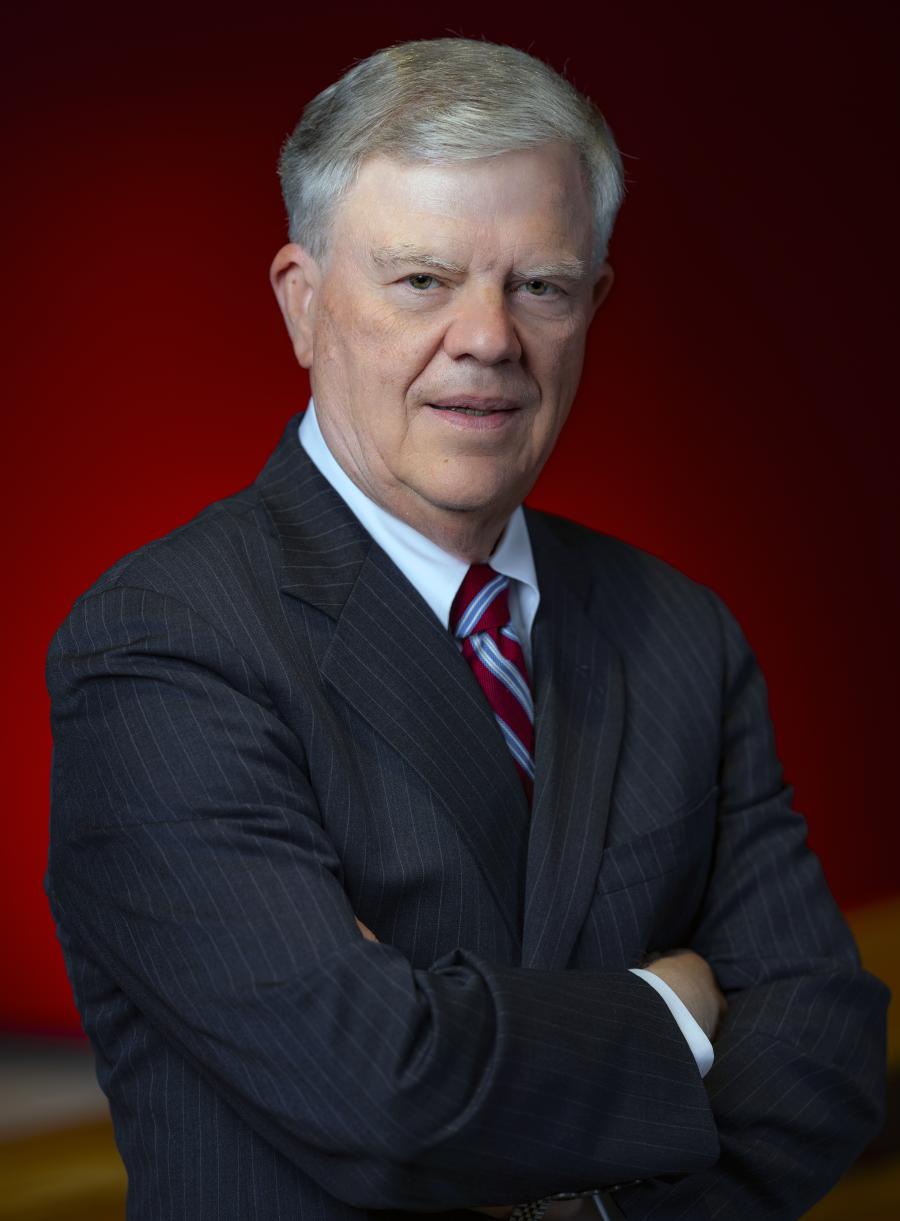
Dr. Spann was born in Fort Worth where his father was completing his education at Southwestern Baptist Theological Seminary. His father pastored rural churches in Northeast Texas, but the family moved when Spann was almost seven to Costa Rica for a year, and then to Uruguay –– answering a call to the mission field to plant and pastor churches.
“The total span of my time living in Latin America was about 10 years from the time I was almost seven to the time I was 17 and came back to college,” Spann said. “I did most of my primary and secondary education in Spanish, which was a real gift because I’m very bilingual and bicultural. That’s been a real asset to me in my career. I still speak Spanish almost every day.”
Spann’s parents wanted him to attend a Baptist university, so he naturally chose Baylor. And, he knew early on he wanted to study pre-med and go into medicine.
“I now look back and feel like this was a divine calling,” he said, explaining that just two weeks after his family arrived in Costa Rica, he pulled away from his mother’s hand at a busy intersection, looked the wrong way, and was struck by a Volkswagen Beetle. With a ruptured liver, three broken ribs, a concussion, bleeding and shock, he was rushed to Hospital Clinica Biblica in San José, where the best surgeon in the city and perhaps the country practiced.
“He was about to go out of town, but they caught him just in time,” Spann said. “He came in and operated on me. I had blood transfusions –– donations from other missionaries –– and I survived. It was pretty miraculous.”
Recovering in the hospital for three long weeks, the young boy became interested in the world of medicine and medical care.
“I thought, ‘This is what I want to do,’ and I rarely deviated. We talk about ‘calling,’ and I think that was my calling,” he said.
Baylor days
Spann arrived at Baylor as a freshman in 1968 and said it was the right place to be for many reasons, including adjusting to life in the United States.
“I grew up in the Latin culture and we were pretty immersed in that,” he said. “Acculturating to the U.S. had its challenges. That’s true for most missionary kids –– now called ‘third-culture’ kids –– and Baylor was a good place to do that.”
Spann lived in Kokernot Hall his freshman year and then the Howell Apartments, where the Dutton Avenue Office and Parking Facility is today.
“Baylor was a good place that helped you grow academically but also spiritually,” he said. “I was involved in what back then was called Friday Night Mission where we worked with kids in African American neighborhoods. I enjoyed going to all the sports events. I had a lot of good friends and met my wife there.”
With his eyes on medical school, Spann majored in chemistry.
“Baylor taught me to think analytically, and I got a good science background for medicine,” he said.
Among his professors, he recalls Dr. David Pennington, now a professor emeritus, who taught freshman chemistry.
“His tests were just very hard. It wasn’t enough to know the material. You really had to know how to apply it,” he said. “And then my organic chemistry teacher, Dr. John Belew, was wonderful.”
Spann did so well in Belew’s course that he was chosen in his junior and senior years to teach Belew’s first-year chemistry labs.
Spann enjoyed a lifetime friendship with Belew, who later served Baylor as associate dean and dean of the College of Arts & Sciences, then as vice president of academic affairs and provost. Belew, who lived to be 102, reconnected with Spann in his final years during several trips he made to Houston.
“He was 100 when he first came down here and was sharp as a tack. We just had this wonderful relationship,” Spann said. “He was my favorite teacher at Baylor and an important mentor, and it was so good to reconnect.”
Spann said his spiritual growth was nourished attending chapel, the Wednesday night Baylor Religious Hour and First Baptist Church, where Peter McLeod, the famed Scotsman, was pastor.
“He was an amazing communicator. I loved to hear him preach,” Spann said. “He really shaped a lot of my spiritual growth and thinking.”
On to medical school
Spann was accepted to every medical school in Texas where he applied, but he chose Baylor College of Medicine in Houston, which was still an affiliated academic unit of Baylor University until his sophomore year.
“When I came to the Baylor College of Medicine campus, I thought, ‘This is it. This is an amazing medical center, an amazing place. This is where I belong,’” he said. “The clinical training was just unparalleled.”
Because the school wanted to produce doctors more quickly, Spann was in a three-year program with two years of classroom work compressed into one.
“The first year was like drinking from a fire hydrant. Second and third year –– the clinical years –– were just amazing. It was wonderful training,” he said.
Spann described his first year of residency in internal medicine as “brutal,” working 100- to 120-hour weeks.
“Again, great training, but halfway into that year, I decided I didn’t want to become an internist, and I had questions as to whether I really wanted to practice medicine,” he said.
He opted to take time off after that first year of residency and joined the National Health Service Corps of the Public Health Service. Working in rural areas near Van Buren, Arkansas, for a year, Spann discovered a love for family medicine. From there, he went to Duke University Medical Center for his final two years of residency.
“After that, I decided I really loved rural practice and wanted to do more of that. I ended up staying in North Carolina in a small town in the foothills of the Appalachian Mountains and did three more years of rural practice, which was also really fun, really great,” he said.
While seeing patients in the foothills, Spann also taught residents as a voluntary clinical faculty at what now is Wake Forest School of Medicine in Winston-Salem, which led to another key career decision.
“I came to realize I could do a lot of good in a small town taking care of patients, but if I got involved training doctors on a full-time basis, that would have a multiplying effect,” he said. “That’s how I decided to leave full-time rural practice and go into medical education.”
Becoming a teacher and administrator
Spann’s decision to pursue a career of medical education led him to the University of Oklahoma College of Medicine in 1982, where he became vice chair of the Department of Family Medicine while continuing to practice with underserved patients. After eight years there, he went to the University of Texas Medical Branch in Galveston to chair their family medicine department for seven years.
Spann was recruited back to his alma mater, Baylor College of Medicine, in 1997 where he chaired the newly formed Department of Family and Community Medicine for almost 16 years. During two of his years there, he was appointed by an interim president to direct the clinical side of the school as senior vice president and dean of clinical affairs.
“That was probably the biggest job I ever had. That was huge,” he said.
When a new BCM president came, Spann returned to his role as department chair, but he soon felt a new call “to be salt and light in the world.” That led him to Johns Hopkins Medicine International in the United Arab Emirates where he was chief medical officer at the 460-bed, 530-physician Tawam teaching hospital for the UAE University Medical School.
Starting a new medical school
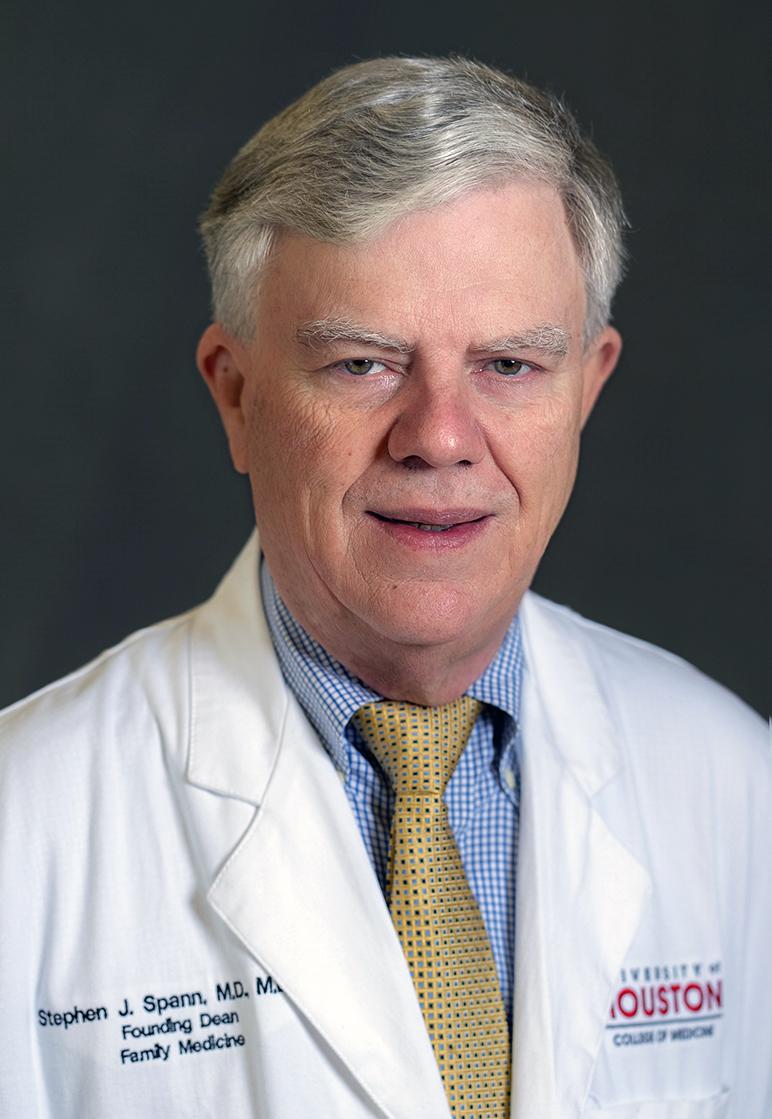
In 2014 while in the United Arab Emirates, Spann learned that Renu Khator, president of the University of Houston, wanted to start a new medical school there. Approached to lead that effort, Spann said he would only do it if he could start the kind of school he believed was needed: “One that trained more primary care doctors, doctors who wanted to work with the underserved, doctors interested in community health.”
Given the green light, Spann was named planning dean in 2015 and began five years of work that included political advocacy, developing curriculum, selecting faculty, designing a building and recruiting students.
“I was the sole person working on this full time for three years, working with an internal advisory committee with leaders and deans from other colleges at the university,” he said.
Spann became founding dean in 2018, and the now-named Tilman J. Fertitta Family College of Medicine at the University of Houston opened in July 2020 with 30 students. Among the first two classes of students, more than 50 percent chose residencies in primary care, and more than 50 percent stayed in Texas for their residency training.
Continuing ties to Latin America
After the first class graduated in 2024 with Spann handing them their diplomas, he stepped down as founding dean, but he has and will remain busy consulting, teaching and practicing wherever he is needed, especially in Latin America.
Over the past 40 years, he has taught, lectured, visited and consulted with medical schools, ministries of health and health systems in every Spanish-speaking country of Latin America.
“Early in my teaching career at the University of Oklahoma, starting in about 1984, my specialty started to develop across Latin America,” Spann said. “And because of my bilingual and bicultural heritage, I started getting invited to conferences and to teach and consult.”
During a sixth-month sabbatical from Oklahoma, he was a consultant to the Ministry of Health in Uruguay, under the auspices of the Pan American Health Organization, to help prepare the first group of family physicians in that country. And for many years he directed an international faculty development fellowship in the medical school departments he led in the U.S. that trained more than 150 Spanish-speaking family physicians from Latin America and Spain as teachers of family medicine.
Twenty-five years ago, Spann began working with the National Autonomous University of Honduras to develop a family medicine residency. That program is finally going to become a reality, and he will lead a faculty development course there to prepare the new teachers for the program. He’s also working with a missionary and Christian university medical school in Guatemala to help develop faculty for a new family medicine residency program in that country.
Retirement and relationships
When not traveling to Latin America or other locations for medical projects, Spann and his wife, Nancy, live in Houston, where they’ve logged almost 31 years over three periods. They also spend time at a second home in Granby, Colorado, especially in the summer enjoying the outdoors.
However, Spann isn’t finished with medicine, focusing in recent years on teaching medical students the importance of relationships.
“There’s a growing amount of scientific evidence that we heal through relationships –– that when health professionals have compassionate, empathic relationships with their patients, the outcomes of care are better,” he said. “Of course, patients are way happier. Costs of care are lower, interestingly, and professional joy and satisfaction are higher, and professional burnout is lower. I love the relational part of helping people.”
Spann shares that passion when he volunteers at Casa El Buen Samaritano, a faith-based clinic he helped establish 18 years ago in Missouri City southwest of Houston.
“My primary calling was to take care of people. I love that, and I love teaching,” he said. “When I’m at the clinic, I often have medical students who I am teaching. Caring for patients and teaching physicians in training –– what joy!”
ABOUT THE COLLEGE OF ARTS & SCIENCES AT BAYLOR UNIVERSITY
The College of Arts & Sciences is Baylor University’s largest academic division, consisting of 25 academic departments in the sciences, humanities, fine arts and social sciences, as well as 11 academic centers and institutes. The more than 5,000 courses taught in the College span topics from art and theatre to religion, philosophy, sociology and the natural sciences. The College’s undergraduate Unified Core Curriculum, which routinely receives top grades in national assessments, emphasizes a liberal education characterized by critical thinking, communication, civic engagement and Christian commitment. Arts & Sciences faculty conduct research around the world, and research on the undergraduate and graduate level is prevalent throughout all disciplines. Visit the College of Arts & Sciences website.