

The Buildings of Arts & Sciences — Part Three
In this third installment of our series providing a brief overview of the more than half-dozen different Baylor campus buildings which house (totally or in part) programs within the College of Arts & Sciences, we look at three structures –– the Draper Academic Building, the Speight Plaza Parking Facility, and the Hooper-Schaefer Fine Arts Center.
Draper Academic Building
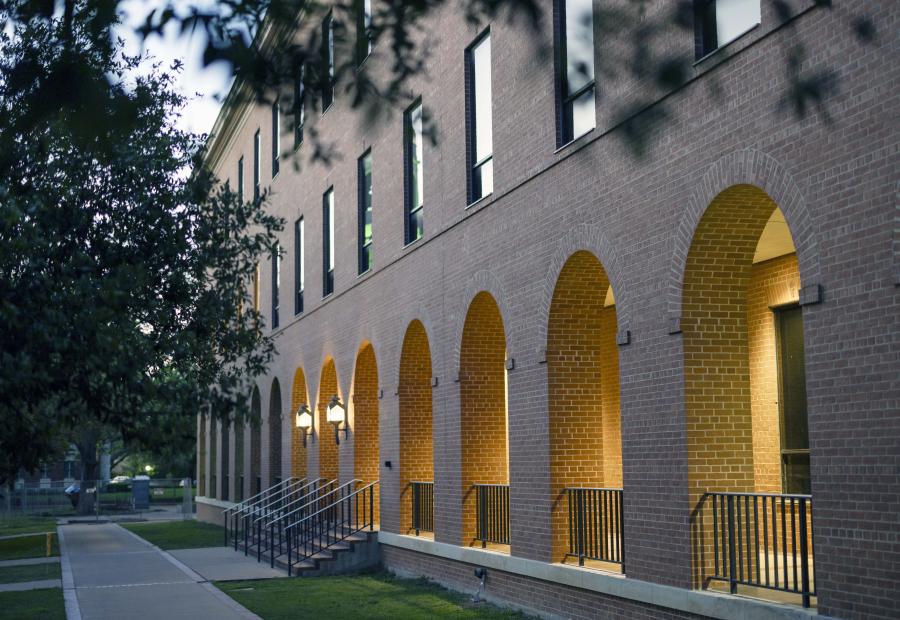
In the fall of 1970, Baylor trustees approved a five-year campus building program that included a new academic building that would house the School of Education and provide much-needed classroom and office space.
In the summer of 1973, the trustees approved plans to renovate and restore the two oldest buildings on campus, Old Main and Burleson Hall. At the same time, two smaller structures attached to the rear of those historic buildings –– Harrington Hall and the Burleson Hall annex –– would be demolished. In their place, the new academic building envisioned in 1970 would be built.
Baylor trustee Guy Draper, a longtime financial, civic and religious leader from Temple, Texas, joined his wife in making a lead gift of $1 million toward constructing the new three-story, 80,000-square-foot building. On August 6, 1974, a groundbreaking ceremony was held for what would become known as the W. Guy Draper Academic Building.
The plans also called for an auditorium as part of the Draper complex. The main benefactors were Mr. and Mrs. Mills Cox of Houston, and the octagonal, 366-seat structure would be named Lila Mills Bennett Auditorium in honor of Mr. Cox’s grandmother.
On September 10, 1976, the Draper Academic Building –– in addition to the renovated Old Main and Burleson Hall buildings –– were officially dedicated. Four months later, on January 18, 1977, Bennett Auditorium was dedicated.
When it opened, the Draper Building was home to the Baylor School of Education, and it also housed the three College of Arts & Sciences departments of political science, sociology-anthropology-social work, and foreign languages.
In 2013, the School of Education left Draper for its new home in the recently renovated Marrs McLean Science Building. In 2024, the Honors Program, Great Texts Program and Baylor Interdisciplinary Core within the Honors College relocated to Draper. Today, the building also houses some laboratories and offices for the Arts & Sciences departments of sociology and modern languages and cultures, and is home to the Office of Engaged Learning within the College of Arts & Sciences.
Speight Plaza Parking Facility
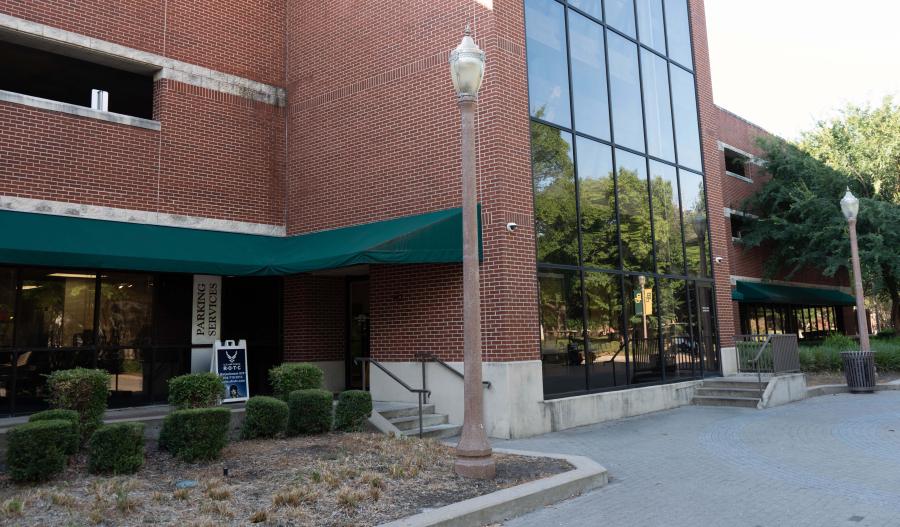
Construction on what was originally called the Speight Avenue Parking Facility –– just across Speight Avenue from the former home of the Hankamer School of Business –– began in the summer of 1998. The $7 million dollar structure was designed to be not only a four-level parking garage for 1,000 vehicles, but to provide space for various Baylor departments and academic offices.
On Aug. 16, 1999, the first residents of the new structure –– the Baylor Department of Public Safety –– began moving in. By the time a grand opening celebration for the building was held on April 12, 2000, the resident list included not only the DPS but Baylor’s printing procurement office, the Baylor School of Social Work and Department of Gerontological Studies, and the Office of Access and Learning Accommodation.
The Diana R. Garland School of Social Work moved to its new home in a downtown Waco office building in 2011. Today, while the Speight Plaza complex houses the Baylor DPS, it has also become the home of two departments within the College of Arts & Sciences –– aerospace studies (Air Force ROTC) and military science (Army ROTC).
Hooper-Schaefer Fine Arts Center
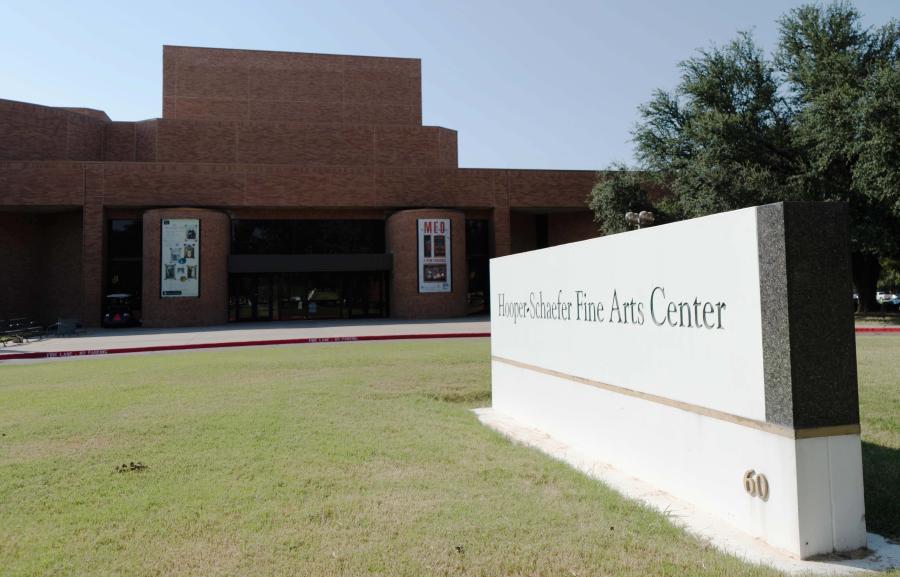
By the late 1970s, finding a new home for Baylor’s fine arts programs was a top priority. The small Baylor Theater complex had outgrown its usefulness, and the University’s art classes and galleries were not well-suited for the former laboratories and classrooms in the aging Carroll Science Building where they were then located.
On July 19, 1979, Baylor University broke ground on the largest building project in its history up to that point –– the $8 million, 100,000-square-foot Hooper-Schaefer Fine Arts Center, which would actually consist of two buildings joined together.
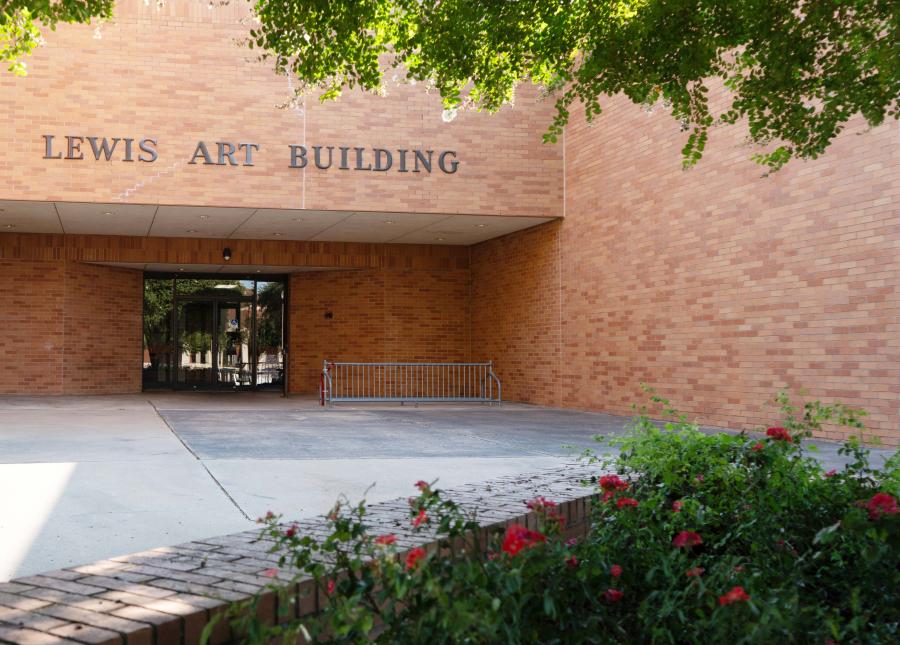
The Lewis Art Building was named in honor of Baylor graduates Milfred and Mary Lee Lewis of Houston, who donated $1 million toward its construction. It housed expanded classrooms, offices and gallery space for the visual arts division of the Department of Fine Art in the College of Arts & Sciences, as well as the Martin Museum of Art, donated by Ruby Laura Hooper Martin in honor of her parents. The Lewis Art Building was completed first, opening in August 1980.
The performing arts facilities took a bit longer to complete. The lead gift for the Hooper-Schaefer Fine Arts Center was made by Lady Hooper-Schaefer of Conroe, Texas, in honor of her late brother Dick Hooper –– who both attended Baylor in the first two decades of the 20th century. The performing arts complex –– with three theater spaces of differing sizes –– became home to Baylor Theater and the Department of Fine Arts division of theater arts within Arts & Sciences. It opened in the summer of 1981, with the first Baylor Theater performance in the building being “Ethan Frome” that following October.
Today, the fine arts center is home to the Department of Theatre Arts and the Department of Art and Art History in the College of Arts & Sciences.
This article originally appeared in the Fall 2025 issue of Baylor Arts & Sciences magazine.
ABOUT THE COLLEGE OF ARTS & SCIENCES AT BAYLOR UNIVERSITY
The College of Arts & Sciences is Baylor University’s largest academic division, consisting of 25 academic departments in the sciences, humanities, fine arts and social sciences, as well as 11 academic centers and institutes. The more than 5,000 courses taught in the College span topics from art and theatre to religion, philosophy, sociology and the natural sciences. The College’s undergraduate Unified Core Curriculum, which routinely receives top grades in national assessments, emphasizes a liberal education characterized by critical thinking, communication, civic engagement and Christian commitment. Arts & Sciences faculty conduct research around the world, and research on the undergraduate and graduate level is prevalent throughout all disciplines. Visit the College of Arts & Sciences website.