

Baylor’s Center for Writing Excellence
Expanded resources are helping campus writers put their best words forward
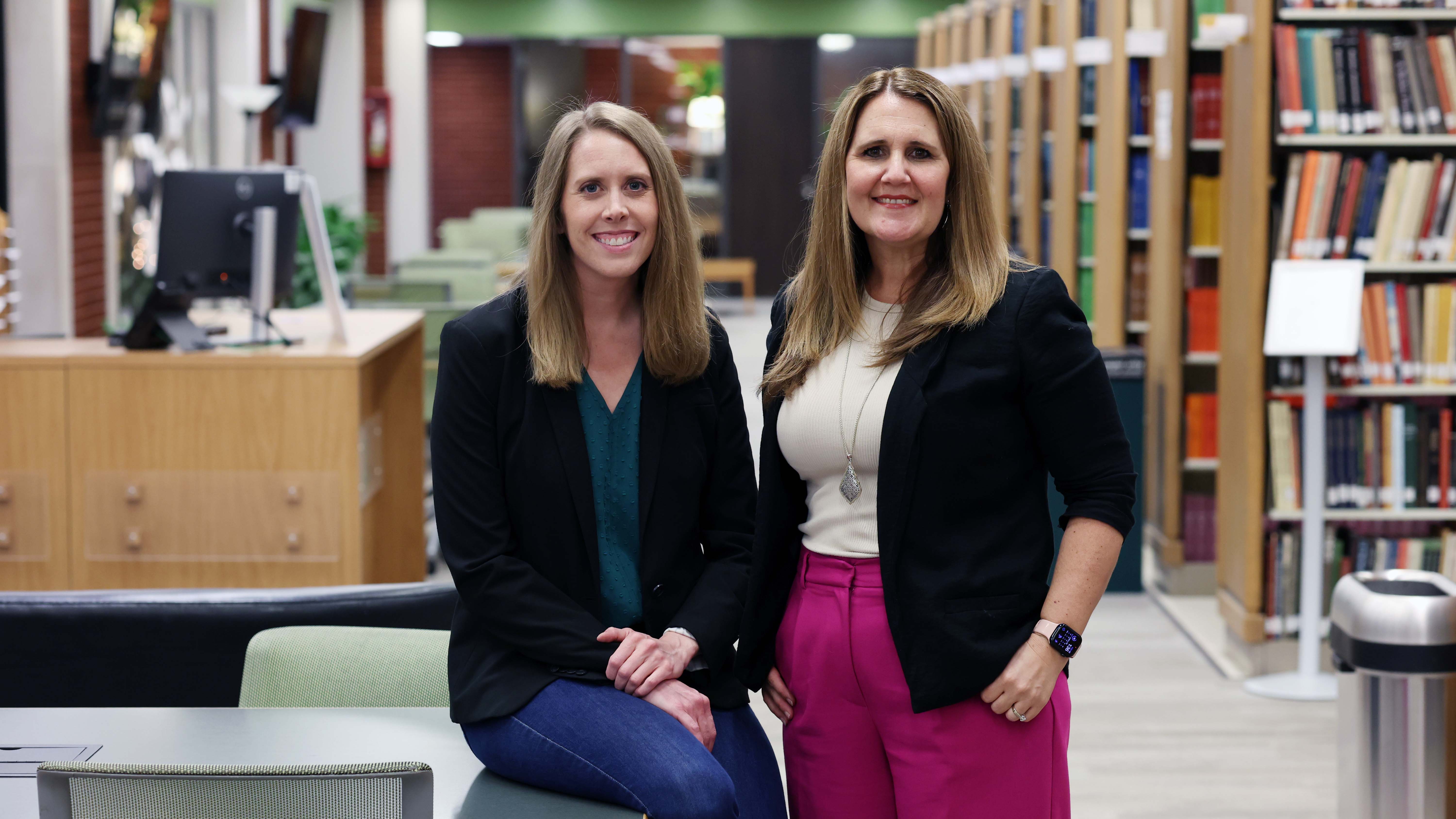
Baylor's new Center for Writing Excellence (CWE) in Moody Library makes use of the experienced leadership of Dr. Becca Cassady (left), director of the Division of Graduate Writing, and Dr. Kara Poe Alexander, managing director of the CWE.
When two great things combine to become even greater, a new name is usually needed. So it is with Baylor’s University Writing Center and Graduate Writing Center, which have merged to become the Center for Writing Excellence.
Housed on the second floor of Moody Memorial Library, the Baylor Center for Writing Excellence (CWE), one of the academic centers contained within the College of Arts & Sciences, helps students and faculty of all collegiate ranks and academic disciplines put their best words forward. Under the new structure, the University Writing Center, which previously served mostly undergraduates but also some graduate students, will now be called the Division of Undergraduate Writing (DUW) and will serve undergrads exclusively. The Graduate Writing Center will now be called the Division of Graduate Writing (DGW) and will serve all others –– from master’s and doctoral candidates to postdoctoral students and Baylor faculty.
“The benefit of the new structure is that we can use it to collaborate on vision and resources and services. Yet, it also allows each division to keep their distinct identities,” said Dr. Kara Poe Alexander, former director of the University Writing Center who is now managing director of the combined center. “Essentially, this merger allows us to home in and target the special populations of undergraduate and graduate students, because each group has different needs.”
The combination also will help the centers manage increased activity. The University Writing Center (UWC) has grown from 21 consultants handling 2,000 appointments per semester in 2021 to 25 consultants with 2,400 appointments per semester in 2025. Add in summer and winter appointments and it comes to about 5,500 appointments annually.
The Graduate Writing Center has been growing as well, and will see an increase in activity as it assists the 25 percent of UWC clients who have been graduate students.
"This merger allows us to home in and target the special populations of undergraduate and graduate students, because each group has different needs."
--Dr. Kara Poe Alexander
Business as usual
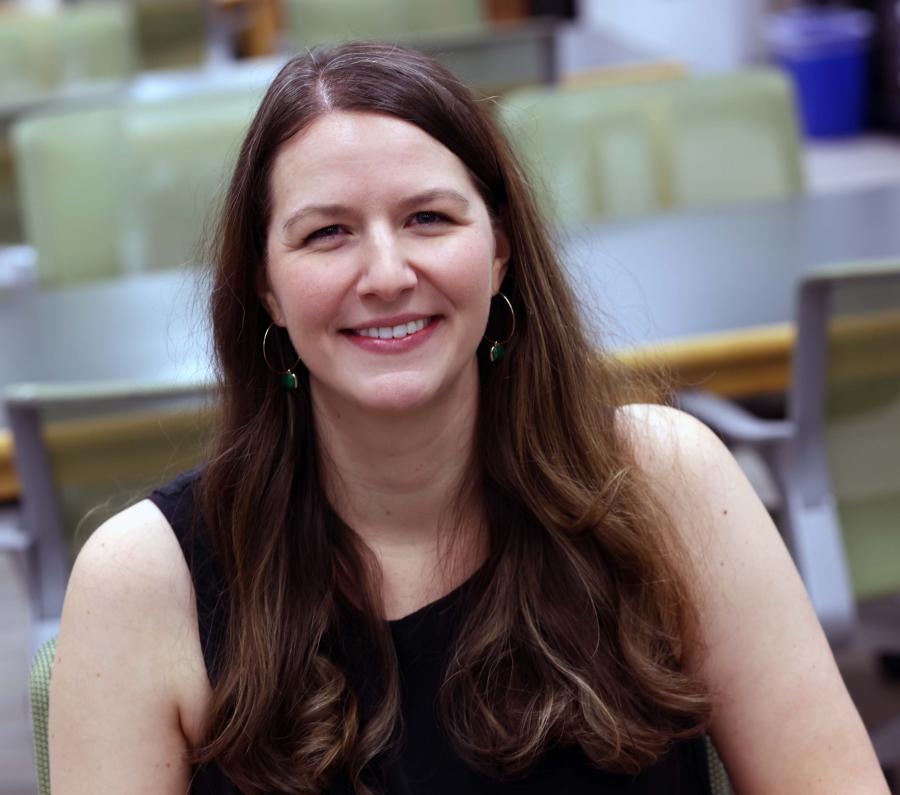
For undergraduates it will be largely business as usual at the new center, with consulting sessions still 50 minutes long and available online or in person at the Center for Writing Excellence’s Moody Library location. Students also can opt for video consultations or written feedback on their projects.
Dr. Lauren Short, formerly the assistant director and now director of the DUW, said consultants and clients are having more in-person appointments than during COVID and immediately afterward.
“I think post-COVID, people are starting to burn out a little bit on some of the all-digital options and are craving more of that person-to-person connection,” she said, adding that bringing the two writing centers under one banner should be a boost for both.
“Having us all together on the same page and pooling our existing resources will enhance our ability to offer the best services that we can,” Short said.
Long-form graduate projects
The Division of Graduate Writing will continue the practice of consultants having a one-hour pre-reading session with clients’ materials, followed by one-hour appointments — usually conducted online, but also in person at the Graduate Research Center on the second floor of Baylor’s W. R. Poage Library or in the CWE space in Moody. However, while appointments in the past were arranged independently between consultants and clients, now they are scheduled with the online system already used by undergraduates.
Dr. Becca Cassady, former director of the Graduate Writing Center and now director of the DGW, said all consultants are doctoral students, with most already having passed their comprehensive exams.
“One reason for hiring consultants at that level is rapport. A Ph.D. candidate wants to talk to somebody who knows firsthand what they’re experiencing as a grad student and who has worked at that advanced level themselves,” Cassady said. “And we’re seeing these larger documents, like a dissertation chapter or a journal article or something for publication. They’re more niche, nuanced and sometimes very complex.”
In addition to individual consultations, the DGW offers workshops and content-focused resources throughout the semester.
“We have workshops on academic job application materials, faculty panels about getting work published in journals, and we have an annual dissertation lab that lasts a week in May,” Cassady said. “Those are things tailored to graduate students and what they’re experiencing, and that helps them with their academic and professional development in ways that undergrads don’t need.”
Challenges with AI
A new challenge for the CWE, especially at the undergraduate level, is monitoring and managing student use of artificial intelligence (AI) in writing projects. While AI is not explicitly prohibited at Baylor, with some professors even encouraging their students to try it after certain parameters have been set, the use of AI may undermine the goal for all students to become good writers, regardless of their chosen discipline or academic level.
“AI can be helpful in the later stages of a project, but it doesn’t help you learn how to write or write on your own,” Short said. “Part of the conversation with students is, if a professor has allowed AI, then to what extent do they want it involved in the writing process? And how do you use it effectively if you are going to use it? And then, of course, if the professor has said don’t use it, then we need to come up with some better tools for generation.”
Cassady said the topic of AI does not come up as often during graduate writing consultations –– possibly due to the length and complexity of graduate writing projects, including those related to research. But that is not to say that students aren’t using it.
“I do think there are helpful ways we can show people how to use AI,” she said.
Alexander concurs, but adds that Baylor’s writing center should be the first choice for students seeking help –– not an AI tool.
“It’s more helpful to your writing process and the development of writing skills to meet with consultants,” she said. “AI can still be a part of the writing process, but it doesn’t substitute for the value and the work of the writing center.”
“It’s more helpful to your writing process and the development of writing skills to meet with consultants. AI can still be a part of the writing process, but it doesn’t substitute for the value and the work of the writing center.”
--Dr. Kara Poe Alexander
Baylor and beyond
With its new name, combined operations, more resources and an updated website, the Center for Writing Excellence should become better known across the Baylor campus and beyond, Alexander said.
“We would like to consider how we might expand our services into the Waco community to see if there are ways we can help with writing there, or even to partner with high schools to perhaps create high school writing centers,” she said.
Meanwhile, Baylor’s strategic plan contains a commitment to help students flourish, including “a University-wide initiative that elevates the importance of written communication and critical thinking,” according to the official statement.
“At the Center for Writing Excellence, we view this as an opportunity to speak into and help with that initiative,” Alexander said.
This article originally appeared in the Fall 2025 issue of Baylor Arts & Sciences magazine.
ABOUT THE COLLEGE OF ARTS & SCIENCES AT BAYLOR UNIVERSITY
The College of Arts & Sciences is Baylor University’s largest academic division, consisting of 25 academic departments in the sciences, humanities, fine arts and social sciences, as well as 11 academic centers and institutes. The more than 5,000 courses taught in the College span topics from art and theatre to religion, philosophy, sociology and the natural sciences. The College’s undergraduate Unified Core Curriculum, which routinely receives top grades in national assessments, emphasizes a liberal education characterized by critical thinking, communication, civic engagement and Christian commitment. Arts & Sciences faculty conduct research around the world, and research on the undergraduate and graduate level is prevalent throughout all disciplines. Visit the College of Arts & Sciences website.