

Messengers of the Healing Arts
A new Baylor certificate program trains students in the rapidly growing field of health communication

(Baylor University/Robert Rogers)
While it may not involve medical diagnoses or treatments, being able to craft and deliver clear and effective health messages to a variety of audiences is an integral component of the healthcare industry and public health in general. To prepare Baylor University graduates to take on the practical, ethical and interpersonal demands specific to this thriving field, the Department of Communication in the College of Arts & Sciences is offering students a chance to earn a Certificate in Health Communication.
Baylor’s certificate programs are designed for students who want to have focused knowledge and experience in an area that interests them, but are unable or unwilling to devote the hours of coursework needed for a minor or second major in the subject.
The new Certificate of Health Communication program –– making its debut in the fall of 2024 -- is open to undergraduates enrolled in Bachelor of Arts in Communication degree plans. To earn a Certificate, which is noted on a student’s transcript, candidates are required to complete four courses — worth 12 credit hours — and all courses must be completed in residence.
Topical variety
As an area of study, health communication “includes a variety of topics including communication campaigns that encourage specific health behaviors, breaking difficult news — a diagnosis or prognosis — to patients and family members, patient-provider communication and relationship building, the role of technology-related communication in healthcare settings, and different forms of patient advocacy,” said Dr. Ashley Barrett, associate professor of communication.

Paige Gloeckner, lecturer in communication, said that health communication feels very much like an untapped field of study.
“A lot of students, especially in our department, think that if they’re going to do anything health-related for work, they must go get a prehealth degree or a medical degree after graduating from Baylor,” she said. “And that is just not the case. Health communication is a field that includes a number of critical roles, including health marketing, hospital and clinic administration and management, liaising between physicians and patients, missionary work and public health administration.”
As Gloeckner recognized a growing need for more focused training in health communication among her own students, she researched other similar certificate programs and found several significant barriers to entry.
“One of the first things I did was just a simple Google search,” she said. “Among a lot of the health communication programs I found — like at Johns Hopkins University and Columbia University — the only way to enroll in those programs is to be in some type of medical degree program already.”
Required courses
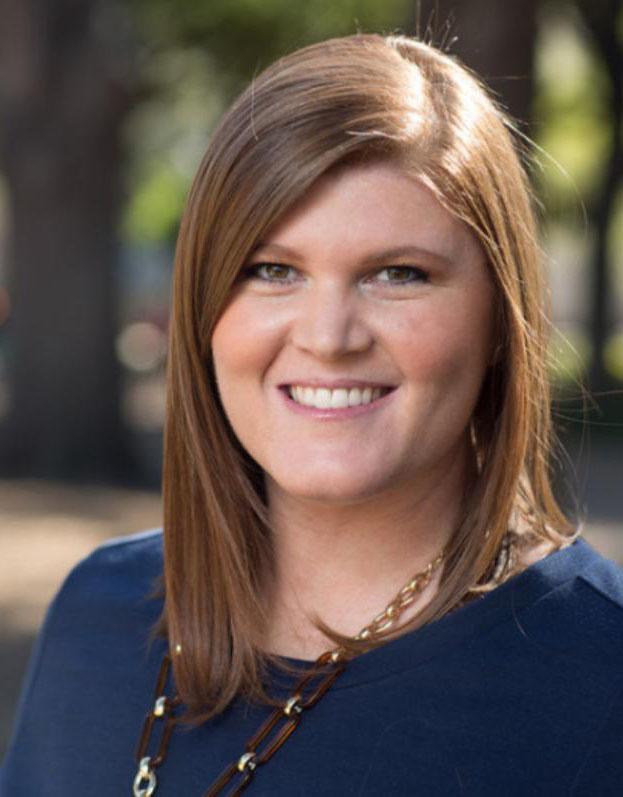
Dr. Kayla Rhidenour, assistant professor of communication, teaches two courses required for completion of the new certificate –– Communication Theory and Health Narratives.
“A hope that I have for the program is that students can engage deeply with their coursework about health-related theories and practice which will, in turn, provide them with a strong foundation for future careers in health industries,” she said.
The Health Narratives course was created by Rhidenour to examine how individuals who have an illness, or a diagnosis of any kind, are impacted as narrators of their own health and body.
“We focus primarily on an individual’s perspective during acute or chronic illnesses, or anyone who identifies with a specific health disparity,” she said. “Research shows that when a person is diagnosed with an illness they are often talked to and talked about differently than they were prior. We tackle what these shifting identities might be like and how communication through storytelling can play a vital role during times of illness.”
As part of the certificate program, students will also gain exposure to a variety of ways to communicate treatment methods, interpret medical literature and incorporate other specialized, fine-grain aspects of communication in a healthcare setting.
Cultural considerations
The certificate program places a great deal of emphasis on the way culture, ethnic and racial backgrounds and social class inform attitudes toward and reception of health-related messaging. While this may be simple enough to accept in the abstract, Gloeckner hopes to give students a more concrete understanding through a course she created called Cultural Approaches to Health Communication. The course culminates in a hands-on service-learning project that sends students into the community.
“Throughout this project, students are looking at demographics one week and access to healthcare the next — specific considerations like that,” Gloeckner said. “Divided into groups, students do what I call an urban hike in a specific area of Waco, seeking answers to questions such as, ‘What type of access to healthcare do people in this neighborhood have? How many clinics or doctors are accessible within a certain radius?’”
Until Baylor students are asked to explore these kinds of questions, they may not appreciate how their own upbringing, background, race and social class might limit their own capacity for effective health communication.
“As an immigrant, I know the absolute need to bridge the gap between complex medical knowledge and accurate and accessible information,” said Theodora John Milton, a senior corporate communication major. “As an Indian woman who is part of many different cultures and has a father who works in health insurance, I look forward to exploring different cultural perspectives and learning to tailor communication to resonate with diverse audiences — especially for something as important and beneficial as healthcare.”
After gaining some entry-level professional experience, Milton sees herself working in crisis consulting at a public relations firm in the Midwest before pursuing a Master of Business Administration degree and running her own crisis communication firm.
“We are trying to put our students a step ahead of an exploding health communication field,” Gloeckner said. “We know it is growing. Based on the Bureau of Labor Statistics, we know that health-related fields are going to be some of the largest and fastest-growing. And we want to make sure that our students are ahead of the curve with that.”
A strategic fit
In addition to equipping students for careers in a dynamic and demanding field, the launch of the Certificate in Health Communication embodies Baylor’s emphasis on undergraduate health and medical education across its academic units under the University’s strategic plan.
“This program aligns well with what Baylor is trying to do in growing this connection to health interdepartmentally, and making sure that we are preparing young people who are able to see and address the determinants of human health, including environmental, family-related and community-related determinants,” Gloeckner said. “Launching this program was a labor of love, but I know we have all loved every second of it.”
ABOUT THE COLLEGE OF ARTS & SCIENCES AT BAYLOR UNIVERSITY
The College of Arts & Sciences is Baylor University’s largest academic division, consisting of 25 academic departments in the sciences, humanities, fine arts and social sciences, as well as 11 academic centers and institutes. The more than 5,000 courses taught in the College span topics from art and theatre to religion, philosophy, sociology and the natural sciences. The College’s undergraduate Unified Core Curriculum, which routinely receives top grades in national assessments, emphasizes a liberal education characterized by critical thinking, communication, civic engagement and Christian commitment. Arts & Sciences faculty conduct research around the world, and research on the undergraduate and graduate level is prevalent throughout all disciplines. Visit the College of Arts & Sciences website.