

Baylor Faculty and Students Receive Louisville Institute Grant Awards
Three faculty members and three doctoral students from the Baylor University College of Arts & Sciences have received 2024 grant awards from Louisville Institute.
Louisville Institute, which is funded by the religion division of Lilly Endowment, has a mission to "bridge Church and academy through awarding grants and fellowships to those who lead and study North American religious institutions, practices, and movements, and thereby promoting scholarship that strengthens Church, academy, and society, and ultimately contributes to the flourishing of the Church," according to the Institute's website.
The Baylor winners of 2024 Louisville Institute grant awards include:
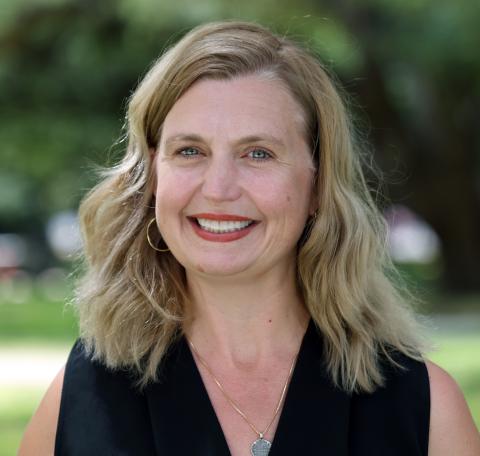
*Dr. Beth Allison Barr, The James Vardaman Endowed Professor of History -- recipient of a Louisville Institute Sabbatical Award for the project "Left Behind: How Southern Baptists Forgot Medieval History and Why It Matters for Women." The award "provides sabbatical grants up to $40,000 to support research projects about Christian faith and life, the practice of ministry, religious trends and movements, Christian and other faith-based institutions and religion and social issues."
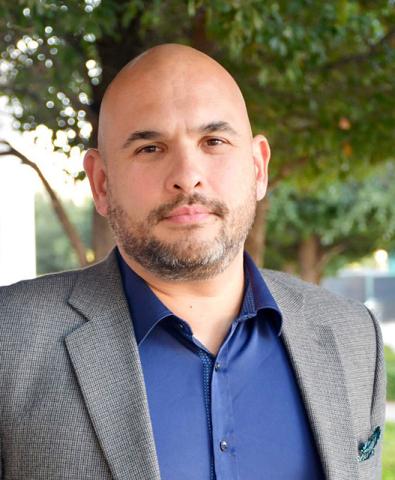
*Dr. Joao Chaves, assistant professor of religion -- recipient of a Louisville Institute Sabbatical Award for the project "Migration, Money, and Mission: Immigrant Christians and Global Proclamation." It is a book project currently under contract with Fortress Press that explores the history and legacy of immigrant churches in the United States that invest strongly in global missionary enterprises. The manuscript’s main academic contribution will be demonstrating how churches led by Latin American immigrants in the U.S. are strongly invested not only in the maintenance of ethnic identity and the adaptation of its members to the U.S. context but also in spreading Christianity worldwide. Migration, Money, and Mission will continue to reveal the rich heritage of Latin American immigrant Christians in the US while exploring the possibilities and complex challenges that their missionary endeavors generate — once such missionary investments are often tempted to reify colonial relationships that innovatively transcend race, class, and nationality concerns. Chaves said, “Highlighting the missionary investment of immigrant churches is crucial because it helps overcome the common notion that the legacies of immigrant churches can be solely measured by their local influences. The deep history of immigrant churches in the US teaches us otherwise — and the more recent role of churches led by South and Central Americans teach us different versions of Christianity’s multidirectional nature.”
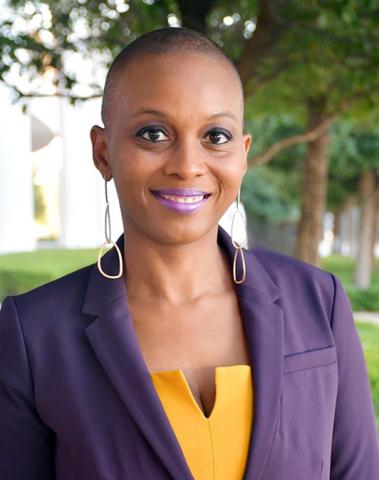
*Dr. Ericka Dunbar, assistant professor of religion –– recipient of the Louisville Institute First Book Grant for Scholars of Color for the project "Migrant God, Migrating People." The award "provides grants up to $55,000 to assist early career, pre-tenured religion scholars of color to complete a major research project about Christian faith and life, the practice of ministry, religious trends and movements, Christian and other faith-based institutions, and religion and social issues." In her project, Dunbar addresses the intersectional oppression experienced by ancient and contemporary migrants, along with the consequences of such cruelties. Dunbar positions migration as fundamental to Christian identity, belonging, and community building. The project highlights that ancient communities depicted in the Bible, including Jesus, possess migratory identities. Migration is not only foundational to the identities of ancient Israel and its neighbors, but also to the divine narrative, with God depicted as a migrant. Jesus' facilitation of salvation is actualized through migration, and his ministry necessitates migration, as does the fulfillment of the Great Commission, to "go ye therefore..." In this dialogical study of migration in the Bible and modern trends and practices towards contemporary migrants, Dunbar critiques widespread hostility and oppression and offers a theological framework for Christian hosting and holistic hospitality. This framework aims to resist and prevent physical, psychological, and spiritual harm to migrants.

*Leslie Garrote and Kathryn Freeman, doctoral candidates in religion -- each a recipient of a Louisville Institute Doctoral Fellowship Award, which "support(s) early career scholars considering vocations in theological education, and whose research has the potential to bridge church and academy and enrich the life of the church in North America." The Fellowship is designed to foster community between doctoral students pursuing a vocation in theological educational. A series of six gatherings in Louisville over the span of two years provides Fellows with professional development, as well as time to regularly connect with one another, exchange scholarly ideas, and encourage each other on the path toward graduation.
UPDATE: Garrote and Freeman met the other eight students in their cohort in October 2024 and are looking forward to returning to Louisville again in February 2025. Garrote described her time at the October gathering as “an amazing opportunity to connect with other scholars during my qualifying year in the Ph.D. program, which sometimes feels isolating since it involves so much individual work. I really enjoyed meeting my cohort and have a feeling that the relationships I develop through LI will impact and better my scholarship for years to come.” Freeman said, "The Fellowship includes a $3,000 stipend each year for two years. We are placed in a peer cohort and invited to think about our vocation as theological educators. While I have only attended one retreat so far, I have found the peer connections across institutions to be extremely valuable for collaboration and support."
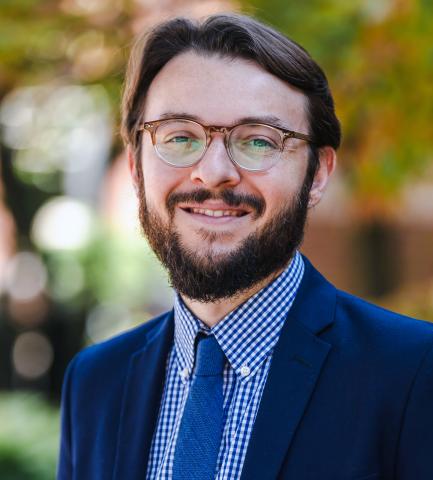
*Ryan Ramsey, doctoral candidate in religion -- recipient of a Louisville Institute Postdoctoral Fellowship, which "provides early career theological educators with vocational and professional formation through a two-year placement as a visiting scholar at a graduate theological school, college, university, or education and research organization in the United States and Canada." Key to the formation is a two-year placement at a theological school. Ramsey serves as visiting assistant professor of history and world Christianity at Pittsburgh Theological Seminary. As a faculty member, he works with students training for ministry, helps direct student research, and teaches courses such as World Christianity, Pentecostal and Charismatic Movements, and Contextual Analysis. Alongside the placement, Ramsey participates in gatherings for the Louisville Institute’s Vocation for the Theological Educator program, joining other postdoctoral and doctoral fellows in preparation for life and work within the academy and church.
UPDATE: Dr. Ramsey graduated from the Baylor Department of Religion in 2024 with his dissertation entitled “Decolonial, Indigenous, Christian: The Life and Religion of Teresa Urrea” which he is currently revising for publication.
ABOUT THE COLLEGE OF ARTS & SCIENCES AT BAYLOR UNIVERSITY
The College of Arts & Sciences is Baylor University’s largest academic division, consisting of 25 academic departments in the sciences, humanities, fine arts and social sciences, as well as 11 academic centers and institutes. The more than 5,000 courses taught in the College span topics from art and theatre to religion, philosophy, sociology and the natural sciences. The College’s undergraduate Unified Core Curriculum, which routinely receives top grades in national assessments, emphasizes a liberal education characterized by critical thinking, communication, civic engagement and Christian commitment. Arts & Sciences faculty conduct research around the world, and research on the undergraduate and graduate level is prevalent throughout all disciplines. Visit the College of Arts & Sciences website.