

The Play’s the Thing
Baylor’s New Play Initiative supports the creativity of American playwrights
An innovative program which made its debut at Baylor University this academic year is providing support for American playwrights who are creating bold new theatre productions.
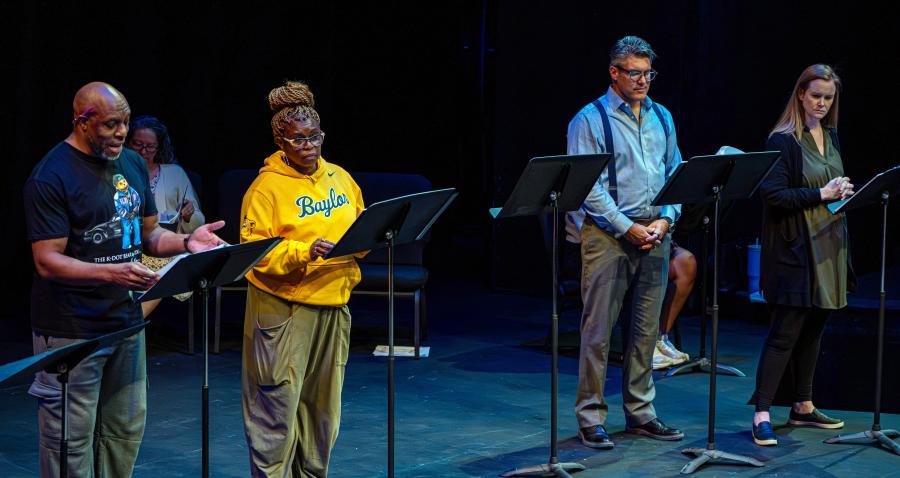
For three days in September 2025, Baylor University Theatre held the inaugural festival of the Baylor New Play Initiative (BNPI). The festival featured readings of four new plays by emerging and established artists from across the country. It culminated in the awarding of the $15,000 Kirk New Play Prize to New York-based playwright Jack Aneglo Cummings, who wrote “& Sons,” one of the plays read during the event.
“I am so thankful for this experience at Baylor. The New Play Initiative helped bring my play to its fullest expression with the help of an incredibly talented, kind and intelligent Texas theater community,” Cummings said. “From here, I look forward to finding ‘& Sons’ its first professional production. I cannot overstate the value of this communal experience. My play could not have evolved without the many resources the BNPI provides, from its thoughtful audience members to its bold artists and educators. This was truly a dream of a collaborative experience.”
The three other plays read during the festival included “Under the Bridge” by Janelle Gray, “I Will” by Scott Carter and “Here Kitty Kitty” by Janelle Kastner. The event was well attended, with audiences enjoying staged readings throughout the weekend.
“The mission of the Baylor New Play Initiative is to foster excellence and innovation in new American works,” said Dr. Carla Neuss, assistant professor of theater arts and BNPI co-chair. “We believe in the potential of theatre to inspire, challenge and engage the human spirit. In addition, we aim to engage with the broader artistic community and facilitate greater exchange between Texas theatre and the American theatre scene, while bolstering new and established artists in the creation of new works through artistic and financial support.”
Critical donor support
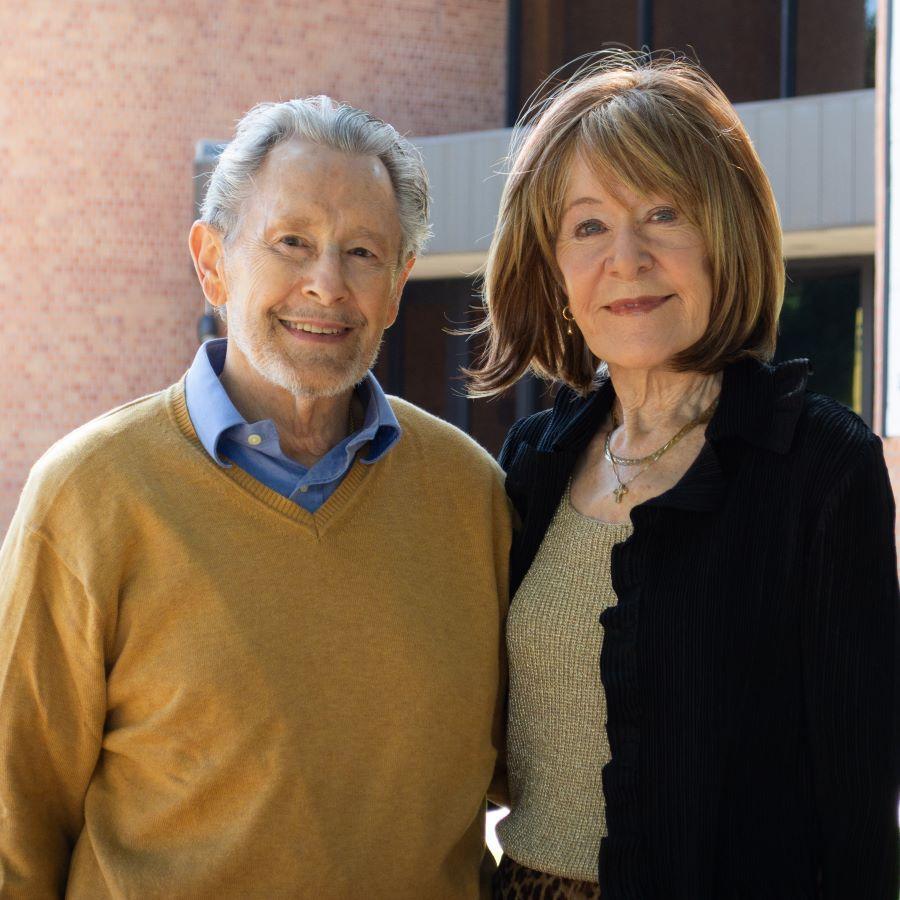
The BNPI is made possible by the visionary leadership and generous support of Baylor alumni and Waco area natives Preston and Ronda (Massey) Kirk, in conjunction with the Department of Theatre Arts in the College of Arts & Sciences. The Kirks are both 1968 graduates –– he in journalism with drama and English minors, she in business with a teaching degree and later a master’s degree in finance from the University of Texas at Dallas.
The Kirks first dreamed of a U.S. playwrights’ competition more than 10 years ago, proposing it to the theatre arts department and underwriting several years of research into playwriting festivals. The dream became a reality with the 2025 debut of the Baylor New Play Initiative, which provided for a top prize of $15,000 to the winning playwright in its first year and funds to support the biennial festival for decades to come.
“I'm so grateful to the Kirks,” said Analisse Nicholson, a senior theater performance major who was cast in one of the readings. “They’re amazing, and they’re truly invested in this project. I can’t wait to see how Baylor continues their legacy.”
Intense preparation
Preparations for the festival began in 2024, which involved reading new works, deciding on directors and dramaturgs (expert theatre advisors), casting and eventually rehearsals.
“We cast some students and gave other students opportunities to be involved. We had two students in each rehearsal process as production assistants, so they could observe how the directors and playwrights are working together,” Neuss said. “There’s a pedagogical good it does for our students to be exposed to an even higher level of professionalism and build professional relationships.”
Invaluable opportunities
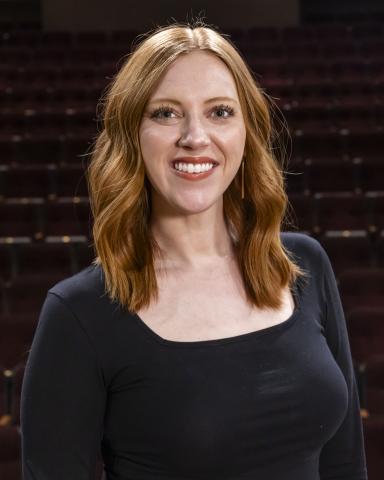
Stacey Schiller, a third-year graduate student working toward a Master of Fine Arts degree in directing, originally chose Baylor after learning there would be an opportunity to be a part of an initiative featuring new works. In her second year at Baylor, she was invited to participate in planning and organizing the new play festival.
“I also got to be a part of reading all the play submissions and having my voice in the room, and deciding what plays we think would be best for not only the Baylor community, but also the larger theater community –– the industry as a whole. We were asking what type of stories we think need more time and attention in this kind of incubator,” Schiller said. “I learned so much, both artistically and from a producing aspect.”
While Schiller participated in the process as a graduate student, undergraduate students such as Nicholson also had excellent opportunities to be a part of the experience.
“Being cast and getting as close as you can to the whole process was really exciting,” Nicholson said. “Not only that, but I sat with people who’ve been where I am as a student. Being someone who wants to do this professionally, it’s really amazing getting to interact with people who are already doing it.”
A cooperative experience
The inaugural festival held in September 2025 featured vibrant and eclectic plays that represented a broad range of themes and styles found in contemporary playwriting. They were selected from dozens of works recommended by 13 of the top professional theatres in Texas collaborating with the BNPI, including the 4th Wall Theatre Company (Houston), Alley Theatre (Houston), Amphibian Stage (Fort Worth), Dallas Theater Center, Second Thought Theatre (Dallas), Stage West Theatre (Fort Worth), WaterTower Theatre (Dallas), Stages (Houston), Zach Theater (Austin), A.D. Players Theater (Houston), Theatre Three (Dallas), Penfold Theatre (Round Rock) and Circle Theatre (Fort Worth).
“When we think about the arts, it’s a collective experience,” Neuss said. “I always tell my students that a play on the page is like a blueprint of a house. You can’t live in the blueprint, but the blueprint builds the house. The BNPI grants a space to be with an audience, and sharing that process is helping build that house.”
The New Play Initiative granted all involved a front-row seat to something never before seen within the Baylor community when it came to new works.
“Throughout this journey, it was clear that Baylor is committed to innovation,” Schiller said. “It’s inspirational. It felt like we were saying, ‘Let’s cultivate a new work that could then go on and have a place in the canon, in the industry, in the landscape of theater. Let’s think higher and beyond what we're doing here for our students, and how this permeates into the outside world.’”
The plans are to hold the Baylor festival every other year. As organizers begin preparing for 2027, they are already dreaming of ways to elevate the experience.
“My colleagues and I are starting to have ideas of even more ways students could get involved, including having the visiting artists possibly teach a master class,” Neuss said. “I know the theater arts department is really excited about it, and we hope to build that for the rest of the Baylor community and the Baylor campus.”
But even now, the students who took part are feeling the positive aspects of the venture.
“A lot of our undergrads got to be in rooms for the first time with professional actors who do this all the time,” Schiller said. “It was a valuable experience for everyone, and I’m so grateful to be walking away with this experience and these skills. I feel incredibly prepared as I finish out my degree here.”
As Baylor continues the Initiative, the theater arts department expects to learn more each time, to be a springboard for more new works and open the event up to even more playwrights.
“I think for the University, this is 100 percent in line with our R1 research mission,” Neuss said. “Becoming the preeminent academic-based new play incubator in the country is a part of that.”
ABOUT THE COLLEGE OF ARTS & SCIENCES AT BAYLOR UNIVERSITY
The College of Arts & Sciences is Baylor University’s largest academic division, consisting of 25 academic departments in the sciences, humanities, fine arts and social sciences, as well as 11 academic centers and institutes. The more than 5,000 courses taught in the College span topics from art and theatre to religion, philosophy, sociology and the natural sciences. The College’s undergraduate Unified Core Curriculum, which routinely receives top grades in national assessments, emphasizes a liberal education characterized by critical thinking, communication, civic engagement and Christian commitment. Arts & Sciences faculty conduct research around the world, and research on the undergraduate and graduate level is prevalent throughout all disciplines. Visit the College of Arts & Sciences website.