

Creativity in the Classroom
The Arts & Sciences Teaching Innovation Program recognizes educators who think outside the box
Faculty members in Baylor University’s College of Arts & Sciences who seek to go the extra mile when it comes to creativity and innovation in the classroom are now able to receive more than a “well done” and a pat on the back –– thanks to a program that gives them incentives for proposing beneficial changes.
Creating educational experiences that elevate teaching and bring out the best in faculty and students is the goal of the Arts & Sciences Teaching Innovation Program. Open to faculty at all levels, the internal award program was initiated by the College to ensure teaching keeps up with the needs, interests and perspectives of Baylor’s ever-changing educational community.
“Teaching excellence has long been a hallmark of Baylor’s history, and it remains a priority not only at the university level but also at the college and department level,” said Dr. Kimberly Kellison, associate dean for humanities and social sciences in the College of Arts & Sciences and an associate professor of history. “This initiative acknowledges and promotes that commitment by providing award opportunities to regular faculty of all ranks, from faculty lecturers to research faculty.”
“Teaching excellence has long been a hallmark of Baylor’s history, and it remains a priority not only at the university level but also at the college and department level."
--Dr. Kimberly Kellison
The program awards stipends for the development of new courses or for redesigning existing courses, including large introductory courses and those with high drop, fail and withdrawal rates. Additional emphasis is placed on courses that support first-gen students, members of underrepresented minority groups or students with exceptional financial need who are eligible for Pell grants.
The program also awards faculty up to $7,500 to attend conferences that enhance pedagogy (the methods and activities of teaching) or emphasize new directions in an academic discipline, student recruitment and retention and diversity in teaching. The money can also be used to bring speakers to campus to train a department in pedagogy.
In its third year and now attracting about 25 applicants annually, the program selection process is competitive. Kellison said applications are reviewed, ranked and ultimately rewarded by an interdisciplinary committee of faculty from the humanities, social sciences and sciences. Because there isn’t a fixed annual awards budget, proposals are not rejected due to lack of money, but instead the successful applicants are chosen taking into account the ways they respond to certain questions.
“What we ask the faculty to think about in their application is how their course is innovative,” Kellison said. “For example, is the course connected to revisions in the Arts & Sciences core curriculum? And does it reach a broader audience than majors in a specific discipline?”
Faculty who have won awards have used them to attend workshops in their discipline that highlight ways they might revise or modify how they teach a subject. Several applicants have used the award funds to bring in outside speakers to teach their students through virtual platforms. Funding also can be used to develop or acquire instructional materials for courses.
Kellison said the awards program acknowledges that changes are being made across higher education in how classes are taught, how teaching methodology is evolving, and how students themselves are changing.
“It’s not exclusive by any means, but we look for the ways that teaching students from diverse backgrounds might factor into teaching,” she said. “Applications that speak to the changing nature of teaching are particularly what the committee looks for.”
New courses for new times
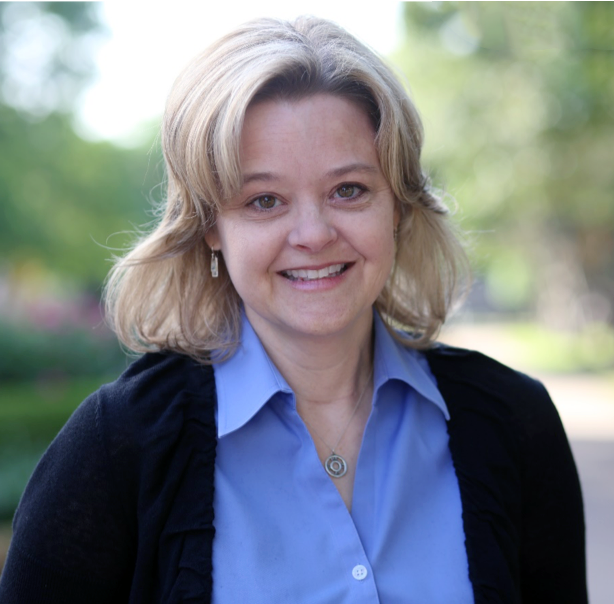
Among the new courses that have been developed using the Teaching Innovation Program is “Ecogothic Literature,” designed and taught by Dr. Sarah Ford, professor of English.
“To offer a course for Baylor’s new environmental humanities minor, I wanted an approach that would appeal to both students in the English major and those who would be coming from the sciences,” she said. “Ecogothic seemed the perfect bridge.”
Ecogothic, Ford said, is the study of literature that depicts fear arising from the relationship of humans and the environment, whether that fear is derived from the environment itself, or from human harm to the environment such as chemical spills or contributing to climate change.
“By studying the origin of the fictional fear, students can think about the complex relationship between human and the nonhuman worlds,” she said.
Ford designed the course to capture a diverse set of works –– from indigenous to science fiction and speculative perspectives –– because the environment affects populations in uneven ways. She also wanted works that would be approachable for nonmajors.
“The award gave me the time and resources to read broadly, to discover some new voices, and to design a syllabus that would appeal to students at the intersection of environmental science and the humanities,” Ford said.
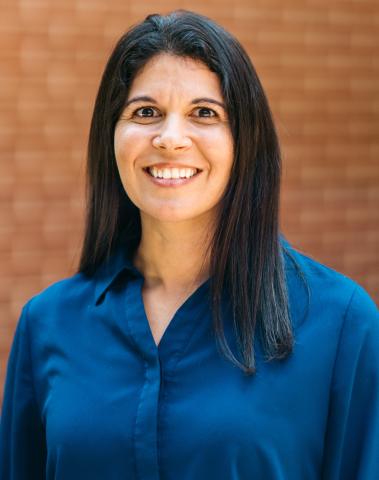
For a number of years, Dr. Jodien Johnson, senior lecturer in sociology, had wanted to create a full course in environmental sociology that expanded the brief touch she was able to give the topic in her Introduction to Sociology course. The Teaching Innovation Program gave her the time and space to do that.
“Throughout the years that I’ve been teaching Intro, students have expressed increased interest in this topic,” she said. “Additionally, this is a topic that sociology can really speak into. I wanted our students who were interested in the topic to be able to use their sociological imagination to solve the environmental concerns they are faced with now and will continue to be faced with in their future.”
Johnson said her new course covers some of the things discussed in many sociology classes, such as the role of culture, the structure of society and the impact that has on the individual and the environmental challenges they face.
“Just as my Marriage and the Family class might look at different family outcomes by social class and different struggles that families face by social class, so too this class will look at different lived environments by class,” she said. “I try to bring in diverse voices and the voices of those who have experienced environmental injustice.”
“It is always helpful to see the concepts we are learning about in action and to get to be a part of the change by learning how we can help.”
--Dr. Jodien Johnson
Johnson described the class as “extremely engaging” as it invites students to look at the environment and the ways humans interact with it from a perspective not often considered. That includes hands-on experiences partnering with community organizations such as Urban REAP (Renewal Energy and Agricultural Project), a program of Mission Waco.
“Such partnerships allow students to learn from and interact with people right here in our community who are addressing the hard issues we talk about in class,” Johnson said. “It makes our class content tangible in ways that I cannot in the classroom.”
Her students have also enjoyed this community interaction, with one noting in a mid-semester check-in, “It is always helpful to see the concepts we are learning about in action and to get to be a part of the change by learning how we can help.”
Other new courses developed using the Teaching Innovation Program have included: a precalculus course, developed by Dr. Tommy Bryan, senior lecturer in mathematics; a course examining controversial Supreme Court decisions, developed by Dr. Dave Bridge, associate professor of political science; and a course teaching about the immune system using a board game to reinforce material covered during class sessions, developed by Dr. Mark Taylor, associate professor of biology.
Brown bag series
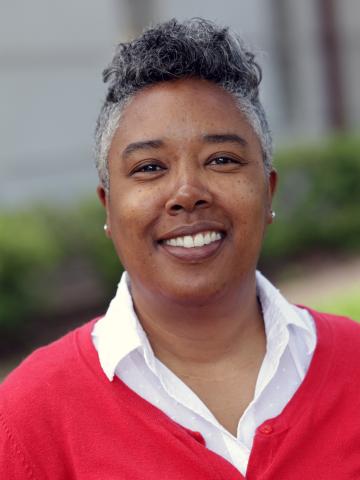
Sharing best practices and lessons learned in an increasingly diverse educational environment is the focus of a Teaching Innovation brown bag series directed by Dr. Coretta Pittman, associate dean for diversity and belonging in the College of Arts & Sciences and associate professor of English.
One of the first presenters in the series was Dr. Ricardo Alvarez-Pimental, assistant professor of history, who created a course titled “Waco’s Mexican American Experience.”
“Students will get an opportunity to make connections with Hispanic community members and get a kind of oral history along with a textual history about what it means to be Hispanic in Waco and also in Texas,” Pittman said.
Another recent presenter, Julie King, undergraduate program director of environmental sciences and senior lecturer in environmental law, redesigned an environmental justice course she’s been teaching to address how environmental issues disproportionately impact communities of color.
“It takes so much time to develop a course, and I’m hoping the brown bags will incentivize more faculty to take the time to redesign or create new courses.”
--Dr. Coretta Pittman
“It takes so much time to develop a course, and I’m hoping the brown bags will incentivize more faculty to take the time in the summer to redesign or create new courses,” Pittman said. “But more importantly, I’m hoping the pedagogy series, along with the teaching awards, will somehow trickle down to students so they’ll know more about the kinds of diverse courses we have.”
This article originally appeared in the Spring 2025 issue of Baylor Arts & Sciences magazine.
ABOUT THE COLLEGE OF ARTS & SCIENCES AT BAYLOR UNIVERSITY
The College of Arts & Sciences is Baylor University’s largest academic division, consisting of 25 academic departments in the sciences, humanities, fine arts and social sciences, as well as 11 academic centers and institutes. The more than 5,000 courses taught in the College span topics from art and theatre to religion, philosophy, sociology and the natural sciences. The College’s undergraduate Unified Core Curriculum, which routinely receives top grades in national assessments, emphasizes a liberal education characterized by critical thinking, communication, civic engagement and Christian commitment. Arts & Sciences faculty conduct research around the world, and research on the undergraduate and graduate level is prevalent throughout all disciplines. Visit the College of Arts & Sciences website.