

Serving God and Others
Baylor’s Ministry Guidance Program helps students discover and fulfill their Christian calling
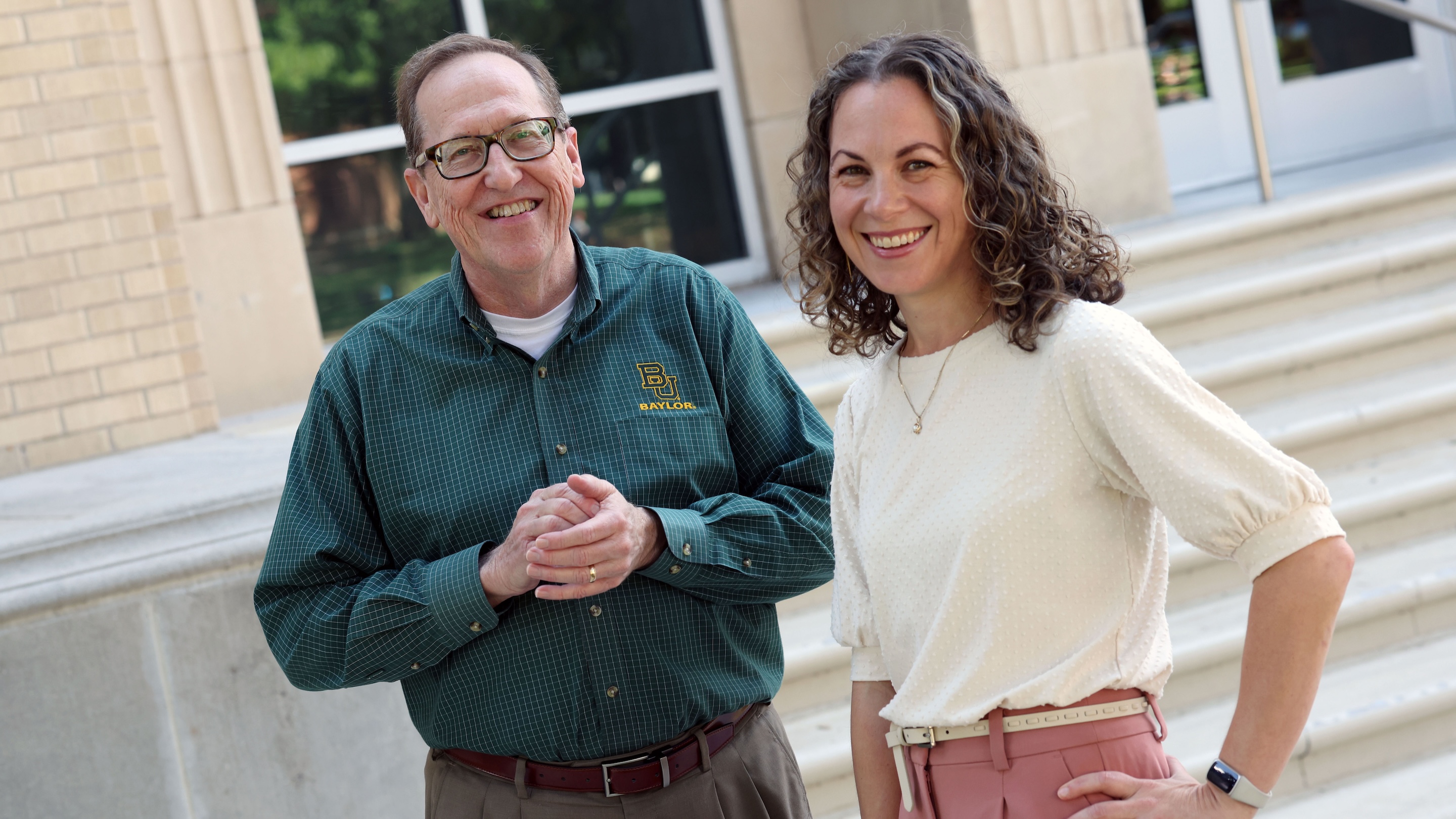
Baylor Ministry Guidance directors Dr. Dennis Horton and Dr. Mandy McMichael (Baylor University/Robert Rogers)
Baylor students who feel called to Christian ministry can take advantage of a great resource to help them find their path.
The landscape of organized religion and ministry has changed dramatically in recent years, and Baylor’s Ministry Guidance Program is helping these undergraduate students discern and prepare for vocational ministry in this shifting environment.

Based in the Department of Religion, the program helps students pursuing careers in ministry answer their call through a combination of courses, internships, scholarships, networking opportunities and career counseling.
“While some of the initial components of the program began in the 1960s with a focus on the traditional role of the preaching pastor, the Ministry Guidance Program was formally developed in the 1980s and now encompasses ministry in all its forms,” said Dr. Dennis Horton, associate professor of religion and program director. “The program has expanded through the years with a lot of complementary pieces that help students explore their vocational interests and ministry gifts.”
Today’s Ministry Guidance Program is led by faculty with a broad range of ministry experience. Horton’s doctorate is in New Testament studies, but he’s worked in missions and teaches Cross-cultural Ministry. Dr. Mandy McMichael, the associate director of the program and The J. David Slover Associate Professor of Ministry Guidance, is an ordained minister and church historian who researches, writes and teaches on women in ministry. Jane Wilson, Visiting Professor of Ministry Guidance, specializes in youth ministry, as does Dr. Susan Benton, lecturer in religion, who also has experience in church administration. Heather Starkey, their administrative associate, facilitates the success of ministry guidance events and various elements of the program.
The program is open to religion majors and minors, as well as to students from across Baylor who are pursuing vocational ministry.
“Some are majoring in church music, church recreation, social work, entrepreneurship, communications, and child and family studies,” McMichael said. “We connect with a broad group of students who want to use their major in ministry.”
Many students plug into the program as soon as they arrive at Baylor. Recruitment events and informational sessions during summer orientation provide details on classes, internships, scholarships and other resources, McMichael said.
“We get a lot of students in their sophomore and junior years, as well as freshmen, who decide they are sensing a call to ministry and want to talk to us about what that looks like, what financial help might be available and what resources are available to help them with the next step after they graduate,” she said.
Studies that shape and direct
Ministry guidance students can choose from a variety of religion courses, including four practical studies courses, the first of which is Introduction to Ministry –– required for anyone receiving a ministry scholarship, which earns four credit hours and includes an internship. The three other courses are: Communication in Ministry (preaching, leading Bible studies, interpreting the Bible); Cross-cultural Ministry (local and global missions); and Leadership in Ministry (church and organizational leadership).
“Because they can major or minor in religion, students are encouraged to take the courses that match the things they’re interested in,” McMichael said. For example, students interested in missions will take Cross-cultural Ministry, but they also might take History of Missions. Those who want to preach will take Communication in Ministry, but also might take Biblical Hebrew.
For religion majors and minors, the ministry guidance courses contribute to their degree requirements. The religion major calls for completing 10 courses in religion, in addition to the two religion courses required of all Baylor students –– Christian Scriptures and Christian Heritage. The religion minor requires completion of six religion courses, including the two required of all students.
What religion minors might gain by completing the ministry guidance program is “all over the map,” McMichael said, explaining that some students might couple the minor with a major in business to work in church finance, with a major in child and family studies to be a children’s minister, or with a major within the prehealth program to prepare for medical missions.
“A lot of times they’ll start out as a religion minor, but over time they might add a secondary major or a double major, or decide, ‘maybe I do need to go to seminary because I realized there’s a lot more to learn,’” McMichael said. “But that’s not always the case, and some go on to do other things because that’s how discernment works.”
Practical internships
A key ingredient of the Ministry Guidance Program is a required internship that puts students’ feet on the ground in their chosen area of ministry and their preferred denominational world. Internships are tied to the Introduction to Ministry course, and require five hours a week for 10 weeks.
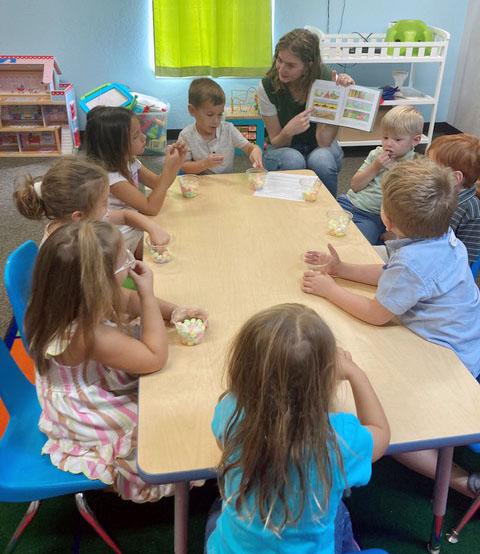
“We have students who work in local churches shadowing youth ministers, pastors, music ministers, college ministers, and sometimes even executive pastors,” McMichael said. “We match students and what they’re interested in with someone in our community who is doing that.”
There’s a growing interest from students in counseling and chaplaincy as well as nonprofit ministry. Students have interned at agencies such as the Christian Women’s Job Corps, Mission Waco, the Family Abuse Center and Meals on Wheels, where they work alongside trained field supervisors.
“It’s a very formalized process. We don’t just call up people,” McMichael said. “Every semester we work to place students based on their needs with the best person in our contact list that will mentor them well.”
Horton said that faculty teaching the Introduction to Ministry course meet with each of the students individually at the beginning of the semester to learn about their story and make internship placements. The professors then meet individually with the students again to evaluate how those internships are progressing.
“We’re able to get a lot of time directly with the students, not only in class, but also through seeing how that internship is going,” he said.
At the end of their internship, students will complete a reflection paper, and one of the questions they answer is about their call discernment.
“Many students –– and we think this is healthy –– will come to us and say, ‘I know I’m called to ministry, but I’m not sure if it’s student ministry or preaching or whatever,’ and we like that openness,” he said.
Changing demographics
Just as the ministry landscape is changing, so are the demographics of the Baylor students who pursue vocational ministries each year.
“Our ministry students back in the 1970s, 1980s and even the early 1990s were all Baptist,” said Horton. “Since then, things have changed so much in the United States with the advent of nondenominational churches, and Baylor has gotten better about recruiting students from across the denominational spectrum.”
As a result, a third of the approximately 1,000 students on campus who are pursuing vocational ministry now are Baptist, a third are nondenominational, and a third are from all other denominations. Another major demographic change is the rise in the number of women who receive ministry scholarships.
“In my day, it was probably about 95 percent male students, and today it’s 65 percent female students, so that’s been a major shift,” Horton said.
Financial assistance
Baylor’s religion department currently has approximately 120 students majoring in religion with an additional 260 pursuing minors. Those are the largest numbers since the late 1990s.
“We’re really pleased with that. I think if we checked other Christian universities, their numbers would be far smaller than that,” Horton said.
This growth has been driven in large part by the availability of scholarships –– specifically, to students pursuing a religion major or minor who have plans for full-time vocational ministry in a church setting or on the mission field, are pursuing a church-related major elsewhere on campus, or are preparing for Christian nonprofit ministry.
Horton said that when Baylor’s tuition increased with the introduction of the flat-rate model in the late 1990s, the number of ministry students on scholarship dropped from around 250 to about 90. However, his predecessor as ministry guidance director, Dr. Jeter Basden, worked with the administration to convert scholarships from a flat amount to a percentage of tuition.
“Credit the Baylor administration that they said, ‘Ministry students are important to us and our Christian mission. We want to be recruiting and preparing these students for ministry,’” Horton said. “We award more than $2 million a year in ministry scholarships, but if we had more funding we could provide additional support –– especially for those students that may not have the financial means and are working at a job as best they can while going to school.”
McMichael said the scholarships help defray the costs for students who probably won’t earn as much in ministry as those going into other fields.
“Part of what these scholarships are designed to do is help make a Baylor education affordable to people who have committed their lives to Christian service through working in the church or going overseas as a missionary,” she said. “We want to honor the sacrifices they’re making.”
Taking the next steps
While Baylor’s Ministry Guidance Program gives students a strong start on their calling, it does not complete their training.
“One of the things we hope our students get during their time here is the recognition that just because we’re called, it doesn’t mean we’re ready,” McMichael said. “So, we’re giving them opportunities while they’re here to grow and prepare.”
Every April the program hosts a Seminary Day at the Bobo Spiritual Life Center on campus, where students can meet representatives from some two dozen seminaries and divinity schools across the nation and across the denominational spectrum.
“We encourage our students to go every year and have conversations. That helps them begin to imagine what might be next,” McMichael said.
Horton said some students will defer graduate studies and take a year or two to do some missionary work or a residency program in a church or institution.
“They’ll be doing some type of ministry before they go on to seminary or divinity school, but at least they know about the variety of opportunities out there and how to apply early,” he said.
Open doors and new directions
The stories of three current ministry guidance students can illustrate just how the program can help participants get training and experience and find direction.

Kara Nelson is one of those students who will take a gap year before taking the next steps toward ministry. The senior from Richland, Washington, first felt the call to ministry as a junior in high school, but what she described as an “unhealthy view of the church” put her on the path to religious education rather than church ministry. Being in the Ministry Guidance Program helped her sort all of that out.
“I had an admissions counselor, but Dr. Horton and Dr. McMichael took me under their wing and showed me what Baylor really was,” she said.
Actually, their relationship began during a college visit when Nelson met both professors, sat in on one of McMichael’s classes, and had coffee and conversation with her and two students.
“Dr. McMichael asked me about my fears and what I wanted to do in ministry –– really trying to decide if Baylor would be the right place for me,” she said. “And that was when I heard about the Ministry Guidance Program.”
Nelson, who was baptized in a Baptist church but “bounced around” denominationally growing up, interned at the nondenominational Mosaic Church in Waco, led by Pastor Slim Thompson.
“I think the internship was a major turning point for me in understanding healthy church leadership,” she said. “We would meet once a week, but then I also took on the project of forming the college ministry at Mosaic, and now I help run that.”
Nelson is a double major in religion and history, and plans to go to divinity school and pursue a master’s and doctorate. She still sees academia as her calling, although she’s open to change.
“I think my undergraduate experience has been one of expansion rather than narrowing, which some might find scary,” she said. “I find it to be a real blessing. I think it really allows God to open more doors in my life that I would have tried to force closed at other times.”
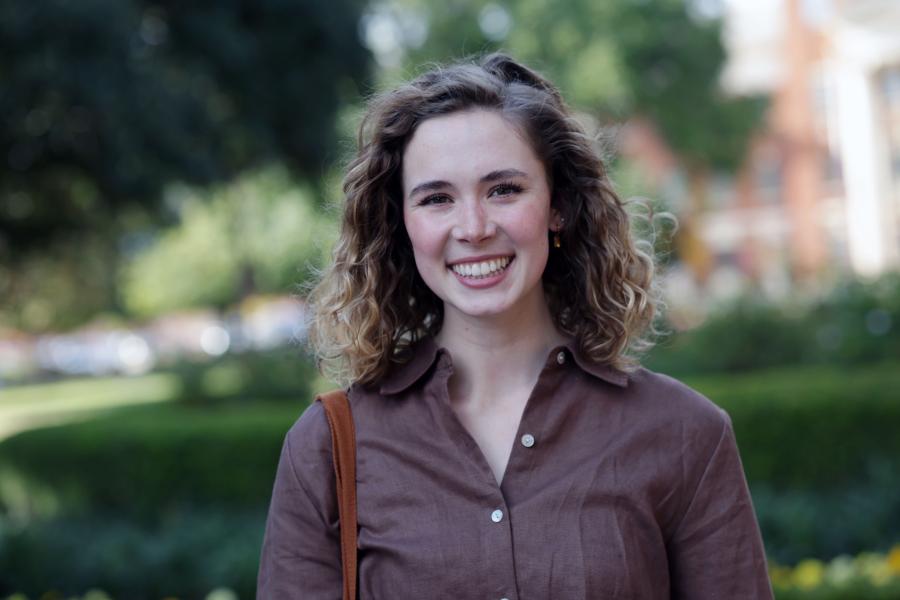
Libby Carroll, a senior University Scholars major from Katy, Texas, arrived at Baylor leaning toward pre-law but began to feel the call to ministry late in her sophomore year. With the flexibility of her major and support from the Ministry Guidance Program, she’s now on the path to seminary or divinity school.
“Being in class with Dr. Horton and having particular conversations throughout my internship have revealed to me that I have a clear bent towards spiritual accompaniment,” she said. “My love of words and writing, and just a desire to minister towards an area of real need and hurt lends itself well towards a pastoral and preaching role. So that’s the direction I think I’m going.”
Carroll interned at Waco’s Calvary Baptist Church, where she got to explore her calling in real and practical ways under Senior Pastor Hannah Coe.
“I got to take leadership in Sunday morning services doing things like officiating communion or doing readings,” she said. “I read several books under the direction of their lead pastor, Hannah Coe, involving things such as Christian leadership and discerning vocation. It was kind of twofold –– preparing me for leadership and giving me evaluative frameworks for thinking about that, while also emphasizing further vocational discernment.”
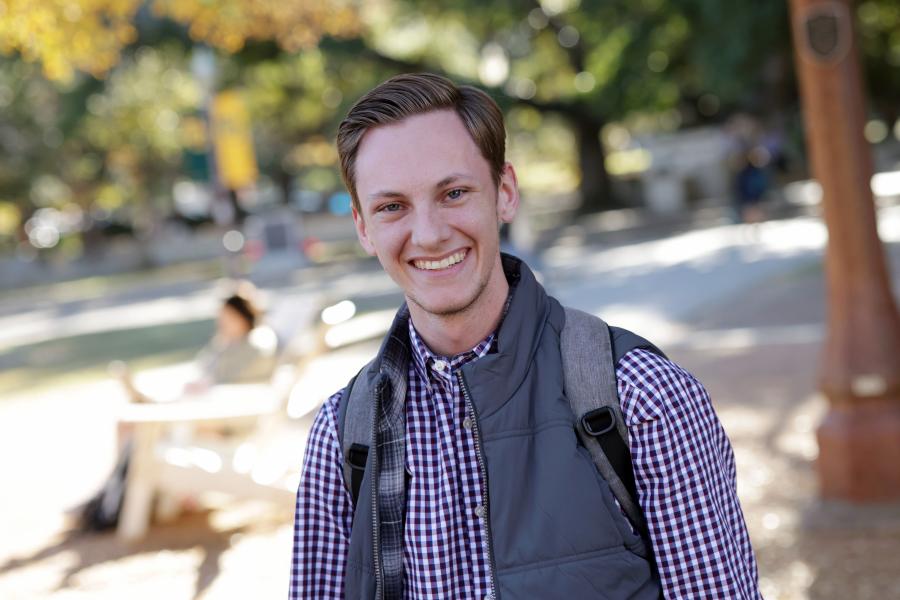
When Matthew Cox first felt the call to music ministry as a high school student in Garland, Texas, he shared the news with his youth and music ministers who helped him explore what it all meant. That process has continued at Baylor through the Ministry Guidance Program, where Cox’s professors and mentors have added more pieces to what he will need to succeed.
“It’s been a wonderful experience, getting both the philosophical side of ministry –– the heady stuff –– in the classroom, and then the practical components out in the field, working with a local minister,” he said.
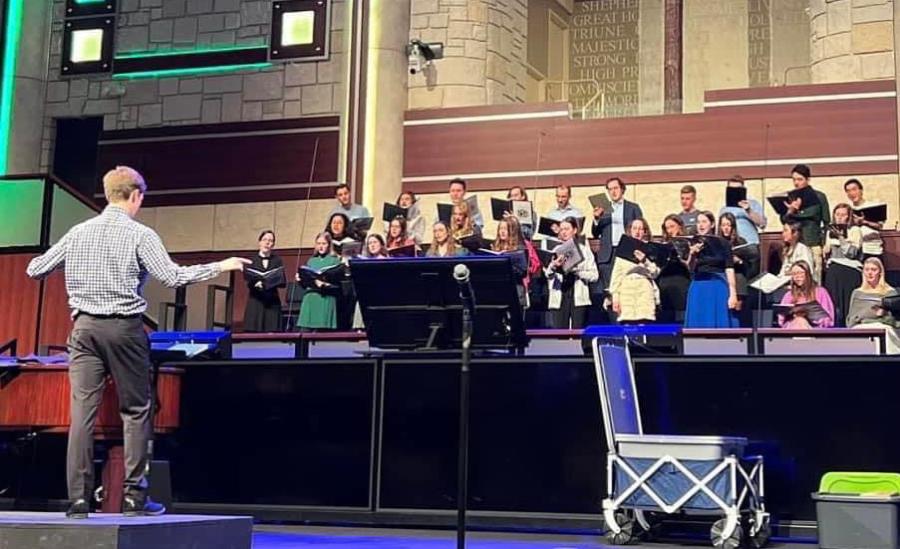
Cox, a sophomore at Baylor majoring in church music in the Baylor School of Music, interned at First Woodway Baptist Church where he worked with Art Wellborn, the worship pastor. He served on the contemporary worship team, led Wednesday night worship for youth, and worked in the college ministry. He and Wellborn read and discussed “From Postlude to Prelude: Music Ministry’s Other Six Days,” a book by Dr. Randall Bradley, director of Baylor’s church music program, that details the non-Sunday aspects of music ministry.
“As part of my internship, I also made a point of doing stuff that was not explicitly music-related, because I’m aware that most ministers don’t just work in a monolithic field,” Cox said. “It’s not, ‘The music minister only does music, the youth pastor only does youth.’ Usually, there’s some overlap.”
*This story originally appeared in the Spring 2024 issue of Baylor Arts & Sciences magazine.
ABOUT THE COLLEGE OF ARTS & SCIENCES AT BAYLOR UNIVERSITY
The College of Arts & Sciences is Baylor University’s largest academic division, consisting of 25 academic departments in the sciences, humanities, fine arts and social sciences, as well as 11 academic centers and institutes. The more than 5,000 courses taught in the College span topics from art and theatre to religion, philosophy, sociology and the natural sciences. The College’s undergraduate Unified Core Curriculum, which routinely receives top grades in national assessments, emphasizes a liberal education characterized by critical thinking, communication, civic engagement and Christian commitment. Arts & Sciences faculty conduct research around the world, and research on the undergraduate and graduate level is prevalent throughout all disciplines. Visit the College of Arts & Sciences website.