

Reel Storytellers
Baylor’s newest MFA degree aims to produce Oscar-worthy filmmakers
As media platforms carrying visual entertainment steadily increase in number and the size of their playlists, and as people devote more and more time each year to consuming visual content, the demand for quality films and videos to satisfy those needs and desires grows as well. A new graduate degree in Baylor’s College of Arts & Sciences is designed to give students both the training and experience needed to launch successful careers as visual content creators.
For many years, Baylor has offered a Master of Arts (MA) in Film and Digital Media that allows students to pursue diverse academic and professional goals. But the new Master of Fine Arts (MFA) in Film and Digital Media, making its debut in the Fall 2024 semester, is a graduate degree designed specifically for practitioners. Its focus is to equip Baylor storytellers to fill expanding media platforms with award-winning content, created with artistic vision and technical expertise.
Equipping storytellers
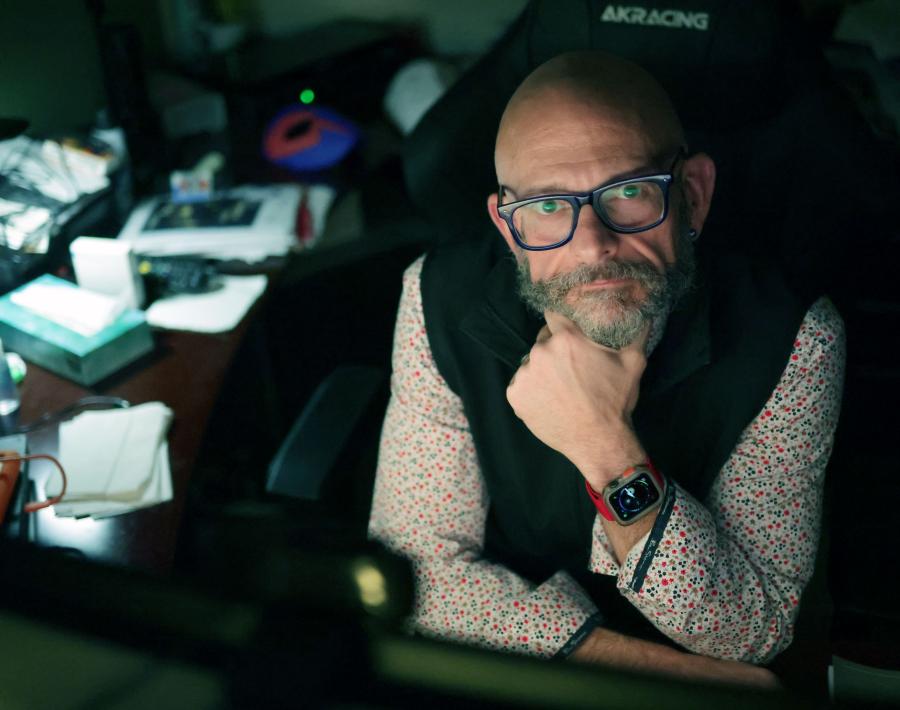
Chris Hansen, chair and professor of film and digital media, said that while many graduate film programs emphasize how to make a good film, he wants Baylor’s program to focus on storytelling in a more comprehensive fashion that integrates a variety of creative elements and skills.
“We believe storytelling in this form is one of the most powerful cultural forces in our world, and if we are not educating students and preparing them to be leaders in that cultural force, then how is Baylor a leader in the world?” Hansen said. “We want our students to be great storytellers so they can have an impact on their world. We also want them, if they have an aptitude towards teaching, to have the opportunity to teach at the college level and impact other generations of students.”
Nine students were selected to begin the program this fall from a pool of applicants that included Baylor undergraduates, students already in the MA program and students from other schools. A good mix of talent and perspective will be a key to the success of the student experience, Hansen said.
“A big part of the MFA program is a workshop setting where students are directing projects together,” he said. “One of the things we look at with potential students is not only how we think they’re going to do in the program, but what are the strengths they bring that can benefit everybody?”
Basic requirements
Students applying for the MFA program should already have undergraduate experience in film and media production and storytelling in that form.
“Obviously, we’re not expecting people to come in and already be a Stanley Kubrick or Steven Spielberg,” Hansen said. “We want to look for students with good potential, but that potential is not necessarily going to be already developed.”
However, successful candidates do need to demonstrate drive and a passion for the art, said Dr. Dan Shafer, professor of film and digital media and advisor for the graduate program. Shafer helped design and guide the new MFA degree through the administrative approval process.
“Understanding films and directors really does help,” Shafer said. “It helps to know who inspires you, what kind of stories you look at and say, ‘I’d like to make a story that’s somewhat like this. And I’m inspired by this kind of work by these directors.’”
Degree program applicants must submit a portfolio that includes video-based work as well as written storytelling in a screenplay format. If they don’t have a screenplay to submit, short stories or other samples of storytelling will suffice.
“They should already be a storyteller, and a lot of our applicants have been trying to be storytellers since they were kids, so that’s usually not an issue,” Shafer said.
Candidates also must submit results from the Graduate Record Examination (GRE) standardized test.
“It’s a good data point for us. It helps us understand how they approach academics,” Shafer said. “We’re not a trade school –– we’re an elite academic institution. So, we want our students to be of a certain caliber.”
And . . . action!
Students accepted for Baylor’s MFA program will get off to a fast start.
“When you enter our MFA program, you’re going to be engaged in near-constant filmmaking,” Shafer said. “There’s not a whole bunch of theory on the front end. You’re going to get in and start making films right away.”
Shafer said that while students will delve into all aspects of filmmaking –– such as producing, cinematography and editing –– the program emphasizes writing and directing.
“It’s for those who want to come up with creative ideas and then execute them,” he said.
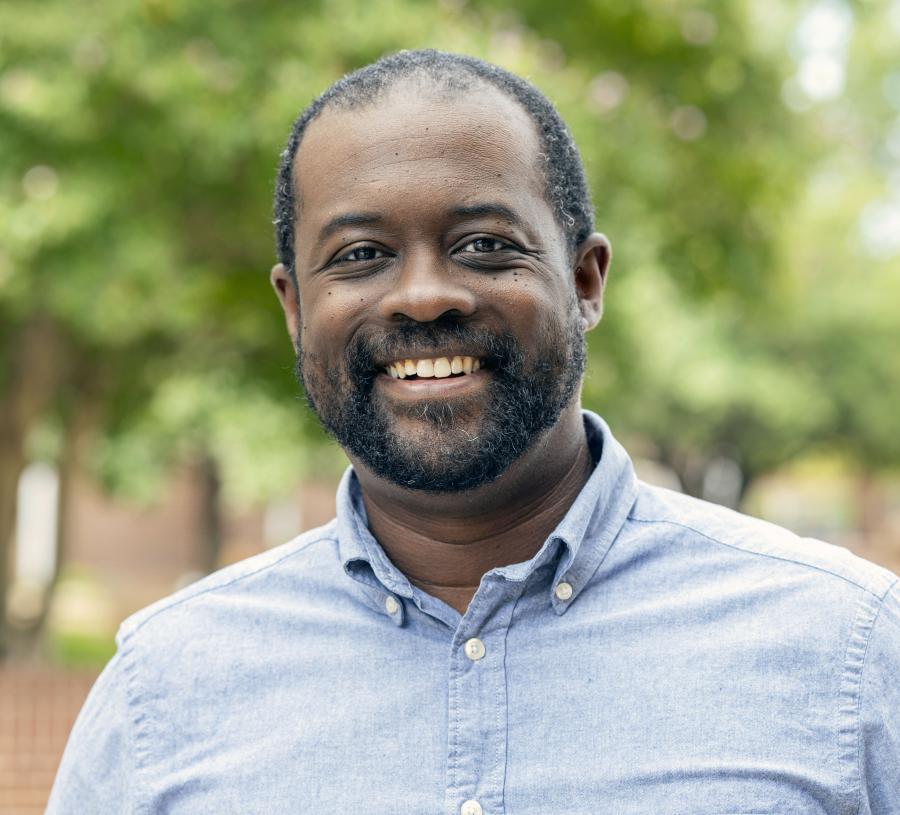
During the summer after their first year in the program, MFA students will be required to make an 8-to-10-minute film under the guidance of supervising faculty member Sam Henderson, assistant professor of film and digital media at Baylor and an award-winning film director, writer and actor.
“I’m asking students to consider the work they’ve made over the first year of the MFA program and, in short form, attempt to work on strengthening a strength or address a perceived weakness in their filmmaking,” Henderson said. “This will culminate in an evaluative discussion from the graduate faculty at the beginning of the students’ second year. My vision is that this is mostly an encouragement. However, this will also be an opportunity for both the faculty and students to assess their standing in the program going into the second year.”
The summer film project may also provide challenges and lessons learned for students to consider as they begin work on a thesis film toward the end of the second year.
“Though not a requirement, I’ve encouraged students to view this as a smaller scale opportunity to experiment with what they might want to aim for in their thesis –– thematically, technically and so forth,” Henderson said.
As the “culminating experience” for the degree, the student’s thesis film will be accompanied by research, Hansen said.
“In a traditional research-based MA program, there’s a lot of written research, so their thesis film comes with some research focused on the creative work they’re doing and the process,” he said.
Lots of student support
With filmmaking being a fairly expensive endeavor, students will have access to partial funding for their thesis film, as well as tuition scholarships and teaching assistantships that pay a stipend to help with living expenses.
“We don’t want cost to be a limiting factor for the kind of stories that get told as a result of our program,” Hansen said. Also, the department will help students enter their thesis films in festivals and make connections in the industry.
“We have a strong network of Baylor alumni in Hollywood,” Hansen said. “We have a Baylor in LA program that is primarily for undergraduates, and we have a Baylor in New York program. We envision helping our students who’ve thrived in the MFA program through those networks.”
Shafer said the demand for trained and experienced film practitioners has never been higher, due to the impact of original content outlets such as HBO, Netflix and Hulu.
“If you want to do this at a high level and tell the stories that are best told on the big screen, and you want to be guaranteed the foundation you need for that, then this is the degree you want,” he said. “Baylor is becoming more well-known in the world of film and digital media, and with the MFA we can start producing people who are even more high profile in the industry. Writers and directors who can get these credits that go up for Oscars –– those are the kinds of people we want to produce."
All photos courtesy of Robert Rogers, Baylor University
ABOUT THE COLLEGE OF ARTS & SCIENCES AT BAYLOR UNIVERSITY
The College of Arts & Sciences is Baylor University’s largest academic division, consisting of 25 academic departments in the sciences, humanities, fine arts and social sciences, as well as 11 academic centers and institutes. The more than 5,000 courses taught in the College span topics from art and theatre to religion, philosophy, sociology and the natural sciences. The College’s undergraduate Unified Core Curriculum, which routinely receives top grades in national assessments, emphasizes a liberal education characterized by critical thinking, communication, civic engagement and Christian commitment. Arts & Sciences faculty conduct research around the world, and research on the undergraduate and graduate level is prevalent throughout all disciplines. Visit the College of Arts & Sciences website.