

Fostering Diversity and Belonging
Coretta Pittman wants everyone to enjoy a seat at Baylor’s table
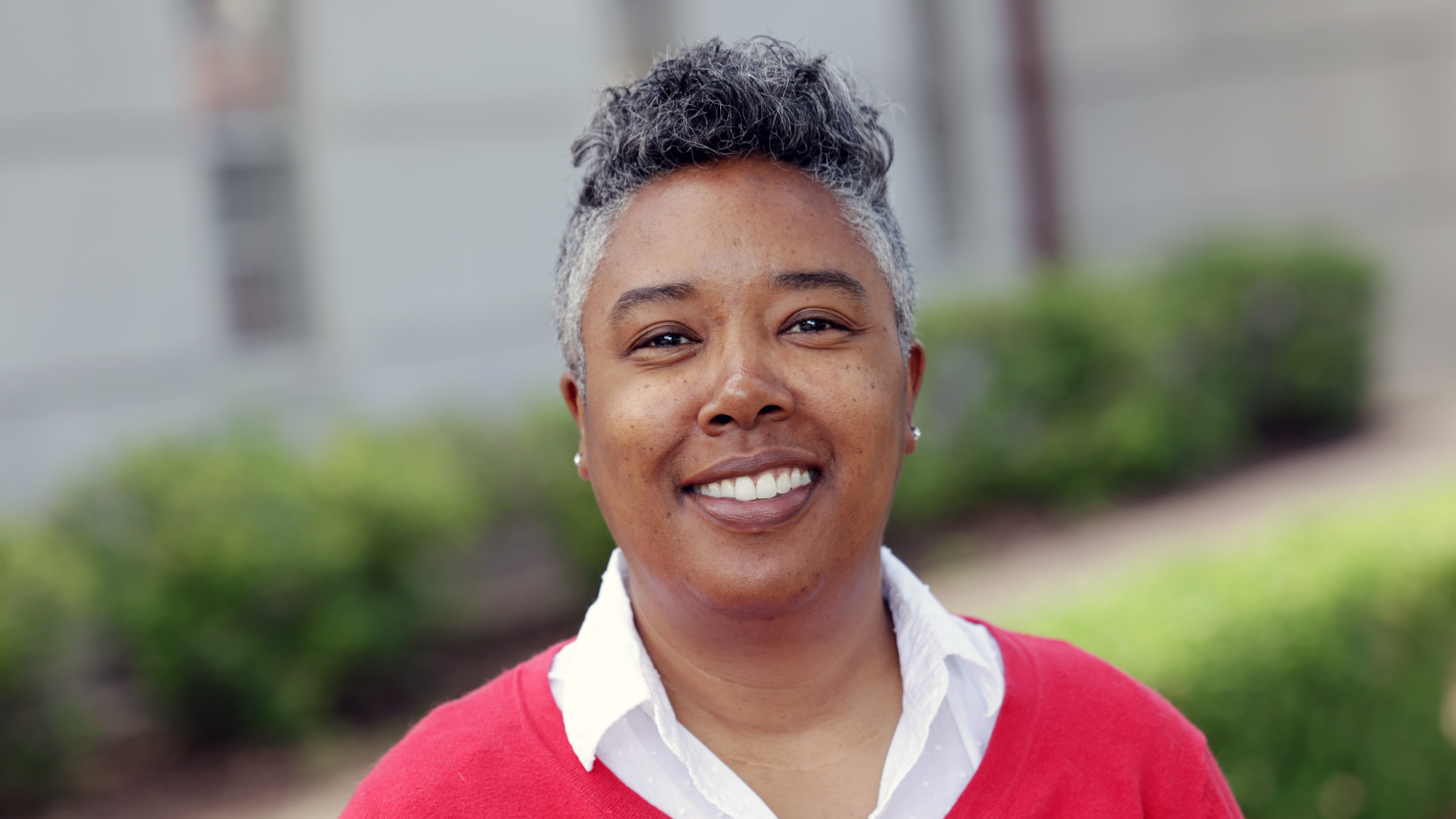
Dr. Coretta Pittman, associate dean for diversity and belonging in the College of Arts & Sciences (Baylor University/Robert Rogers)
A longtime Baylor English professor is heading up the effort in the College of Arts & Sciences to advance diversity and belonging.
In the fall of 2020, Dr. Lee C. Nordt, dean of the College of Arts & Sciences, convened a group of faculty members and formed a committee (with five subcommittees) to look into how diversity and belonging (D&B) initiatives could be implemented. The subcommittees eventually presented Nordt with more than 30 D&B proposals, including ones to expand the diversity of voices contributing to the curriculum, make technology and materials more inclusive and increase D&B in faculty mentoring.
Nordt was pleased with the proposals, but they left him asking the question, “Who is going to do the work of implementing these?”
The dean then solicited input from the chairs of the 25 departments and directors of the two academic programs that comprise the College. Late in the Spring 2023 semester, he asked Dr. Coretta Pittman, associate professor of English, if she would become the inaugural associate dean for diversity and belonging in Arts & Sciences.
“He gave me a few days to think about it, but in my mind, it was a yes,” Pittman said. She began the new position on Aug. 1, 2023.
A good match
Pittman, who joined the Baylor faculty in 2003, had recently rotated off of the Faculty Senate, and had served as the group’s chair for a year.
“I thought, okay, I’m going to get some time back. I’m going to kick my feet up and go do my research, go teach my classes, and kind of become invisible again,” Pittman said. “I had made all these plans in my head, and then the offer to become associate dean happened. I was delighted, but I was in shock.”
After Nordt asked for recommendations to fill the diversity and belonging role, “it was all but unanimous that it be Dr. Coretta Pittman,” he said. “In my time working with Coretta in her new role, I am pleased at the recommendation and that she agreed to join us in the Dean’s Office.”
As an English department faculty member, Pittman’s areas of expertise include rhetorical studies and race studies. She’s also director of Baylor’s Ethnic Studies minor, and served on the initial D&B committee in Arts & Sciences, as well as on other campus-wide committees during her time at Baylor.
“I actually have spent a great deal of my time here thinking about questions around fairness, justice and equity –– both in my classroom, and also on many of the committees that I’ve been on,” she said.
In her new role, Pittman still teaches one course a year in English and is able to continue her academic research agenda. She splits her time between her English faculty office in the Carroll Science Building and her associate dean’s office in Burleson Hall.
Seeking diversity
Pittman’s first goal has been to implement the 30 recommendations that came from the Arts & Sciences D&B committee, one of which addressed diversity in the classroom. “That comes in a number of ways,” she said, including course content, assessment, accessibility and innovation.
In the classroom, Pittman hopes to see diverse voices represented in materials being taught, innovative assessment methods being used, and open educational resources utilized.
“If you think about diversity, it’s a wide range,” she said. “It’s not just about race and gender and ethnicity. It’s also thinking about disability and accessibility being included in the kinds of daily choices we’re making. My role is to think about how I can talk to colleagues, discover the good work they’re already doing, and maybe find some programs and initiatives that can help them do the work they need to do in the classroom so their students can be successful.”
Pittman said that totally implementing the “belonging” aspect of her role will likely take a bit longer.
“I think it takes a cultural shift,” she said. “Belonging is making space available for underrepresented minorities in the faculty hiring lines, or maybe first-generation faculty thinking about the people that they hire, and when you get them here, retaining them and making space available for them to be successful –– because sometimes we can hire them, but we don’t make them feel like they belong at Baylor.”
Building relationships
Another recommendation from the committee that Pittman is working to bring about is to begin a college-wide D&B speaker series. Nordt said the first step in that process will be to ask the department chairs about what sort of programs are already in place dedicated to bringing in diverse speakers and topics. Pittman met with more than half of the chairs during the Fall 2023 semester, “and we’ve had conversations about their speaker series,” she said. The remaining department chairs and program directors are getting visits this spring.
“I'm trying to build relationships and get chairs to understand what the recommendations are, how they might speak into those recommendations, and offer feedback as well,” she said.
Pittman is doing her best to meet faculty face-to-face in order to build relationships and alliances. There are no online Zoom meetings for her, “unless I absolutely have to,” she said.
The diversity and belonging efforts by the College of Arts & Sciences sometimes mesh with those of other Baylor academic units. In her role, Pittman works closely with other associate deans handling diversity issues across campus, including Kerri Fisher from the Diana R. Garland School of Social Work, Dr. Lisa Jones from the Louise Herrington School of Nursing, Dr. Jonathan Tran from the Honors College and Dr. Cindy Wu from the Hankamer School of Business.
“We’re meeting monthly and talking about our respective goals in our different colleges and learning from each other,” Pittman said. “What’s successful? What might we do in the future?”
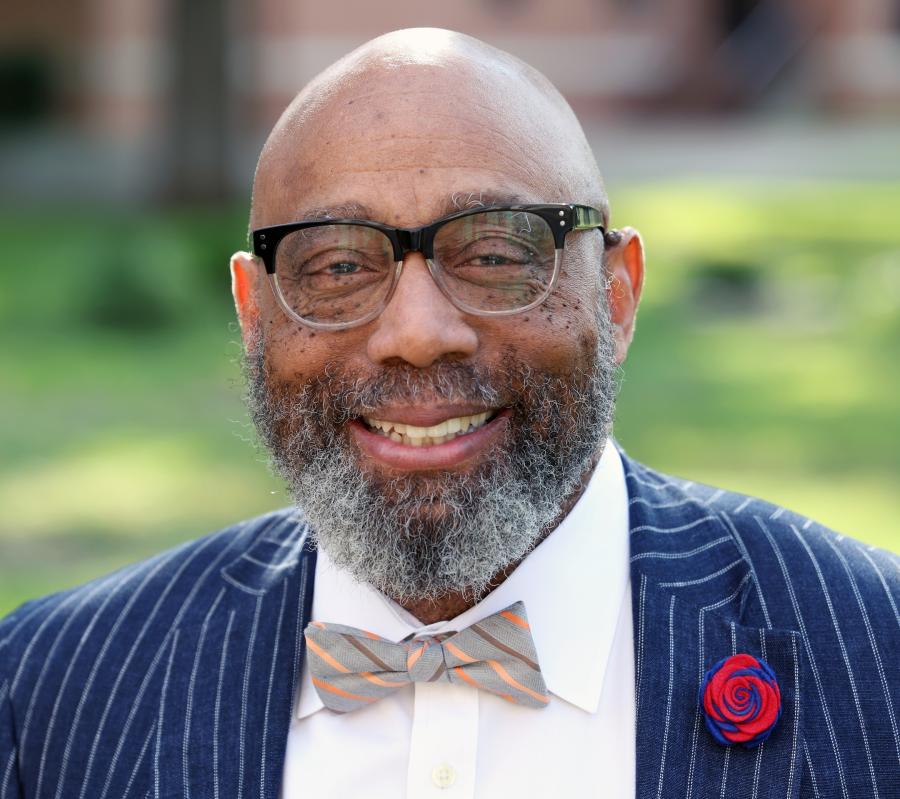
Dr. Stephen Reid, Baylor’s vice provost for faculty diversity and belonging, “is kind of like our facilitator,” Pittman said. “He makes sure we’re not duplicating what he’s doing over there, and he knows what we’re doing over in our respective academic units.”
Reid said his office “works with all schools and colleges within the University to find excellent faculty and provide an environment for their flourishing.”
“The College of Arts & Sciences, under the leadership of Lee Nordt, developed a robust diversity and belonging strategic plan touching faculty and student recruitment and retention, curriculum and co-curricular events,” Reid said. “The plan recognized that the work of Arts & Sciences required more than the Baylor Office of Faculty Diversity and Belonging could provide. Therefore, Dean Nordt called for an academic diversity officer to work with him and the vice provost to implement the D&B strategic plan.”
Strategic support
Pittman said Arts & Sciences has made strong progress in supporting diversity and belonging, especially since the College put forth a new five-pillar strategic plan, A&Spire to Illuminate, in 2020.
“Dean Nordt has made a true commitment to diversity and belonging by including that in A&Spire, and by putting together the group of folks who helped write that initial pillar,” she said.
The fifth pillar of the A&S strategic plan, “Fostering Diversity and Belonging,” was written by a committee co-chaired by Dr. Kim Kellison, associate dean for humanities and social sciences, and Dr. Mia Moody-Ramirez, chair of the Department of Journalism, Public Relations & New Media.
“One outcome of the implementation of the College of Arts & Sciences Diversity and Belonging plan was that I appoint an associate dean to help me, and for my staff and the departments to think more intentionally about these questions as they relate to best hiring practices, teaching pedagogy, research directions and the helping of our students,” Nordt said. “As dean, I also need guidance in the ever-changing national landscape on the questions of diversity and belonging. In doing so, we in Arts & Sciences will become more diverse in the best of ways, including the retention of our underrepresented minority faculty and students.”
Pittman said that while she is initially concentrating on implementing recommendations from the College’s D&B committee, there are some other issues that she’d like to see addressed. For example, she would like to see indigenous scholars being invited to speak on campus or be hired as faculty, and she also looks forward to seeing additional Asian-American and Latinx studies. The recent hire of historian Dr. Felipe Hinojosa as the University’s Jackson Family Chair for Baylor in Latin America represents a strong start in this direction.
“We still need more women in STEM (science, technology, engineering and mathematics) departments, and more people from minoritized communities,” she said. “So, there are some gaps there.”
Determined background
Pittman earned her master’s degree at Austin Peay State University in Clarksville, Tennessee, and her Ph.D. at Wayne State University in Detroit, Michigan. She herself was a first-generation college student, though her mother, Helen Theresa Pittman Springfield, eventually returned to college, and graduated the same semester as her daughter.
“All through my years growing up she told me, ‘Education is important, education is important. You need to go to school,’” Pittman said. “And at the time, she was so sad that she had not been able to go directly from high school to college. I think she just emblazoned that in my mind, when I was a child, that you go to high school, you finish high school, you go to college, you get a career.”
Pittman admitted that she threw her parents for a loop when she began work on her doctorate.
“They didn’t know anybody who had gone off to get a Ph.D.,” she said. “They just had known people who had gone to college in the same city and lived there all their lives. And so, when I was going to get my degrees, my mom and dad were like, ‘What are you doing? You’re running away from work.’ I was like, ‘No, no. I have a plan.’”
*This story originally appeared in the Spring 2024 issue of Baylor Arts & Sciences magazine.
ABOUT THE COLLEGE OF ARTS & SCIENCES AT BAYLOR UNIVERSITY
The College of Arts & Sciences is Baylor University’s largest academic division, consisting of 25 academic departments in the sciences, humanities, fine arts and social sciences, as well as 11 academic centers and institutes. The more than 5,000 courses taught in the College span topics from art and theatre to religion, philosophy, sociology and the natural sciences. The College’s undergraduate Unified Core Curriculum, which routinely receives top grades in national assessments, emphasizes a liberal education characterized by critical thinking, communication, civic engagement and Christian commitment. Arts & Sciences faculty conduct research around the world, and research on the undergraduate and graduate level is prevalent throughout all disciplines. Visit the College of Arts & Sciences website.