

The Blessings of Reconciliation
Baylor alumnus and Baptist minister Steven Reece has spent almost two decades helping to restore historic Jewish cemeteries in Poland
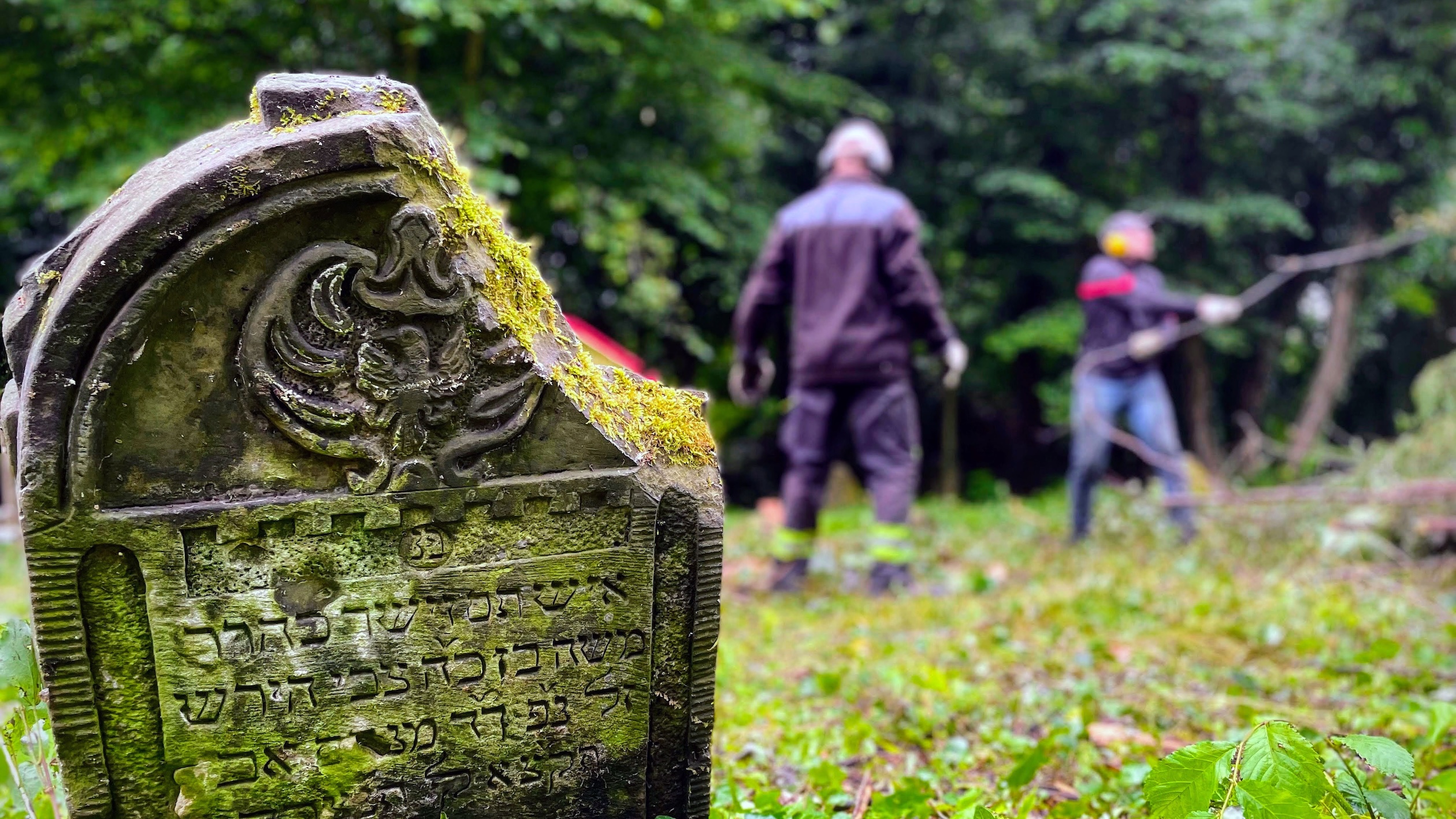
It’s a long way from the Gulf Coast and the biology labs of Baylor to the Jewish cemeteries of Poland, but for Arts & Sciences alumnus Dr. Steven Reece, it has been the journey of a lifetime. Along the way he has not only helped a people restore their heritage, but he has been transformed in the process.
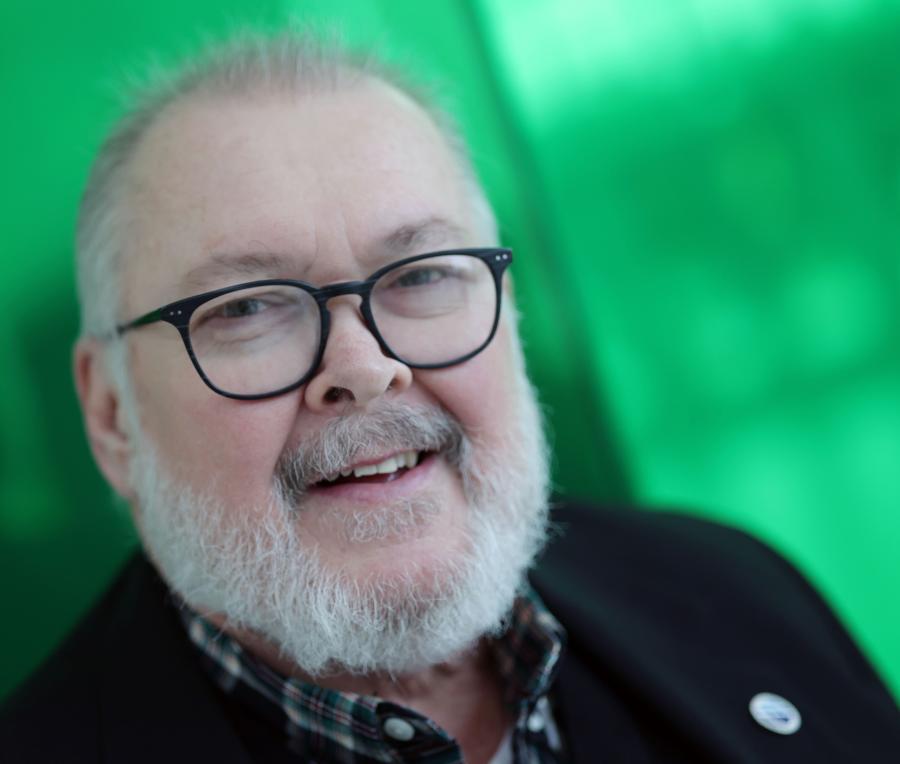
Reece, who graduated from Baylor in 1978, is president and CEO of The Matzevah Foundation, a nonprofit he formed in 2010 with a group of friends that restores and cares for Jewish cemeteries in Poland. The name “Matzevah” comes from the term used in the Hebrew Bible for “sacred pillar,” and in the modern vernacular refers to a tombstone marking a Jewish grave.
“The care of a cemetery, or those whose remains are in a cemetery, is considered one of the highest expressions of loving-kindness possible,” Reece said. “It is considered a ‘mitzvah’ –– a good deed which is a fulfillment of Jewish law.”
From Texas to Poland
Reece was born in Texas City and moved with his family to Baton Rouge, Louisiana, where he graduated from high school. Interested in medicine, he enrolled at Louisiana State University but had a difficult time academically and withdrew. When that happened, his father told him he’d have to pay for school on his own, so he did.
“Within two years’ time, I had regained my father’s confidence to the point that he said, ‘If you want to transfer to a school in Texas, wherever, I’ll pay for it,’” Reece said.
Reece researched schools where he might resume his premed studies, and he was drawn to Baylor for a variety of reasons, including a grandfather who followed Baylor sports, an aunt who had a bear mascot toy, and a high school teacher who told stories of her student days at Baylor. Reece transferred to Baylor and graduated in 1978 with a bachelor’s degree in biology.
After graduation, Reece and his wife, Deborah Dismuke, whom he met at Baylor, moved to Dallas so he could pursue a medical school education, but with a GPA just shy of 3.0 he had trouble getting accepted. Needing an income source while he waited, he took a job in a pulmonary lab at Baylor University Medical Center for three years.
“Working in a hospital, observing and experiencing the medical world, I began to realize this was not really what I was cut out to do,” he said.
Reece always had an interest in photography, and after meeting a Pulitzer Prize-winning photographer from the Dallas Times Herald, he resigned his lab job to take courses in journalism and photography. Advised that he needed to start small, he landed a job as chief photographer at the Palestine Herald-Press from 1984 to 1988, and then worked at the Waco Tribune-Herald until 1993. His photos taken for stories such as the Branch Davidian siege found their way into Newsweek and Time magazines.
“It was my passion really, and if I could do it again, I would,” Reece said, but just as photography was changing with the advent of digital technology, he began feeling a personal change. In 1988, he traveled with a group of Baptist men to Poland and crossed into the Soviet Union and Belarus, where they spent two weeks.
“That was a transformative experience seeing Baptist life and Christianity behind the Iron Curtain. As a matter of fact, I wrote a couple of stories from that experience that were published in one of the Baptist mission magazines,” he said. “When I came back, I told my wife I felt like God was leading me to consider this, and we talked and prayed about it.”
Over the next few years, Reece returned to Poland several times. He also went back to school, this time to Southwestern Baptist Theological Seminary in Fort Worth, where he earned a Master of Divinity degree in 1996 and was ordained by a local church. A year later, he began working with the Baptist Union of Poland.
“I was never a pastor of a church,” he said. “As far as gifting, I am more focused on the intersection of external life –– how to set your life in the spiritual world, and how those things work in practice and not theoretically.”
Living in Poland with his wife and children, Reece worked with local churches while studying Polish language, culture and history.
“I saw the buildings and the remnants of World War II in Warsaw, and saw how some had not been dealt with. They were still in ruins and they’re still there to this day around where the Baptist church is,” he said.
Reece also spent a year in Kosovo where he led humanitarian work for the International Mission Board. This exposed him to the experiences of people and families that had suffered from the war in that country.
“As a Christian, as a Baptist minister, I began to consider –– What is this? What am I dealing with?” he said.
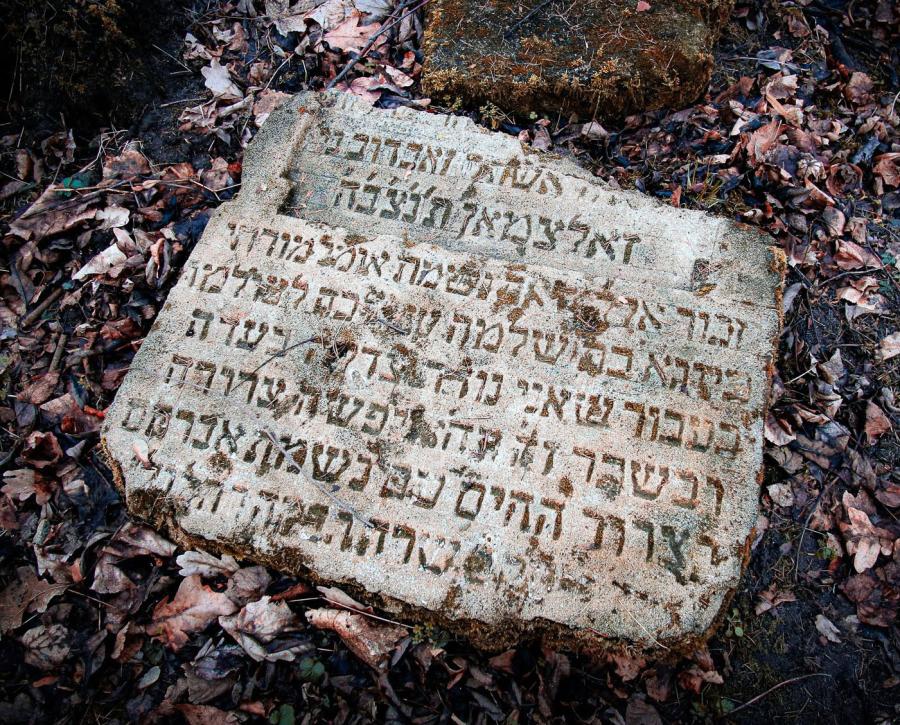
In 2004, Reece was working with a group of volunteers from the United States at the Baptist church outside of Warsaw –– ministering to the community, teaching English, helping provide Bible school for children –– when a waitress at their hotel told him he should take the group to see the local Jewish cemetery, which he did. It was a thought-provoking visit.
“I began to ask myself –– why is this cemetery important to this woman? Why is this Jewish cemetery important to the Jews? Why is it different from a Christian cemetery?” Reece said.
His research seeking to answer such questions led him to an understanding of how the Shoah –– a Hebrew word used to identify the killing of nearly six million Jews in Europe in the Holocaust –– separated Polish Jews from their heritage and legacy. He also learned how the restoration of Jewish cemeteries in Poland was a way of reconciling Polish Jews and Polish Christians, and was an act of “gemilut chasadim” –– the giving of loving-kindness.
Reece soon decided to put his new understanding to practical use by bringing people together to restore Jewish cemeteries.
“I arranged a meeting with the representative of the chief rabbi of Poland, and I explained to him what I wanted to do,” Reece said. “This young man asked me one question –– ‘Why would you want to do this?’ And I gave him a one-word answer in Polish –– ‘Pojednanie,’ which means ‘reconciliation.’ He said, ‘Okay,’ and that’s how it began.”
Reconciliation
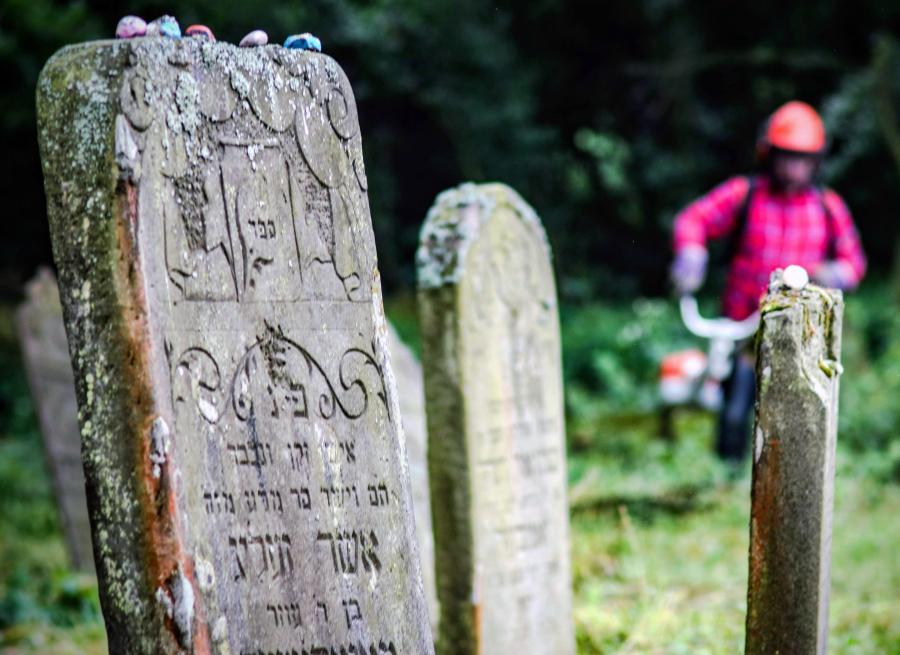
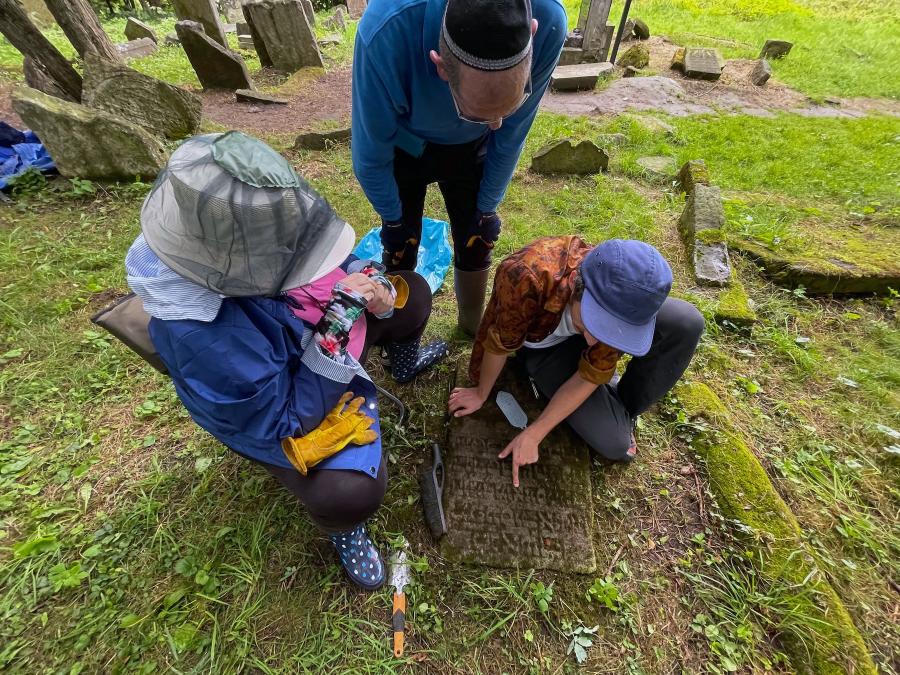
Founded by Reece in 2010, The Matzevah Foundation has completed close to 60 restoration projects. The work can include (in collaboration with others) surveying and defining cemetery perimeters, rebuilding walls, clearing brush, weeding and trimming, raising headstones, and partnering with Jewish groups and descendants who can conduct inventories.
“We do five to six projects each summer, and that’s a lot of work for us as an organization because each place is unique,” he said. “You just don’t walk into a cemetery and start doing stuff. There’s a lot of preparation that goes on beforehand, meeting with community leadership, schools and the religious authorities. Plus, we have to do some logistical work by finding places for volunteers to stay with meals and transportation.”
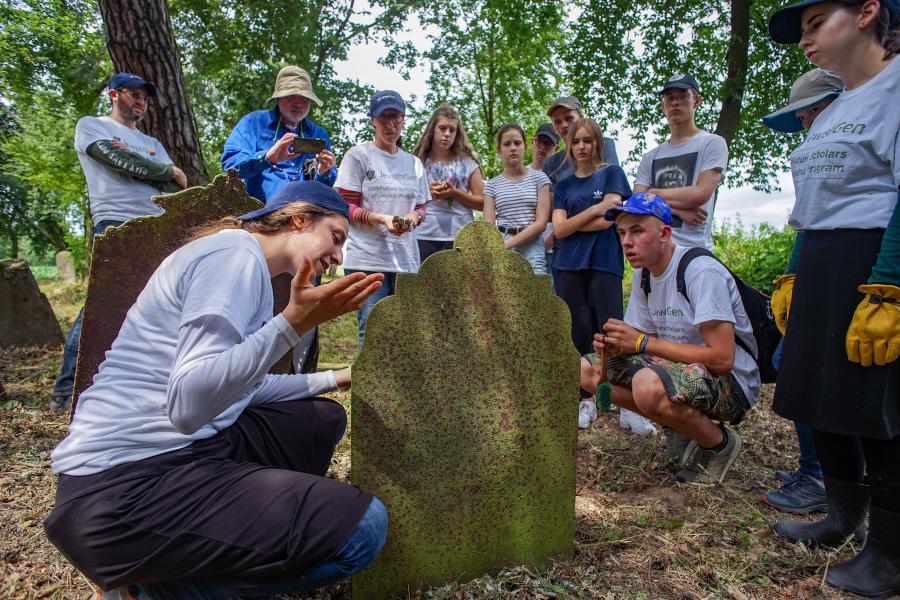
Reece said more than 2,000 volunteers have participated in Matzevah projects so far, with about 75 percent of those being local residents.
“Our model is to work with descendants of those buried in the cemeteries, and for those descendants to mobilize their volunteers within their networks. Then, we assist them on the ground to get started doing the work,” Reece said, adding that the strategy has created another layer of reconciliation.
“In the Jewish diaspora population of today including Israel, between 80 and 85 percent have Polish-Jewish roots. So, from the United States, Canada, Australia, South Africa, Israel, Argentina –– that’s where some of our volunteers have originated,” he said. “Most of the people returning to Poland are trying to reconnect with their family’s past and trying to re-establish their identity.”
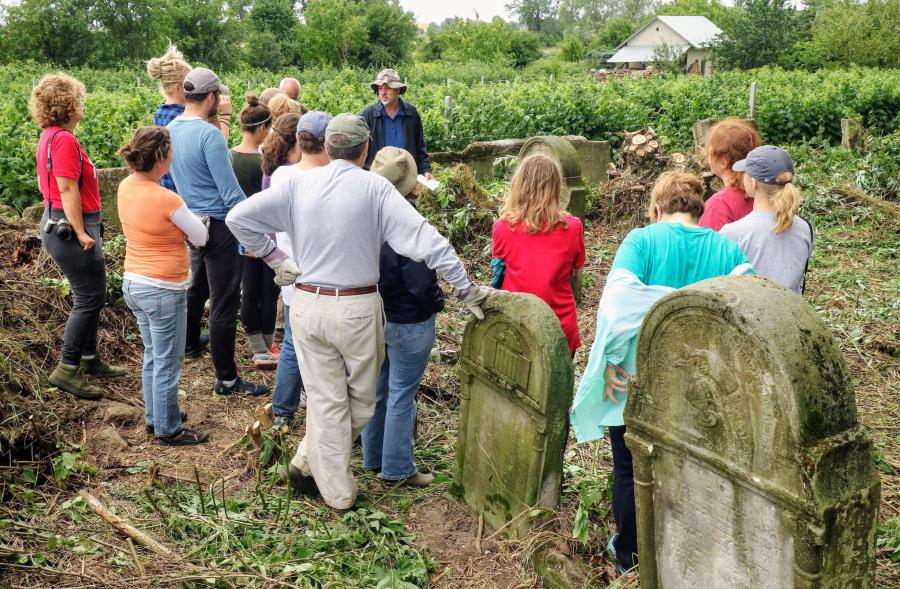
Funding for the Foundation’s work comes from a variety of sources, ranging from small grants from Polish Jewish groups to working with organizations like the European Jewish Cemetery Initiative. Reece said the most notable grant came from the International Holocaust Remembrance Alliance, which funded a four-year collaborative project with the Centre of Archeology at Staffordshire University in England and other partners to research Holocaust killing sites, particularly in Polish-Jewish cemeteries.
For his almost two decades of work helping to restore Jewish cemeteries, Reece was awarded the Figure of Reconciliation for 2022 by the Polish Council of Christian and Jews. The award ceremony took place at the historic Nozyk synagogue in Warsaw and was hosted by the Chief Rabbi of Poland.
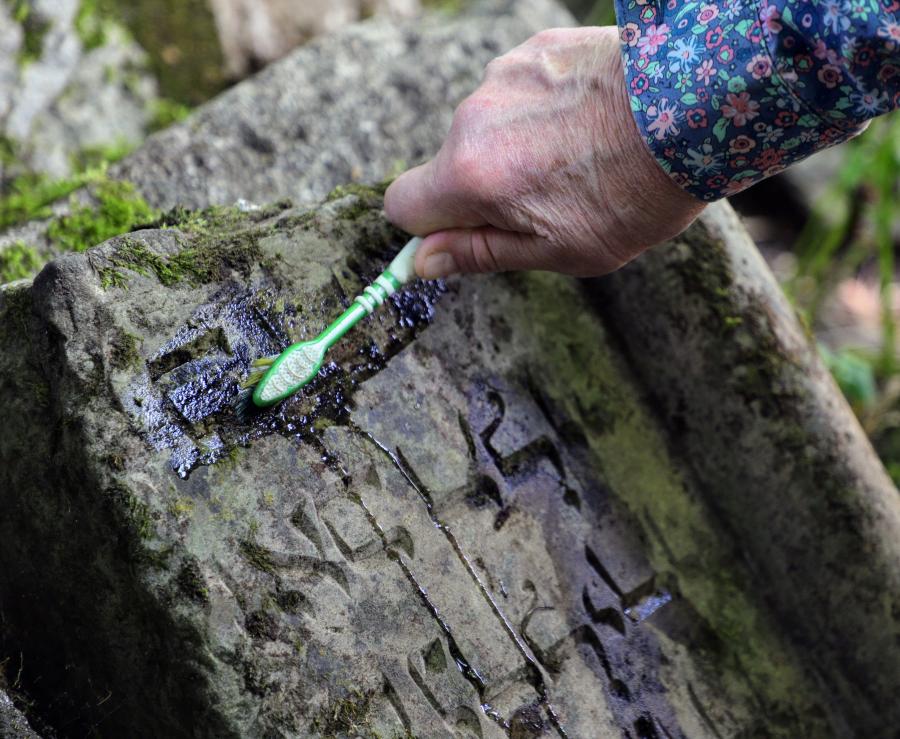
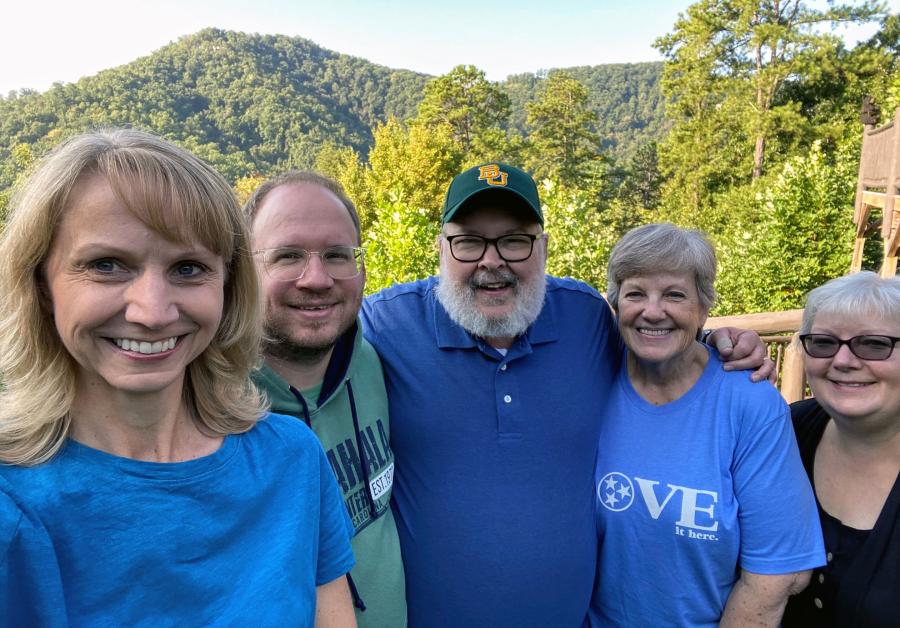
Reece, who earned a Ph.D. in leadership in 2020 from Andrews University in Michigan, works today from a home base in Atlanta. As Matzevah’s leader he receives no salary, but the Foundation board funds his travel to and from Poland. The group’s volunteers pay their own way, and some material needs are covered by partners, collaborators and gifts in kind.
“Some people might look at us and say, ‘That’s not the right way to do a nonprofit,’ Reece said. “Well, this is the way we’ve learned to do our work and we’ve been successful at it.”
Today, whether mobilizing volunteers or raising funds for projects, Reece is in the business of working with what he has.
“We just need the willingness to do it,” he said, “and then we trust that God provides the resources we need for the work he’s given us to do.”
*This story originally appeared in the Spring 2024 issue of Baylor Arts & Sciences magazine.
*All photos, except where indicated, are courtesy of Steven Reece.
ABOUT THE COLLEGE OF ARTS & SCIENCES AT BAYLOR UNIVERSITY
The College of Arts & Sciences is Baylor University’s largest academic division, consisting of 25 academic departments in the sciences, humanities, fine arts and social sciences, as well as 11 academic centers and institutes. The more than 5,000 courses taught in the College span topics from art and theatre to religion, philosophy, sociology and the natural sciences. The College’s undergraduate Unified Core Curriculum, which routinely receives top grades in national assessments, emphasizes a liberal education characterized by critical thinking, communication, civic engagement and Christian commitment. Arts & Sciences faculty conduct research around the world, and research on the undergraduate and graduate level is prevalent throughout all disciplines. Visit the College of Arts & Sciences website.